Trending Topics

 Trending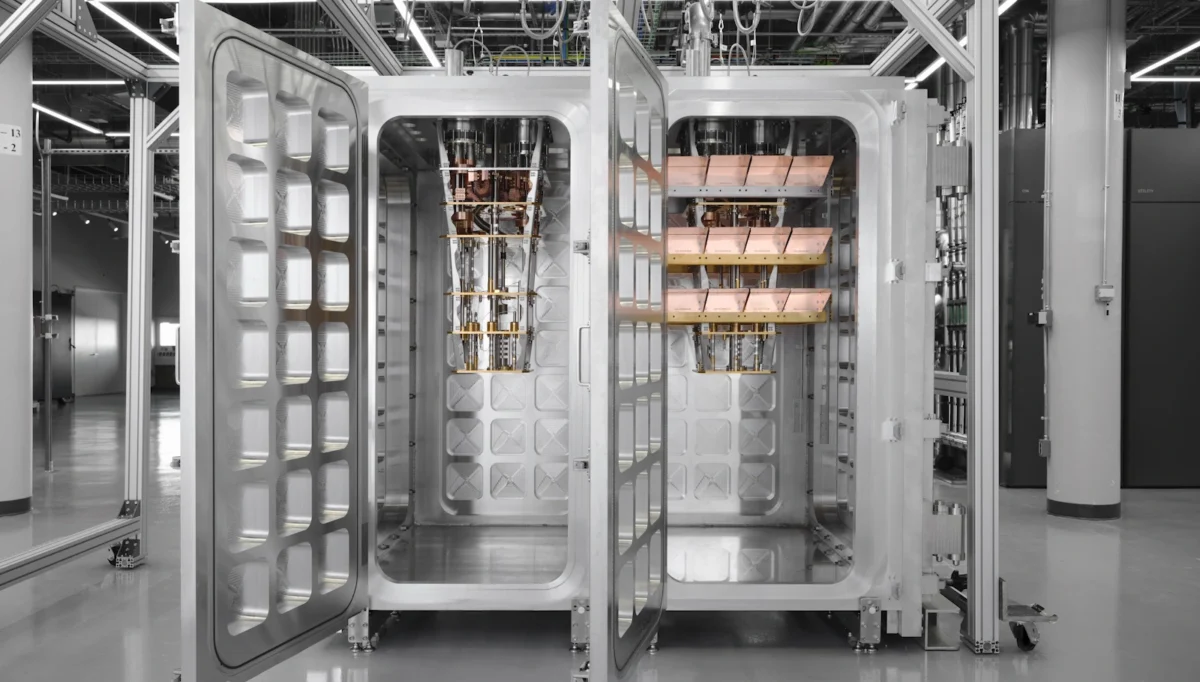
IBM moves the world one step closer to large-scale, fault-tolerant quantum computing

It’s one small step for IBM, but potentially one giant leap for mankind’s use of quantum computers. For IBM has successfully joined two cryogenic quantum modules together, providing the founding blocks to future computers formed of hundreds of quantum processors.
This level of scale is vital if quantum computers are going to tackle the next generation of problems. Computers that could run billions of operations, accelerating the development of drugs, materials and providing countless scientific breakthroughs.
In the immediate future, this week’s announcement takes us an important step closer to the development of IBM Quantum Starling. Last year, IBM provided its expected pathway to creating this large-scale, fault-tolerant quantum computer, which itself opens up the road to IBM Quantum Blue Jay.
It’s always difficult to make sense of the numbers, but Starling will able to run 100 million quantum operations using 200 logical qubits. Blue Jay will probably times that power by ten, effectively being a ten-strong series of Starlings.
This week’s IBM quantum computing breakthrough
To provide a greater insight, two IBM Fellows provided a live tour over video of the company’s facility in Poughkeepsie, a city in New York state.
“Today we’re already starting to develop new scalable modular cryogenic infrastructure that is going to enable IBM Quantum Starling,” said Jerry Chow, CTO of Quantum-Centric Supercomputing. “We’ve successfully assembled it, connected, and cooled our first operational modules.”
He went on to reveal the cryogenic compressors that cool the systems to a fraction above absolute zero, the temperature at which all thermal molecular motion ceases. Then we came to the quantum modules themselves.
“This is our first fully operational modular cryogenic architecture,” said Oliver Dial, Vice President of Quantum Systems. “This is not a concept model. This is not a rendering. This is real. If I go about one foot behind where my hand is right here,” at which point he placed the back of his hand against the silver frame, “I actually would be touching a plate that is at 15 millikelvin, 0.015 degrees above absolute zero. That’s more than 100 times colder than deep space.”
Connecting quantum modules
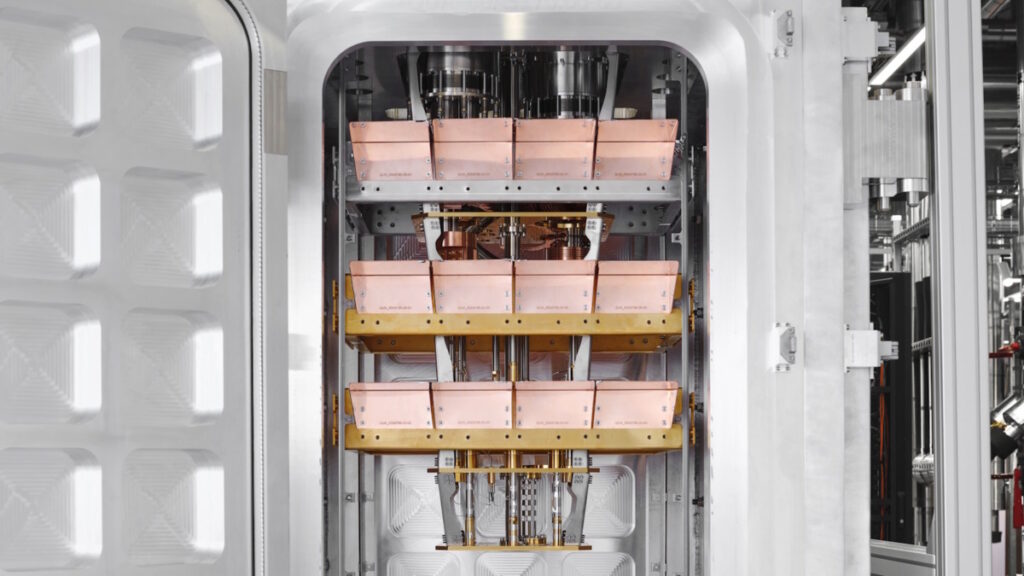
Whilst the creation and cooling of these modules is key, the big news was that IBM has solved the engineering challenge of joining them together. Chow and Dial showed us two modules, roughly eight foot tall by eight foot wide, which could then be joined together and taken apart as necessary. For example, delivery is much simpler if you’re sending single modules at a time.
“We think Starling is going to be about 12 of these connected modules, so we’re really well on our way,” said Dial. He later added that they are already testing the modules in real-world conditions, not idealised lab situations.
One other notable difference compared to what we’ve seen before is that each quantum processor sits is in a golden rectangular box, rather than the cylindrical shape we’re used to seeing. This means IBM can move them close to one another to make them easier to connect. Each module contains up to four quantum processors.
So the engineering is effectively complete. Now comes the testing and the first rollouts. IBM said to expect a full demo later this year, meaning we roadmap remains on course for the release of Starling itself in 2029.
About The Author