Trending Topics

 Trending
Letter from America: How Trump’s first year has transformed the US technology scene

On January 20, 2025, in the chilly Capitol Rotunda in Washington DC, Donald Trump was sworn in as the 47th president of the United States. And then the parties began.
A US presidential inauguration night is a single solemn occasion and then a series of networking events – and the tech industry was by far the biggest contributor, doubling the traditional biggest spender – finance – to the tune of over $40 billion. Several tech bosses, who had paid a million dollars apiece to the event’s inauguration fund, watched on with some uncomfortable expressions.
Google’s Pichai exchanged polite smiles with Jeff Bezos, Zuckerberg – who had banned Trump from Facebook and Instagram for two weeks after the January 6 rioters wandered through that Rotunda – did his best to look calm. Tim Cook’s default mordant mode was only heightened by the threat of tariffs on Chinese suppliers that could see iPhone prices skyrocket. And everyone present had seen their companies lose value since the election result.
Savvy IT buyers had been stocking up on hardware since the election results. No one builds volume kit in America any more and the proposed tariffs were either going to damage profit margins or push up prices. Little wonder the election sparked more upgrades than the hardware demands Microsoft has imposed for upgrading to Windows 11.
Tariffs have certainly raised prices – and this instability will continue in 2026, as the increased costs are passed on to buyers – but the capricious nature of their implementation means the effects have been less than was feared.
Sadly for Trump, there’s no sign that American companies are moving manufacturing back home – it’s just too big a hit on profit margins still.
Job losses: From Elon Musk’s DOGE to AI
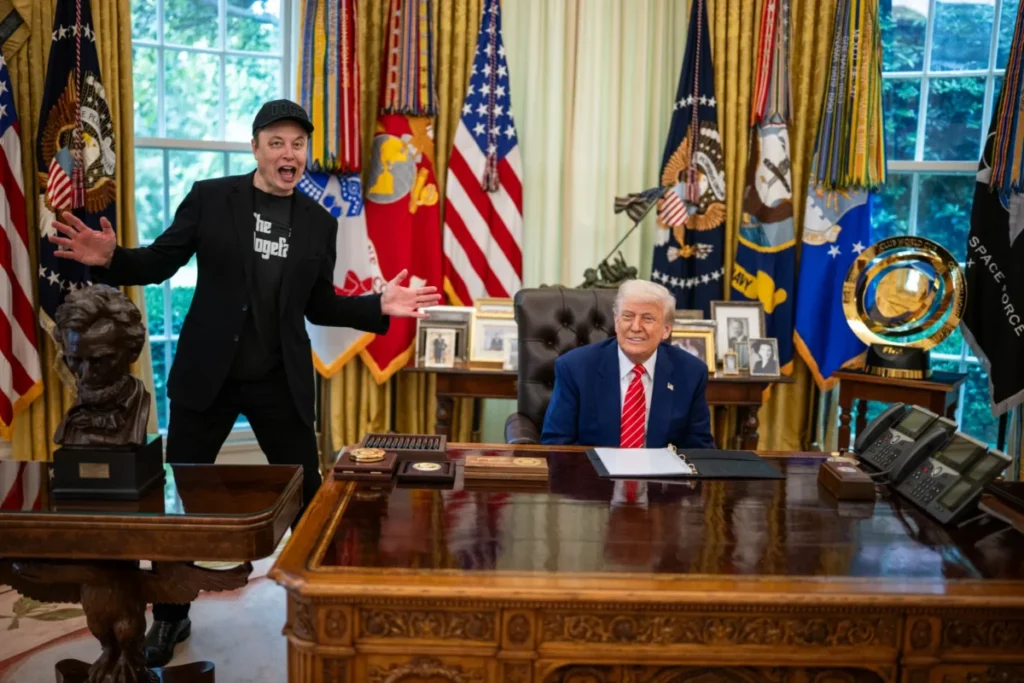
Of all the attendees at that inauguration, Elon Musk’s smile shone the brightest. As Trump’s biggest donor, the so-called First Bro spent the first half of the year terrorizing government employees, including many of those who regulated his companies, with the newly formed Department of Government Efficiency.
The $2 trillion in promised efficiencies failed to turn up however, and Musk was accused of plundering US government databases to little good effect. After a spectacular falling out with the president, Musk retired to spend more time with his ailing businesses.
Some billed 2025 as the year AI really invaded operating systems but, to quote Bachman-Turner Overdrive, you ain’t seen nothing yet. In December, Trump banned US states from regulating AI, meaning laws in California, Texas and others were vetoed. So Americans are stuck with whatever AI slop is poured at them..
There’s also the effect of AI on the jobs market. An estimated 150,000 tech workers lost their jobs in 2025 and that won’t slow down in 2026 as companies hunker down for an expected recession and hope AI will pick up the slack.
Junior-level hiring – particularly in the security field – is dire and, despite very mixed results of using AI to replace human workers, there’s no sign of the trend letting up. AI is “good enough” in management thinking and a great way to cut costs for the next quarterly results.
Imports and exports: London welcomes Waymo
One American AI import to the UK that’s going to be particularly noticeable is the introduction of Waymo taxis in London in 2026. Having tried them, the cars are the safest drivers in San Francisco (admittedly against a low baseline) and, once you get over the weirdness factor, can be quite fun. However, London’s taxi drivers may be tempted to take action – either by protesting or taking a more hands-on approach to disabling the competition.
But beware, if London suffers a blackout avoid Waymo rides. On December 20 a massive power outage hit huge swathes of San Francisco, knocking out power to a quarter of residents and taking down traffic signals and cell phone towers. Waymos stopped dead in the streets as a result, unable to decide what to do. Services have now resumed but it’s a warning that the bugs haven’t totally been ironed out in the service.
A huge sticking point in the US next year is H-1B visas. These were designed 20 years ago to bring in outside talent and fill skills gaps, but have been latterly used to sack domestic workers in favour of immigrant staff who keep wages low and will work lots of unpaid overtime for fear of being sacked and deported, along with their families.
Now any visa application comes with a $100,000 fee. Amazon is going to be hit hardest by this, so no wonder Bezos was looking so uncomfortable. But almost all tech firms have adopted employing compliant H-1B workers and many are lobbying hard for exemptions to the fee or a change to the rules. As Wall Street is fond of saying, it may be a TACO situation – Trump Chickens Out Again.
All in all it’s looking like an interesting 2026 is in the offing, both here in the US and around the world. Will it be tears for Trump, or triumph? We shall see, and the rest of the world looks on in hope.
Read more views from across the world
About The Author

Iain Thomson
NEXT UP