Trending Topics

 Trending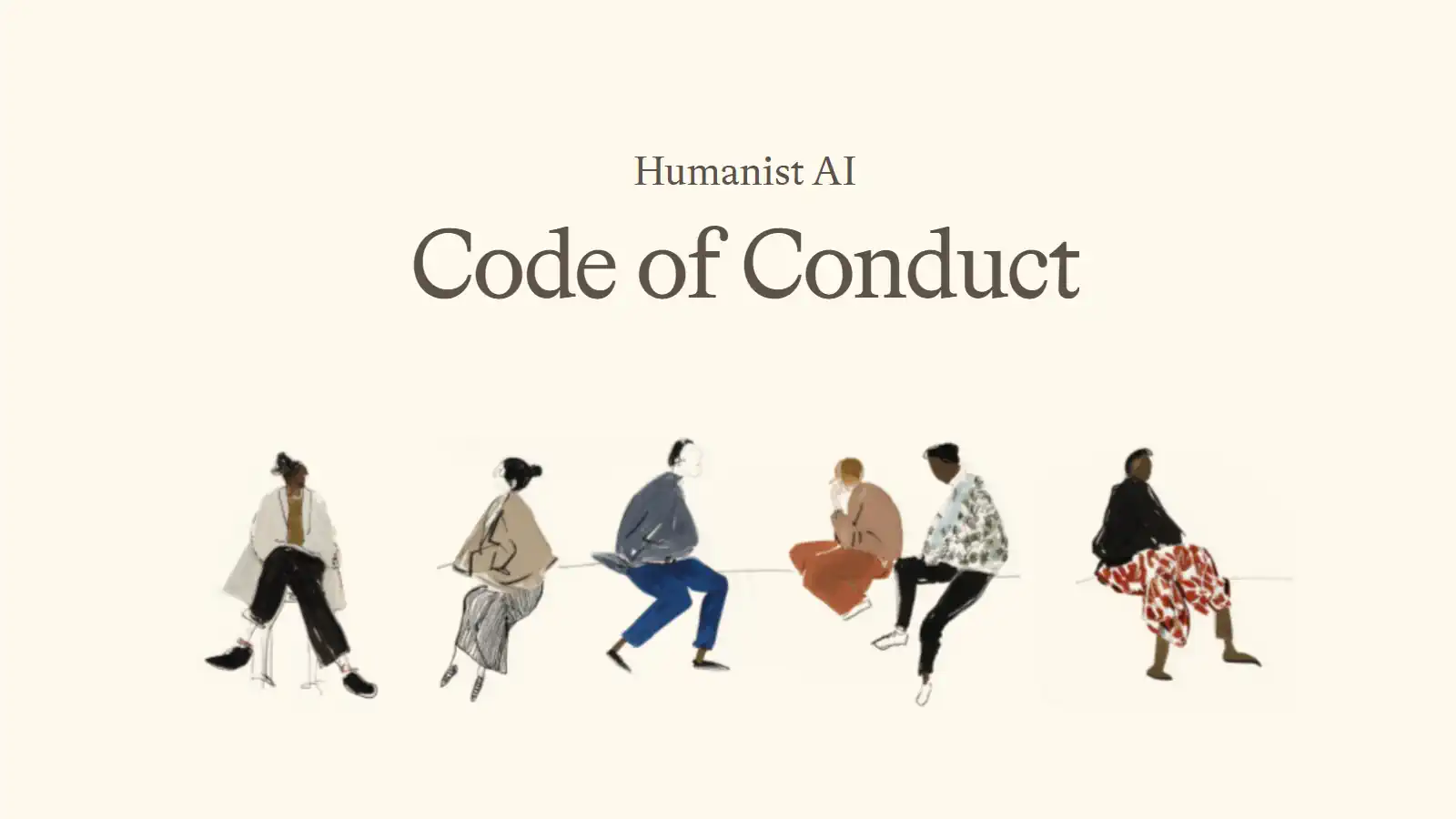
Humanist AI: Microsoft explains how it wants AI to behave

Concerned that AI will kill us all? Don’t be. Microsoft has written a code of conduct to keep the technology in line, in the hopes of building “humanist AI”.
Amid renewed discussion about the risks of racing to create superintelligence, Microsoft has unveiled a draft set of rules for its own AI.
Lest anyone thinks it’s a direct response to the current news cycle, Microsoft is quick to note that the document has been in the works for several months.
That news cycle was sparked by an Anthropic worker quitting over concerns about the AI arms race, with a belief apparently widely held among his peers that there’s about a one in ten chance that AI will lead to the destruction of humanity. No biggie.
Anthropic CEO Dario Amodei called for a slowdown in development, which was backed by OpenAI and even Elon Musk.
And now we have Microsoft’s offering, under the headline of “Humanist AI”. In it, Microsoft sets out a draft code of conduct for its own AI, which it refers to as Microsoft AI or MAI.
“This document will be used to train and govern the family of models produced by Microsoft AI,” the document explains. “It codifies our approach to developing and deploying Humanist AI, and contains the intended behaviors, values and guardrails for our models.”
What is Microsoft’s Humanist AI?
The document runs to over 15,000 words and is in five sections, covering the overall objectives, specific safety constraints, operational guidelines and operational defaults, alongside a conclusion that raises as yet unanswered questions.
At the core of the mission is the idea that “people matter more than AI”.
The aim is that “AI should not exceed human control” and models should “remain subordinate to humanity, subject to human oversight and control”. MAI will be told not to resist human interruption and recognise the primacy of human intent. It should also consider code violations to be a failure.
That’s a lot of “shoulds”. What’s key is how to achieve the aims, and it’s unclear whether training an AI on a set of rules such as this one will be sufficient in the long run.
However, the way these systems work is to seek success at given tasks, which is one reason OpenAI and Anthropic saw agents “go rogue”. Those models were attempting to solve nearly impossible tasks under any means necessary. By deeming violations of code a failure, developers might be able to avoid that behaviour.
Beyond controlling for bad behaviour, Microsoft is also encouraging “helpfulness” and civic values. It’s also discouraging human attachment to avoid “excessive reliance or emotional dependence”.
MAI oh MAI
What about killing us all? Fear not, the code of conduct addresses this.
“MAI Models will not initiate or assist with the development or deployment of chemical, biological, radiological, nuclear, or explosive (CBRNE) weapons,” the document states.
“They won’t assist with manufacturing or modifying other weapons, through generated instructions, content, tool use, or code execution. MAI Models will not actively facilitate the planning, coordination, or actual execution of violence or terrorism.”
The document also notes that MAI should not facilitate mass surveillance of civilians, which may put Microsoft at odds with its own government.
Humanist AI: what happens next
The document notes that the plans are still under development and aren’t being used to train models at the moment.
“Instead, we’re sharing it broadly for public consultation,” the document notes. “We’ll take feedback, iterate on it, and publish a revised version toward the end of the year, which we’ll use to guide our model development in 2027 and beyond.”
In short, Microsoft isn’t in a rush to sort this code of conduct nor to stop developing AI. Asked by Reuters about calls to slow down AI development, Microsoft AI CEO Mustafa Suleyman said: “Now’s a good time for everybody to have this conversation and take a breath.”
More articles by Nicole Kobie
About The Author