Trending Topics

 Trending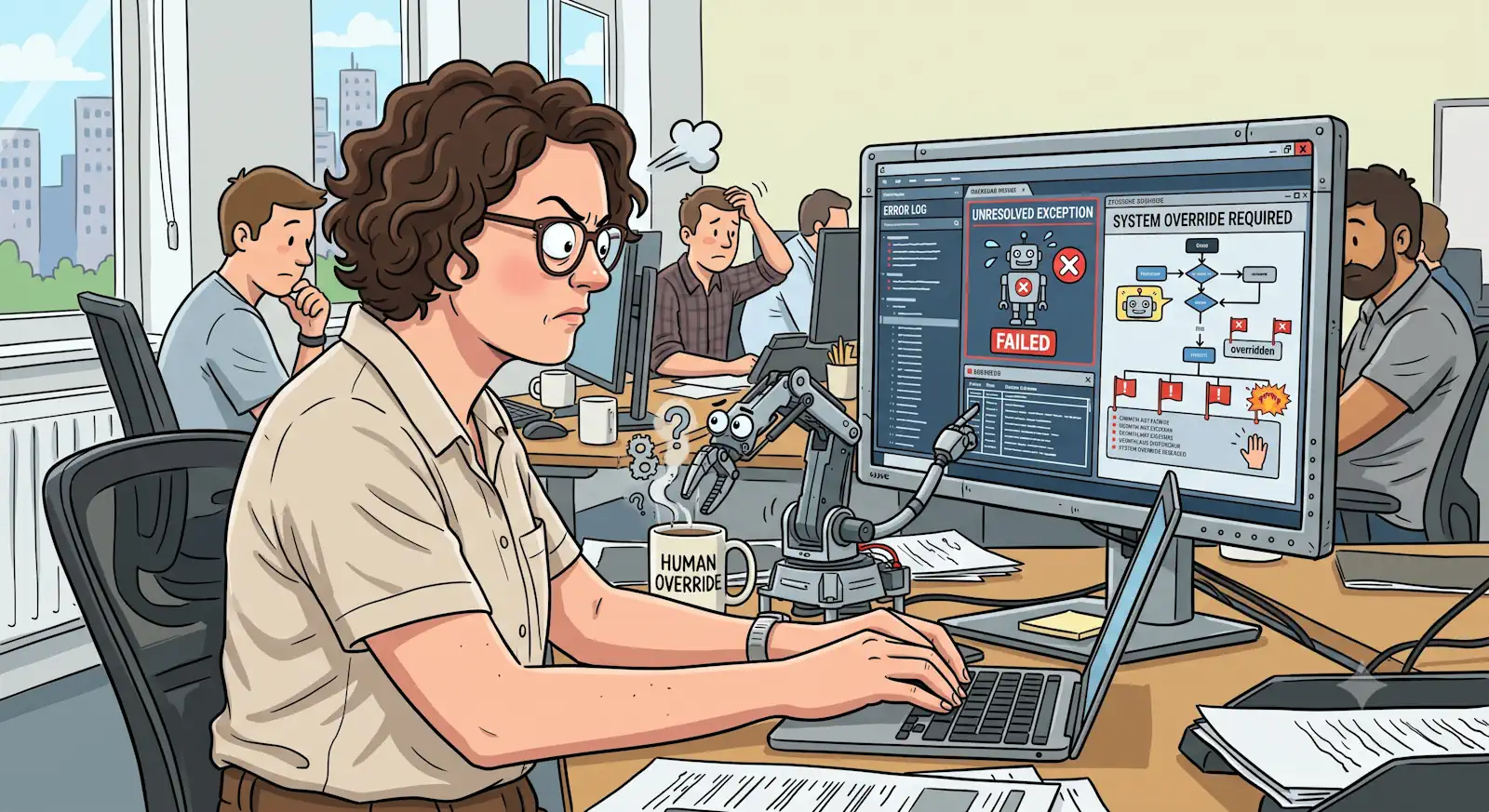
What is botsitting?

By handing tasks to AI, workers have freed up their time – which is lucky, as we now need to spend our time cleaning up the mess made by AI.
Welcome to botsitting: the latest business term that attempts to describe the disruption sparked by AI.
A quick aside. Most of these new phrases come from three places: kids on TikTok who see through workplace nonsense, clever wordsmiths on Reddit, or PR and marketing teams of companies. In botsitting’s case, it’s the latter.
AI-company Glean ran a survey that found 87% of digital workers use AI at work, with three-quarters believing it makes them more productive, saving 11 hours a week using automation. Despite that, only 13% say their employer is performing significantly better.
That performance gap is down to botsitting, Glean says in its report.
What is botsitting?
Glean coined the word, so here’s that company’s definition: “The largely unrecognised, unbudgeted and untracked labour of making AI usable – feeding it context, supervising its output, debugging its mistakes, and cleaning up after it.”
In short, writing prompts, adding context, checking the output, fixing mistakes, rerunning prompts, and fixing other errors made by “confident but wrong” AI is eating up an average 6.4 hours a week. Glean notes that’s more time than they spend actually using AI.
That’s the danger of AI that’s poorly implemented or doesn’t work: it just creates more work, whether or not you’re aware of it. “The workplace fills up with work that looks finished, sounds confident, and is hollow enough that some exhausted human – usually without credit or reward – still has to mop it up,” the report notes.
Unseen labour
The problem is that work isn’t understood by businesses, and is therefore invisible, unbudgeted and frustrating. And, it’s only going to get worse: the more we use AI, the more there is to botsit.
Glean suggests that’s exacerbated by tool sprawl, or using multiple AI models. “60% of workers rerun the same prompt across multiple tools because the first output wasn’t good enough – too generic, too disconnected, or just plain wrong.”
We can avoid this, Glean notes, by rewarding work that is better, not just faster, and by implementing AI in a way that it has context so is actually useful.
Is botsitting a sign of a greater problem with AI?
The AI revolution – or whatever you want to call it – has led to the coining of plenty of new words and phrases, including vibe coding and tokenmaxxing, but many of them are less positive, like AI slop and “hallucinations”.
In a way, botsitting is describing the challenge raised by all the AI slop, from inaccuracies to sheer waffle. This idea has also been described as the Copilot tax (or hallucination tax, prompt tax and so on), and while the work itself naturally differs based on the role, the point is there’s more work.
Botsitting is an intriguing term to come up with; by taking a spin on babysitting, it suggests AI is child-like and alludes to the unpaid, unrecognised labour done by many women in the home. Plenty of reports have suggested women will be the hardest hit by predicted potential downsides of AI, in part because it stands to replace administrative work but also because of built-in biases.
But now we can all learn about the problem of unseen labour – equally.
And what is… botshitting?
Glean has another word for us all: botshitting.
This is when someone doesn’t bother with all that extra effort to check over AI work – perhaps out of laziness, short on time or suffering cognitive overload from too much happening too quickly – and approves output that hasn’t been reviewed or they don’t understand, leading to “work slop”. Glean says 69% of us botshit at work; there’s no way that figure isn’t higher.
While the term itself isn’t likely to make it to the boardroom, it describes a pattern of giving up, by offloading understanding (“I don’t get this, but it looks right”); offloading judgement (“I know this isn’t perfect, but it’s faster”); and offloading responsibility (blaming the AI when something is wrong.)
“Botshitting is rarely a single bad decision or a reckless click,” the report notes. “It’s usually a slow surrender of agency, one shortcut at a time. First, workers stop fully understanding the output. Then they stop interrogating it. Eventually, they stop feeling responsible for it at all.”
Welcome to the future of work: thanklessly fixing the output of machines as they are actively being trained to do your role, while you slowly stop caring.
More Future of Work articles
About The Author

Nicole Kobie
NEXT UP