Trending Topics

 Trending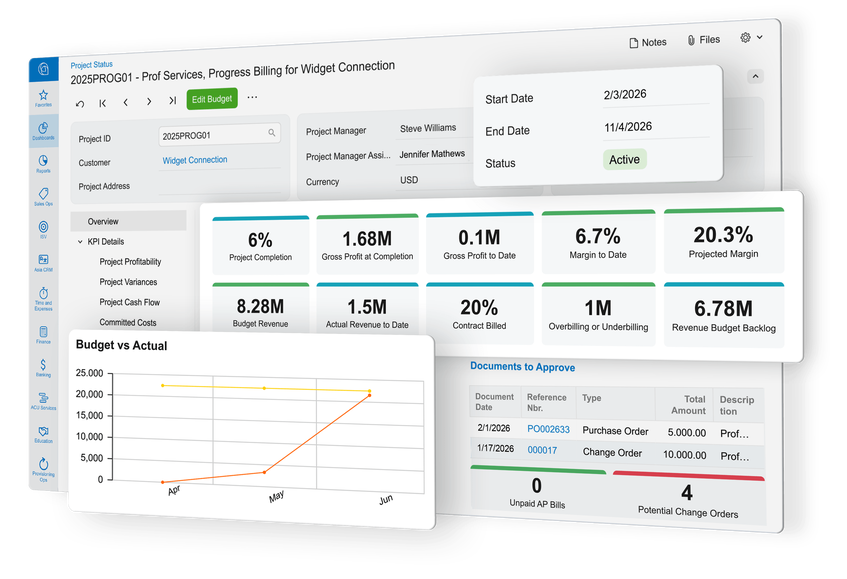
Cloud ERP for SMBs: How Acumatica positions itself against competitors

A $60 million distributor still using an on-prem ERP, disconnected warehouse tools and Excel-based demand planning has a problem. And it will sound familiar. That business wants AI, e-commerce and supply chain visibility, but its systems were built for yesterday’s operating model.
That is where cloud ERP for SMBs has become a strategic battleground.
Acumatica’s pitch is not that it can out-muscle Oracle NetSuite, Microsoft Dynamics or Infor. It is that mid-market manufacturers, distributors and construction firms often need speed, flexibility,and predictable economics more than global-suite complexity.
That positioning is gaining credibility. Nucleus Research named Acumatica, Epicor, Infor, Oracle NetSuite, Rootstock and SYSPRO as leaders in its 2026 SMB ERP Technology Value Matrix.
Why cloud ERP for SMBs is getting more competitive
The market is crowded.
NetSuite remains a default shortlist option for fast-scaling companies, Microsoft Dynamics 365 benefits from the wider Microsoft stack, and Infor has deep industry functionality. Acumatica’s opening is narrower but defensible: domestic mid-market firms, often in the $10 million to $100 million revenue range, that need industry depth without enterprise-level overhead.
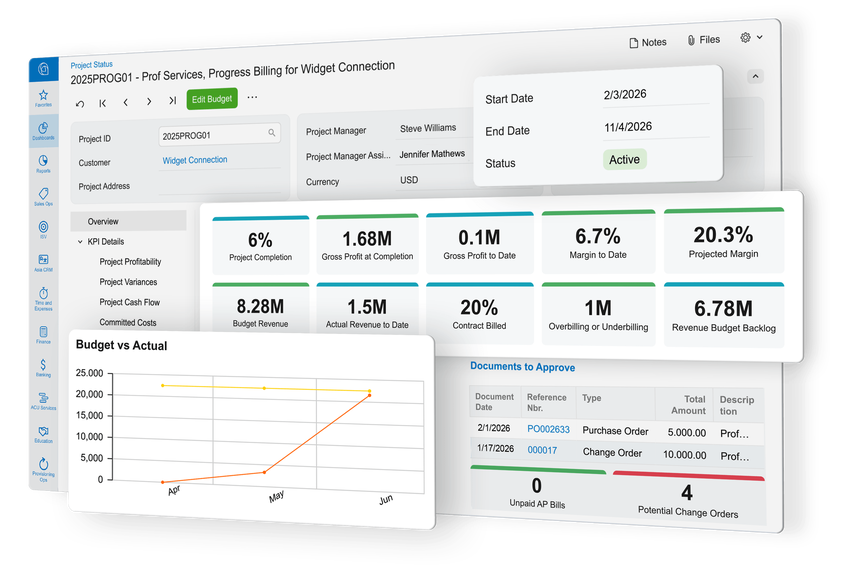
Acumatica Cloud ERP backs this with editions for manufacturing, distribution, construction, retail, professional services, and general business. It also emphasizes low-code customization, mobile access, dashboards, and workflows that business users can adapt without heavy IT dependence.
Economics may be Acumatica’s sharpest weapon
Licensing is a major differentiator.
Acumatica says its pricing is based on applications, expected usage, resource requirements, and deployment preferences, not user seats. NetSuite, by contrast, says its annual license includes the core platform, optional modules, and number of users.
That matters for SMBs that want shop-floor staff, warehouse teams, finance, sales, and managers inside the same system. Per-user models can encourage rationing access; Acumatica’s model encourages broader adoption, assuming transaction volumes remain moderate.
Related reading: Acumatica AI Studio makes anomaly detection part of everyday ERP
The partner-led bet
Acumatica also competes through ecosystem depth. It sells through Value-Added Reseller (VAR) partners and relies on Independent Software Vendors (ISVs) to extend functionality for micro-verticals. This allows Acumatica to look more specialized than its size suggests, especially when a buyer finds a strong partner with direct experience in its niche.
The risk is that partner quality becomes part of the product. Poor implementation, limited local capacity, or weak industry knowledge can quickly erode the value proposition.
When Acumatica is the right fit
Acumatica deserves serious consideration when an SMB has single-country operations, many potential users, moderate transaction complexity, heavy customization needs, and a strong fit with one of its industry editions. NetSuite or Infor may be stronger for global consolidation, complex multi-entity compliance, and highly regulated operations.
The bigger lesson is that cloud ERP for SMBs is shifting away from monolithic suites. The winners will combine vertical depth, usable AI, pragmatic analytics, and partner ecosystems that make ERP feel less like a multi-year transformation and more like an operating advantage.
Worth a read
About The Author

Kihara Kimachia
NEXT UP