Trending Topics

 Trending

Abnormal AI finds 46% of security professionals struggle to define normal AI agent behaviour

Abnormal AI’s 2026 State of Behavioral Security Report found that 46% of security professionals surveyed rated their organisations “not at all effective” at establishing and maintaining a baseline for AI agent behaviour. Yet 43% picked AI agents as the area that would receive their greatest investment in behavioural monitoring over the next two years, ahead of API integrations at 14%.
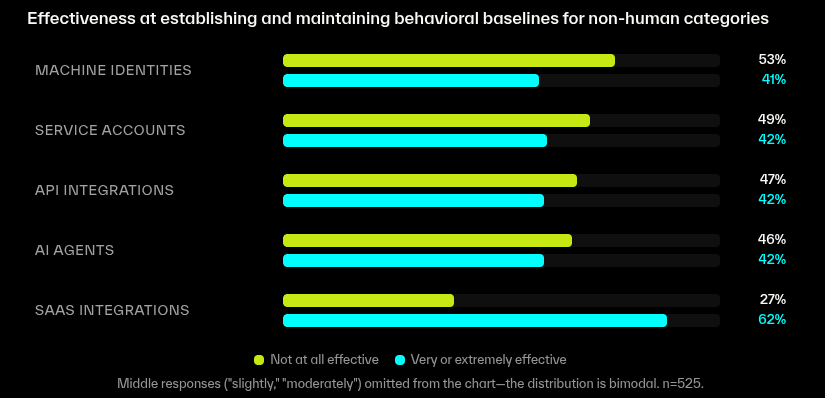
AimPoint Group surveyed 525 cybersecurity professionals at organisations with at least 1,000 employees across six countries on Abnormal AI’s behalf. About 85% held CISO-level or security operations leadership roles. The results reflect how respondents rate their own organisations, not how those organisations performed in a detection test.
The blind spot extends beyond AI agents
A behavioural baseline describes what an identity normally does, giving security teams a reference point when something changes. A service account that runs a nightly backup has a fairly predictable job. A support agent might legitimately consult several systems to resolve one ticket and only one to resolve the next. A change in activity, on its own, tells an analyst little about whether the agent has strayed.
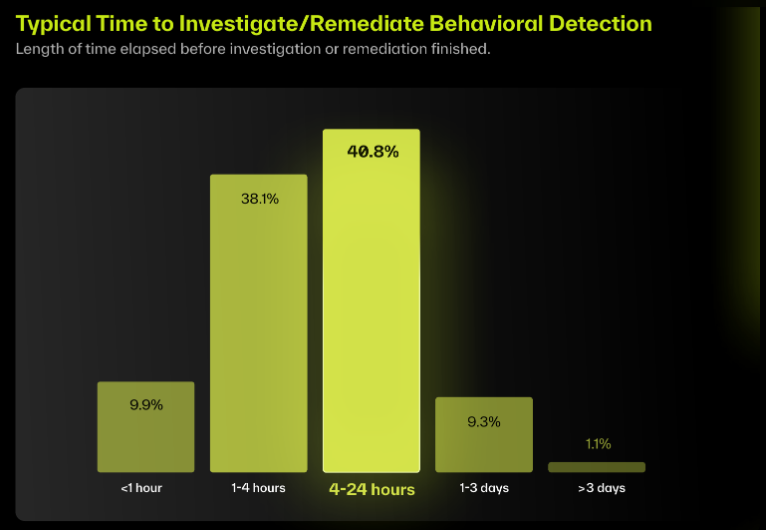
The survey exposed a broader gap: 72% said they were better prepared to detect unusual activity from non-human identities than from people, yet 53% said they did not define normal behaviour for machine identities at all. And when an alert does fire, 51% said they need at least four hours to investigate and remediate it, according to Abnormal AI’s analysis.
For context, four hours is enough time for an attacker or a compromised AI agent to steal practically an entire company’s core digital assets, ranging from hundreds of gigabytes to several terabytes of data. AI agents actually make it worse because a human hacker had to spend part of those four hours manually searching through folders to figure out where the good stuff was hidden.
A hijacked AI agent eliminates the “searching” phase and can be done stealing the highest-value secrets before a human security analyst has even finished reading the initial alert logs.
An alert needs to tell a story
As we have reported, AI agents can act as privileged insiders, accessing data, calling tools, and triggering workflows. Knowing that an agent had permission to open a record is useful. Knowing which task prompted it to open that record is what helps an analyst decide whether it belonged there.
That is also why agents need a stopping rule.
Start with a high-risk workflow: give the agent its own identity and a named owner, record the task behind each sensitive action, and specify when the agent must stop and ask for help. Then test whether an analyst can reconstruct an unexpected action from the logs. If the logs show only which credential was used, the team may know what happened without knowing why.
About The Author