Trending Topics

 Trending
What is Gemini Nano Banana Pro?

Ten days ago Google unveiled Nano Banana Pro, built on the recently released Gemini 3 Pro. It’s talking up the model as offering “studio level quality” for generating and altering images, and for once the results are living up to the hype.
Certainly the first wave of reviews have been overwhelmingly positive. “With pixel-level terrifying details and perfect Chinese character rendering, it tells the world who is the real king of AI image generation” wrote 36kr, a Chinese-focused website.
“Overall, the shift from Nano Banana to Nano Banana Pro reflects a clear evolution from a fast prototyping tool to a fully capable, production-ready AI image editor,” wrote industry trends website Analytics Insight.
In short, experts think that Nano Banana Pro can indeed be “your new creative partner”, to use Google’s jargon. In this article, we explain what Nano Banana Pro is and why you almost certainly want to give it a try.
Unpeeling different Bananas
The first version of Banana, built on Gemini 2.5 Flash, was released this August, offering what Google described as “speed and cost-efficient image generation”.
While its successor is slower, Nano Banana Pro provides higher-fidelity pictures and provides users with more creative features, including being able to change the lighting in their images, alter aspect ratios and adjust camera angles.
Google says the Pro version of Nano Banana offers higher quality text content too. The model will now provide “correctly rendered and legible text directly in the image”, with more textures and fonts, Google said. It can also create text across different languages, which can then be added to images.
As the article on 36kr shows, that appears to be true for Chinese characters. “The generated details [by Banana Pro] can only be described as ‘terrifying’,” the website says. “Especially, the Chinese characters generated before [with Nano Banana] were like ‘scribbles’, but now the level of Chinese character generation is top-notch.”
According to the company, it has improved Nano Banana Pro’s ability to create text-heavy content such as infographics and “educational explainers” using information garnered from Google Search.
To see how things have improved, compare how Nano Banana coped with the instruction “create an infographic showing the evolution of AI image generators” with what Nano Banana Pro produced:
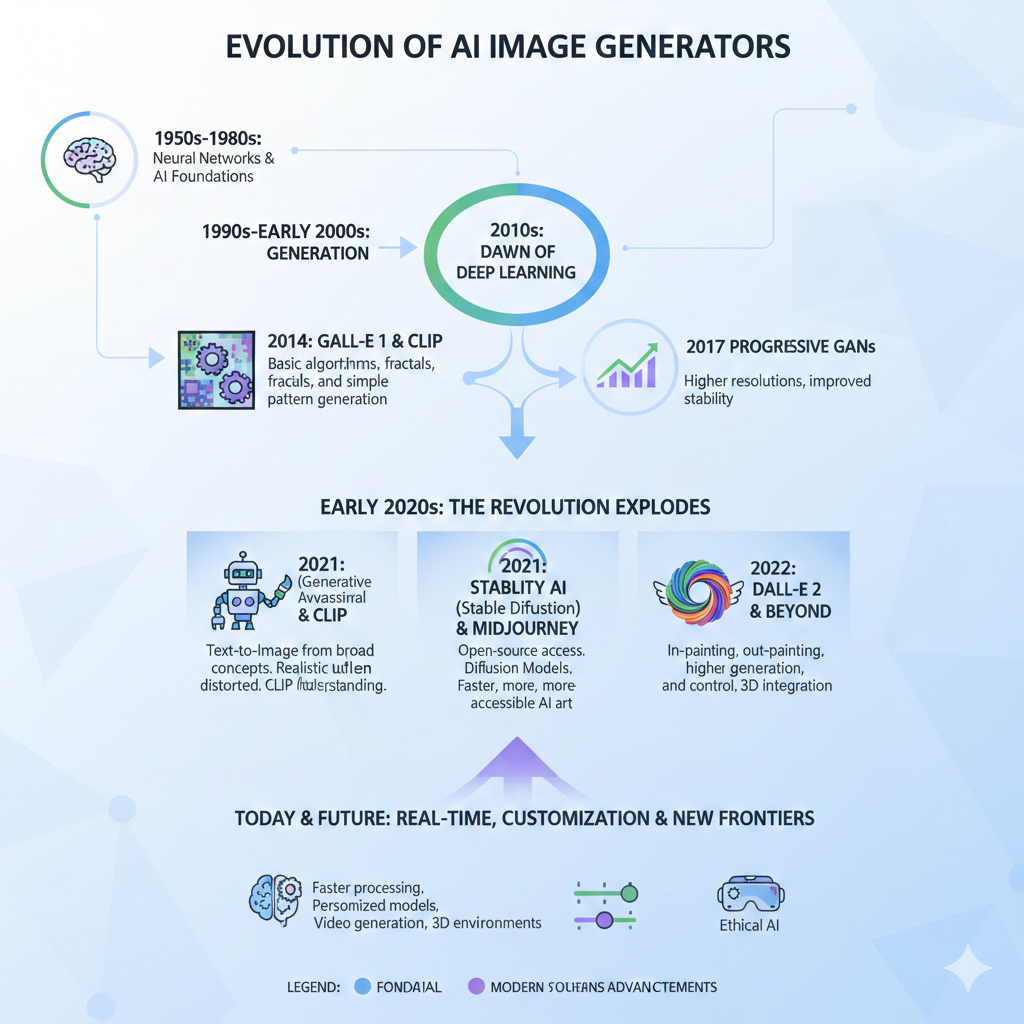
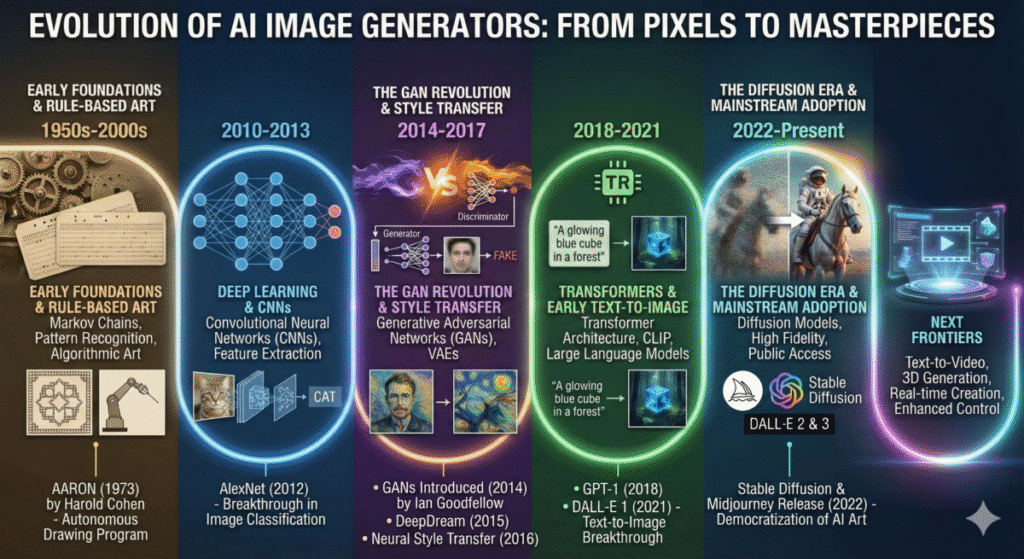
Google has also upped the number of elements that can be blended together in Nano Banana images. The Pro version can tackle up to 14 elements or five people’s images, while keeping the elements consistent in the pictures it creates.
How can you access Nano Banana Pro?
Nano Banana Pro is already available through the Gemini app and NotebookLM, and will roll out to other Google apps including Slides, Vids, AI Studio and Vertex, Google’s AI development platform.
Can I use Nano Banana Pro for free?
Yes, but the image model has already proved so popular that Google appears to have rowed back on how many times users can create images with Nano Banana Pro if they don’t have a Gemini subscription.
According to reports, when Nano Banana Pro first launched, users could create three images – Google subsequently dropped that to two and noted that “daily limits may change frequently”.
Will people know generated images are made by AI?
Like its non-Pro predecessor, Banana Pro can alert users to when an image is generated by AI, using its SynthID watermarks.
Images made by Nano Banana Pro will feature a digital watermark that’s invisible to human eyes, but which can be spotted by Gemini, even if the image is subsequently altered.
And, if users are curious if an image or other content has been created by AI, they can upload it to the SynthID portal. Google will then flag up if it’s carrying the watermark that confirms it’s been made using artificial intelligence.
More articles
- Google unleashes Gemini 3 with a heavy emphasis on vibe coding
- Google Gemini Enterprise enters race to become your company’s all-seeing AI
- Biggest ever update for Chrome as Google brings more Gemini and AI to the browser
About The Author

Jo Best
NEXT UP


