Trending Topics

 Trending
CrowdStrike’s 2026 Global Threat Report: Why breakout time has collapsed to 29 minutes

Breakout time has become one of cybersecurity’s most uncomfortable clocks according to CrowdStrike’s 2026 Global Threat Report. The average eCrime breakout time, the period between initial access and lateral movement, fell to just 29 minutes in 2025.
The fastest observed breakout took 27 seconds.
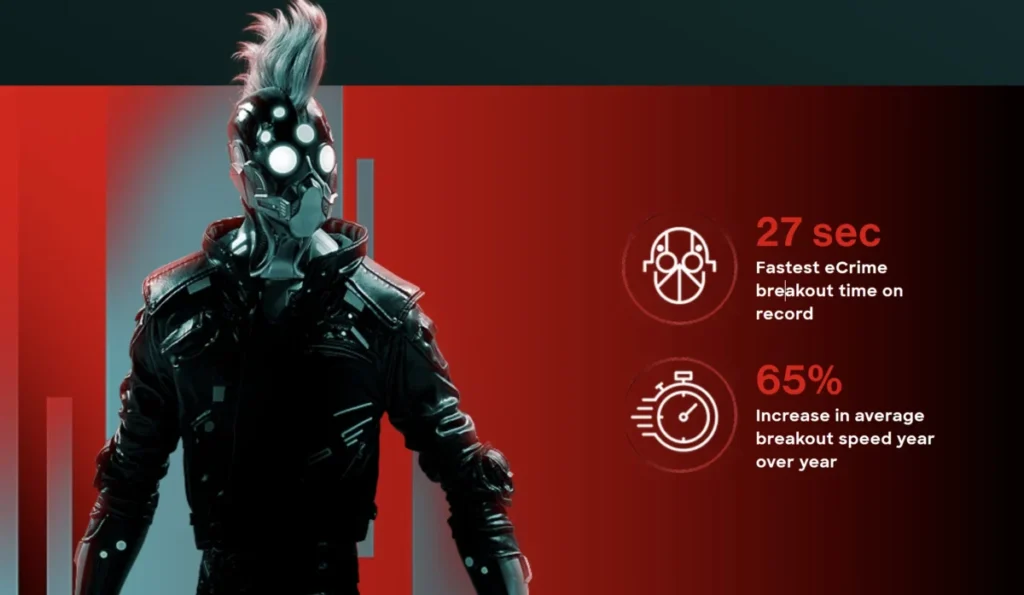
That is not merely faster hacking; it is a shrinking window for human-led defence.
The bigger story is that adversaries are no longer waiting for malware to do the heavy lifting. CrowdStrike says 82% of detections in 2025 were malware-free, while attacks by AI-enabled adversaries rose 89% year on year.
Instead of dropping obvious payloads, attackers are increasingly using valid identities, SaaS access, cloud infrastructure and trusted workflows to look like normal business activity.
That is why “breakout time” matters. If an attacker can move from one system to another in under half an hour, SOC teams cannot afford investigation queues measured in hours.
Triage, identity telemetry, session risk, privilege escalation and automated containment all need to happen at machine speed, with analysts brought in to make judgement calls rather than manually stitch together the first facts.
Identity is now the intrusion path
Attackers are now “blending into legitimate access paths” and relying less on malware. That should change how defenders prioritise controls. Static secrets, long-lived tokens and loosely governed service accounts are no longer hygiene issues. They are breakout accelerators.
The practical response is not to buy another dashboard. SOC teams should tune playbooks around identity-first detection: impossible travel, unusual token use, abnormal SaaS access, privilege changes, suspicious OAuth grants and lateral movement from non-human identities. Endpoint telemetry still matters, but it is no longer enough when the attacker’s first move looks like a successful login.
The uncomfortable takeaway is this: defenders are not just racing malware anymore. They are racing authorised-looking activity. In that environment, the best teams will be those that can detect intent before a valid session becomes a full-blown breach.
More CrowdStrike news
About The Author

Kihara Kimachia
NEXT UP


