Trending Topics

 Trending
Zero trust AI security for the agentic era: How Zscaler’s Symmetry acquisition rewires enterprise security

The enterprise security perimeter has dissolved. Now, the identities acting inside that perimeter are not always human. Zscaler’s planned acquisition of Symmetry Systems signals that Zero Trust AI security must evolve for autonomous agents, temporary permissions, and machine-speed data access.
That is critical because agentic AI breaks one of security’s most comfortable assumptions: that identities are stable, visible, and mostly human. AI agents can spawn tasks, inherit privileges, call tools, and touch sensitive data before a traditional control stack understands what happened. As we previously argued in our coverage of why companies must stop just talking about zero trust, the value of Zero Trust comes from enforcing least privilege, not just adopting the label.
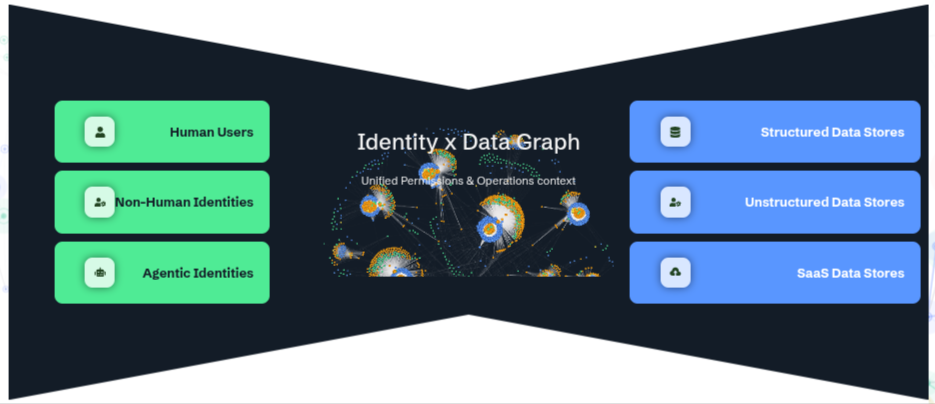
Zscaler announced the Symmetry deal on May 21, 2026. Symmetry’s core asset is an access graph that maps how human and non-human identities, applications, and data connect across SaaS, cloud, data stores, and AI systems. Combined with the Zero Trust Exchange, that visibility could help security teams govern agent-to-application and agent-to-agent communication at scale.
Why zero trust AI security needs an access graph
The point is not simply better monitoring.
Zero Trust AI security requires policy enforcement that understands relationships: which agent accessed which data, through which identity, and on whose behalf. Zscaler says this can support least-privilege policy building, data lineage, anomaly detection, and blast-radius analysis when an agent or identity is compromised.
This fits Zscaler’s wider repositioning from network security vendor to AI-secure edge platform. In June 2026, it announced new agentic AI security capabilities, including AI Broker, Endpoint AI Security, and AI Access Graph, alongside AI Protect enhancements for asset discovery, secure access to AI tools, and AI infrastructure protection. That aligns with our interview with James Tucker, Head of CISO International at Zscaler, who warned that AI is accelerating exploitation and forcing businesses to modernise infrastructure.
The investor signal is also hard to miss.
Zscaler reported Q3 fiscal 2026 revenue of $850 million, up 25% year over year, and more than $3.5 billion in annual recurring revenue. For buyers comparing Zscaler with rivals, Zero Trust AI security is becoming a platform question, not a point-product feature.
Enterprises should start by auditing AI identities, mapping data permissions, and asking vendors how they enforce least privilege for agents. Zscaler is betting the access graph will become as foundational to Zero Trust AI security as the firewall once was to network security.
About The Author

Kihara Kimachia
NEXT UP