Trending Topics

 Trending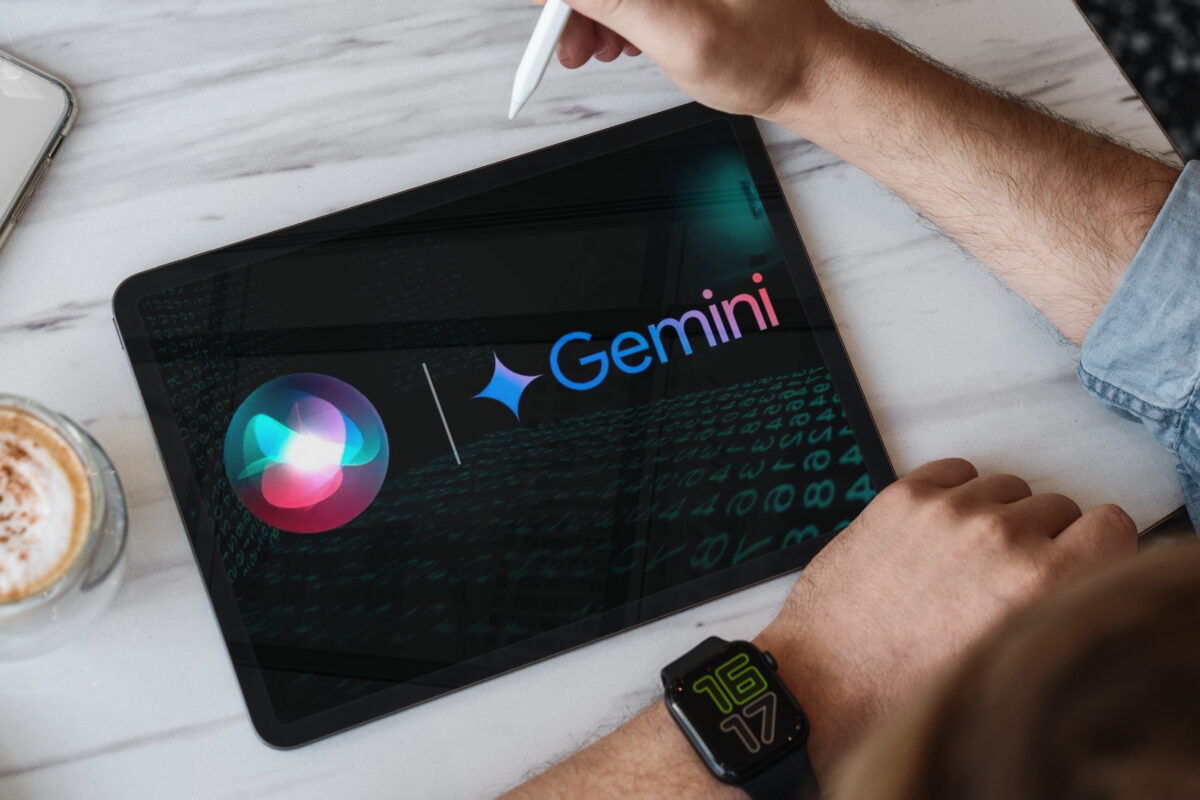
Why is Apple paying Google $1 billion to power Apple Intelligence?

Less than two weeks ago, Apple and Google made a quiet, joint announcement that they had “entered into a multi-year collaboration under which the next generation of Apple Foundation Models will be based on Google’s Gemini models and cloud technology”. We later heard that the deal will cost $1 billion per year.
Here, we poke under the bonnet to see why Apple is willing to pay such a huge sum to one of its biggest rivals.
1. Apple’s own models aren’t good enough… Google’s are
This is the fundamental reason. Over the past two years, Google Gemini and many other AI models have raced ahead with almost breakneck speed. Apple’s Siri, or Apple Intelligence to use the wider name for Apple’s AI services, has been bumbling along at a gentle trot. As a result, Apple has fallen behind in terms of reasoning, particularly in complex, multi-step tasks.
This is surely the main reason why John Giannandrea, at that point the man responsible for machine learning and AI strategy at Apple, “retired” in December 2025. Admittedly, we suspect, with a huge pension pot (he’s 62 years old) and with a long and successful career behind him.
Giannandrea was immediately replaced by Amar Subramanya, who for the previous 16 years had worked at, you guessed it, Google. When he left, he was the Head of Engineering for Google’s Gemini Assistant. We can safely assume that Apple knew what it was planning to do when it offered Subramanya the job, no doubt much earlier in 2025.
2. Apple already has a long-standing partnership with Google
Despite their fierce rivalry, Apple has worked with Google for years. But usually it’s Google paying Apple, most notably to place its search engine as the default across Safari (Apple’s web browser) on iPhones, iPads and Macs. Each year Google pays Apple billions of dollars for this privilege.
How many billions? Court documents from 2022 suggest Google pays Apple roughly $20 billion per year, which does make the $1 billion that Apple is sending the other way seem pretty reasonable.
3. Apple believes it can keep its users’ data private
Apple takes its users’ privacy far more seriously than any of its rivals. As a page on its website states, it is “committed to protecting your data”. This is such a key part of Apple’s brand that it will surely stand by it forever.
For instance, as part of the Google search deal it strips away location data. More generally, it states that “Safari minimises the amount of data sent to third-party search engines”.
It’s taking the same approach to the Google Gemini integration, as shown by this sentence in the joint statement: “Apple Intelligence will continue to run on Apple devices and Private Cloud Compute, while maintaining Apple’s industry-leading privacy standards.”
4. Google offers risk-free scale
Many commentators believe that we’re in an AI bubble as Amazon, Google, Meta, Microsoft and OpenAI invest – some might say gamble – trillions of dollars to build the next generation of AI supercomputing data centres. And even more money in the power stations required to keep them going.
Apple has made investments, most recently announcing that it “would spend more $500 billion in the US over the next four years”. That included a new factory in Houston for making “servers that support Apple Intelligence” along with “Apple Intelligence infrastructure and data centers”. However, it also includes investment in everything from training engineers and Apple TV+. It’s unclear how much will go on AI compute.
Google, by contrast, has already put its money where its promises are. In July 2025 it announced it was on course to spend $85 billion on AI compute alone, and that figure may well double in 2026.
Right now, Apple simply doesn’t have cloud capacity. It needs to partner with a company that can scale with demand. Google is an obvious choice.
5. Apple has form with OpenAI and ChatGPT
This isn’t the first time that Apple is partnering with a third party to improve Apple Intelligence. In December 2024, it announced that it would be “integrating ChatGPT into experiences within iOS, iPadOS, and macOS”.
For example, Siri can currently call upon ChatGPT for writing tools such as summarising documents, and it also uses it for complex requests. However, Siri will always ask for permission before sharing any user data – the Google Gemini integration is likely to be more deep seated. So Apple may ask you for permission, but only once.
6. The deal doesn’t harm Apple’s long-term vision
In a substack interview, Ricky Sutton interviews Stephen Nellis, Reuters’ Tech Correspondent. It’s an interesting read all round, but this quote from Nellis stands out: “[We understand that Apple is constructing this so the core AI service can be swapped out. It’s like it’s building a car, but in a way that it can swap out the engine at some point. Who knows, maybe it uses OpenAI, Anthropic, or Microsoft at a future date.”
All these are possible choices, but Apple has such deep R&D pockets that it surely harbours ambitions to create its own foundation models. Apple has recruited many AI engineers over the years, so it has the capability.
Apple also has form: unhappy with the CPUs on offer from Intel in the early 2000s, it invested hundreds of billions of dollars into its own Apple Silicon. These are now the M4 and M5 chips powering its MacBooks to almost universal acclaim.
When it comes to AI, Apple has stumbled. It has even broken promises. But only a fool would bet against it turning those fortunes around, and in a decade’s time there is every chance that this partnership will be seen as a stopgap deal rather than the shape of things to come.
More on Google Gemini
About The Author

Tim Danton
NEXT UP


