Trending Topics

 Trending
R-ai aims to disrupt paid media planning and buying with first purpose-built enterprise AI platform

Can AI replace your marketing team? No – but it can help cut down the workload.
That’s what Izzie Rivers promised at the launch of R-ai Technologies, an AI-powered media buying platform designed to help pull together expert knowledge, draft marketing plans and track results – and later this year even take on the role of automated activation of paid media, if publishers can align their technology to accommodate it.
Applying AI to an industry is hardly news these days, but Rivers wants to be clear on one point: this isn’t just an LLM wrapper. Instead, R-ai is an orchestrated platform with multiple AI models and built in security by design. “R-ai is an enterprise grade platform that does media planning and buying at scale, because you have to say scale at the end of everything,” she said.
Rivers said it was clear disruption was coming for her beloved media buying industry – which she’s been a part of for more than two decades – so 18 months ago she decided to step in and do the work herself. “We know in this industry that AI disrupted creative first, that was really the area where we saw a lot of innovation from the beginning,” she told attendees of the launch event in London. “But media planning and buying is definitely next now.”
Agentic AI media planning: What R-ai can do
The first stage of media buying is building a media plan. Users can start by typing in natural language what type of media plan they’d like to create, asking for data including costs, tactics for reaching new markets, and lists of possible publishers to work with. “It’s really highly technical, with large pieces of information, showing exactly what audiences you’re going to target,” Rivers said.
The next stage in media buying is known as activation, when campaigns are booked with publishers. Some require registering for a bespoke platform, others are manual, such as email threads or offline conversations. This stage isn’t yet included in R-ai, but the plan is to sign up publishers to the platform to allow activation to be fully automated by later this year, Rivers said.
The third stage is reporting, which R-ai also includes. “You get all the metrics back on what’s gone live, and you measure how many impressions, how many people did you reach, how many different websites,” she said, saying that can be used to inform future efforts.
In short, if all goes to plan, marketing teams will be able to build a media plan, set it in motion, and track the results – all without signing up an agency. “I think it’s the end of the media agency, they’ll evolve into something else,” she predicted.
Early adopters
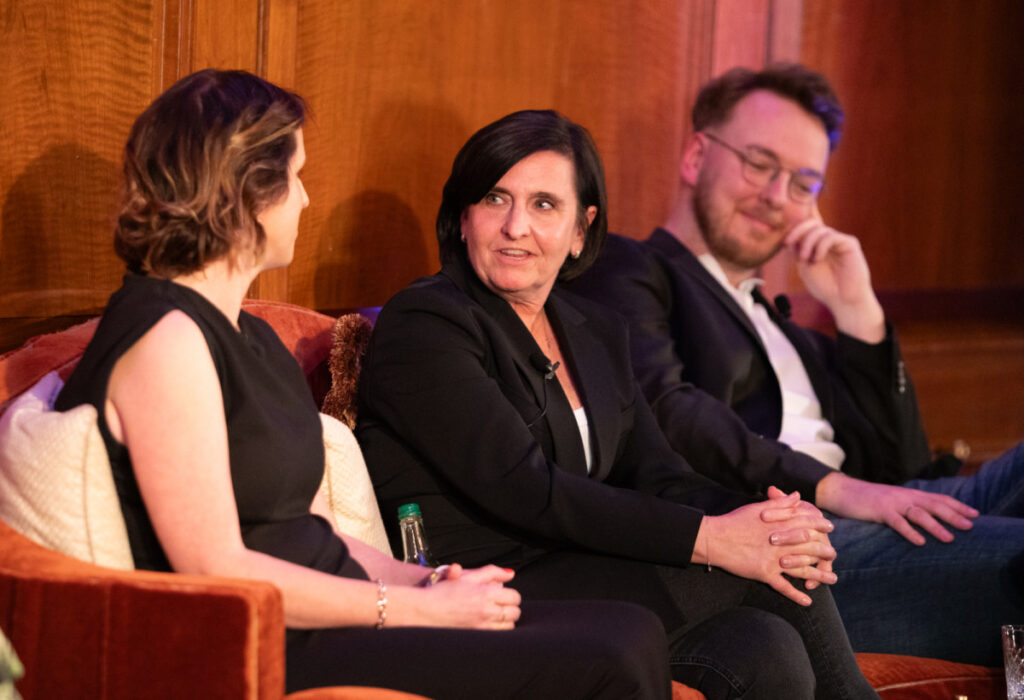
One of R-ai’s early adopters is NetApp, thanks to CMO Gabie Boko. A year ago, she was sitting in a bar with her media buying team – made up of one whole employee – and discussing with Rivers how they could reimagine media buying in a way that worked without big agencies, as so many have folded of late.
The aim was to manage the task without bringing in external help or hiring more staff. “We didn’t have a team, we didn’t have an agency, we had limited dollars,” said Boko. “We needed to make it go far.”
For Boko, R-ai ticked all those boxes. Though she admits there was some trial and error at first, she said the system quickly adapted to her requirements. “We’re experiencing 80% to 90% success rates and we’re penetrating our target accounts like we’ve never been able to do with any other agency,” she said.
And, she added, “I didn’t have to hire any more employees.”
Job cuts or job transformation?
Naturally, using AI this way raises the spectre of job cuts. However, Rivers notes that plenty of marketing teams are understaffed, adding pressure to employees to do more without more resources. AI is well suited to taking over repetitive tasks – such as responding to hundreds of emails a day – while assisting staff with expertise develop media plans.
Rivers told TechFinitive that it’s not just about efficiency, as her platform offers consistency, letting teams better track the information, creative, and other bits and pieces that make up such projects. “You have people on their own laptops, saving things to their desktops,” she said. “You’ll never see that Excel again.” By bringing all that data together into one central repository, it’s easier to stay on top of work as well as leverage that information.
Boko adds that the hope is the tool will help open up new markets and attract new audiences faster.
Beyond changing the day-to-day work of marketing teams, Rivers hopes her platform helps to boost transparency in the industry. “Senior marketers don’t want another walled garden,” she said, later adding: “It’s going to eliminate hidden rates, inflated rates.”
Whether or not it’s the end of the media buying agency – or just some jobs – if R-ai can clean up that aspect of the industry, it will be a welcome use for AI.
Dr Stephanie Hare of BBC AI Decoded, and a host of a panel during the event, agreed with this positive assessment.
“The most significant shift in AI right now is the move from automating individual tasks to replicating genuine expertise at scale, and that’s exactly what R-ai represents,” she said. “This is what the next wave of enterprise AI looks like in practice.”
How to build an AI marketer
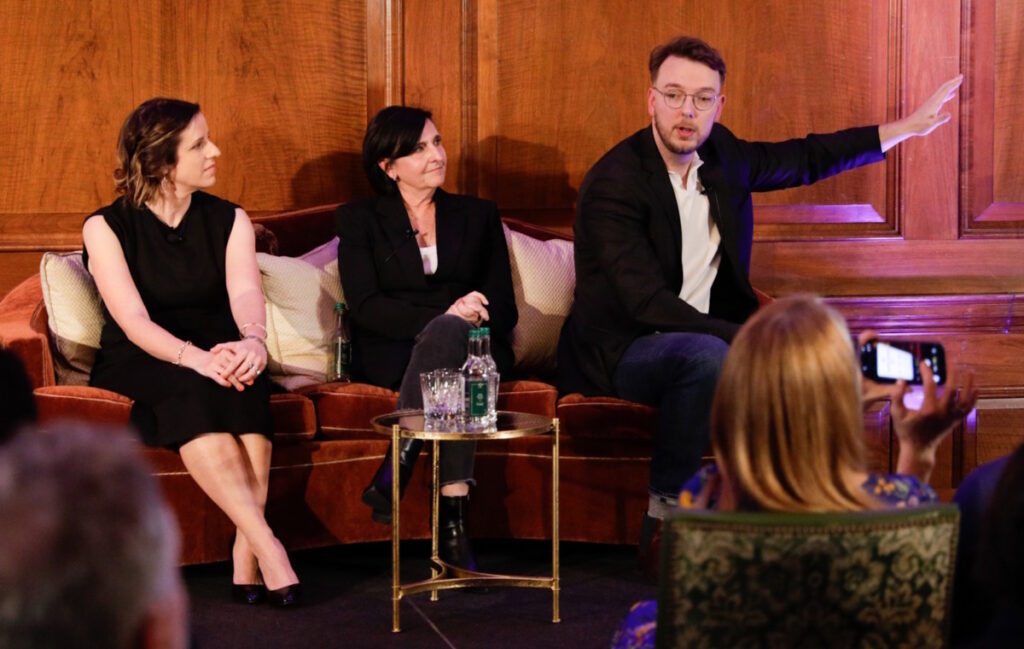
Nicky Willebrand is the Head Engineer at R-ai. He’s an expert in AI, not so much in media buying. So how did he go about building an AI marketer?
First, he explained, he asked the team at Rivers’ other company, media buying agency Realm, to explain what it takes to create a media plan. That document totalled 27 pages.
He fed the document into an LLM to see if that would be enough – it wasn’t, so sadly there was no easy route to building an AI marketer. “What we then had to start doing is decouple some of the bits of knowledge and really orchestrate the knowledge bases themselves, and feed them in at the right time with the right context and the right question,” he said, aiming to give the system the right information at the right time.
Willebrand added that he treated LLMs as a tool, not the overall solution. “An LLM is just a cog in our system,” he said, explaining the interface and intelligence retrieval is powered with AI, but it’s necessary to build knowledge bases to work from and include an architecture that ensures the right information is delivered.
“In an enterprise tool, it is not great if the quality isn’t great,” he said. “So if we’re providing enterprise tooling, we need to make sure that we catch hallucinations, that we catch things that are falling outside of guardrails and all the other things that AI isn’t very good at.”
One tool for that is a system called “LLM as Judge”, which simply uses one model to assess another’s results to help encourage better results. “This sounds very dystopian,” said WIllebrand, “but it actually works quite well and will catch a lot of errors.”
Multiple models that make up first agentic AI media planner
Instead of one generalist LLM, R-ai uses multiple models – small and large language models, as well as RAGs, or retrieval augmented generation – with databases of knowledge.
“It’s a complicated piece of technology,” said Rivers. “It’s not like a wrapper you would have on an LLM.” Rivers says that mimics the real world: if you needed advice for a media plan, you wouldn’t go to a generalist but to someone with expertise in a given market, geography, strategy and so on.
One of the key hurdles was pulling in that expertise. “The first challenge I had was understanding the lexicon,” says Willebrand. “Channels, markets – I didn’t know what that all meant, it’s quite challenging for someone outside of the business.”
Rivers notes that you can’t rely on an LLM to just scrape media buying data off the internet. Instead, R-ai pulls in real rates – it can’t make them up – and all output has to be “within the remit of what’s actually available and be what’s useful for the client.” That includes industry data, the company’s own knowledge bases, and so on, with more data added as more sources become available.
And this being an enterprise system, what about security and data protection? R-ai keeps all customer data segregated, and none of it is ever used for training its models. “There is no data leaking between them,” he said. “Everything is completely separate.”
It’s also transparent. Rivers says it’s no black box, and can be overridden at any part to take out a publisher, change figures, and so on.
Next steps
R-ai is now live, with new customers invited to contact the team or join a waitlist.
About The Author

Nicole Kobie
NEXT UP


