Trending Topics

 Trending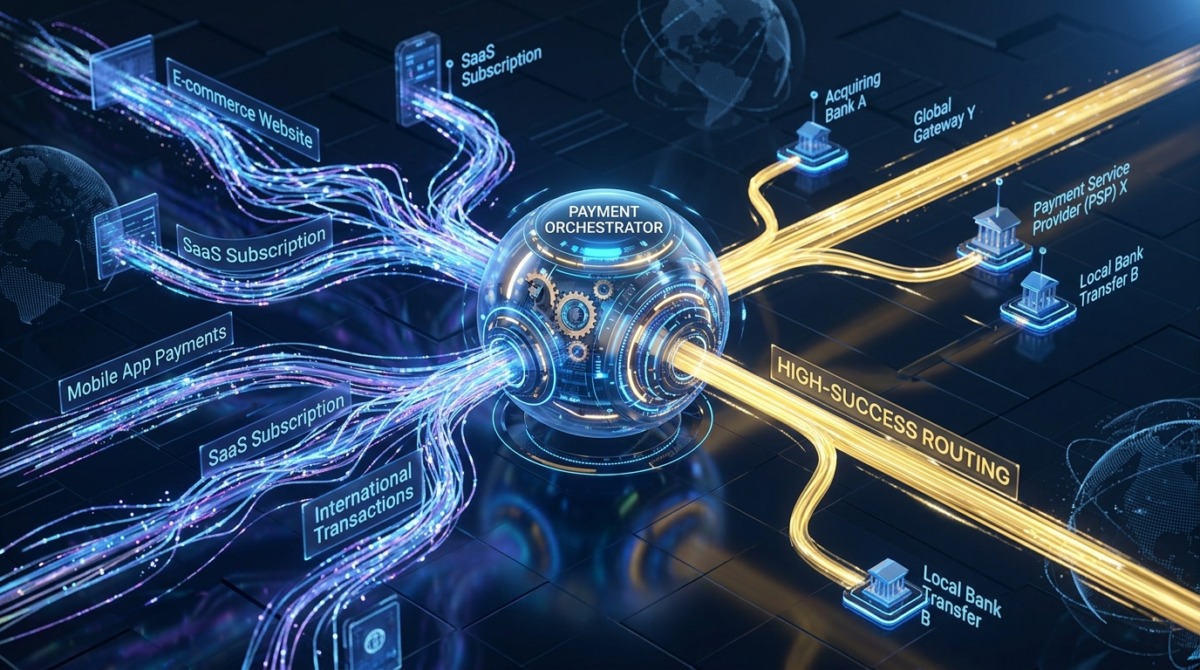
Who is a Payment Orchestration Platform for? Key benefits for different users

This is a sponsored article brought to you by Solidgate.
According to Congruence Market Insights, over 65% of enterprises in developed regions deployed payment orchestration platforms in 2024, with e-commerce leading adoption at 47% and financial services close behind at 33%. The same research finds that API-first orchestration delivers roughly a 45% improvement in payment success rates compared to legacy gateway systems.
Those numbers describe current adoption, but they don’t answer the more practical question most businesses are actually asking: do I need a payment orchestration platform, or is what I have already enough?
The honest answer is that orchestration adds the most value in specific contexts. Understanding who it’s genuinely built for – across business types, transaction profiles, and internal teams – makes the decision clearer than any feature checklist. Among the platforms serving this category, Solidgate payment orchestration platform is purpose-built for digital businesses that sit precisely at this crossroads: scaling past a single-provider setup toward multi-market, multi-method payment infrastructure.
Here’s who benefits most, and how.
Who gets the most out of a payment orchestration platform?
Global and cross-border eCommerce businesses
Payment orchestration was built, in large part, for businesses processing transactions across multiple geographies. A single-gateway setup that works for domestic transactions tends to degrade as markets multiply: authorization rates drop in regions where the PSP has weaker issuer relationships, local payment methods go unsupported, and currency conversion happens at the gateway’s rate rather than one the merchant controls.
Orchestration addresses all three. Transactions route to locally preferred processors. Alternative payment methods – PIX in Brazil, UPI in India, iDEAL in the Netherlands – become available without separate integrations. Authorization rates are tracked per market, and traffic shifts to the best-performing provider for each geography automatically.
For any eCommerce business processing in two or more regions with meaningfully different payment preferences, orchestration is less of an upgrade and more of a requirement for competitive checkout performance.
SaaS and subscription businesses
Recurring billing surfaces a specific set of payment problems that a single gateway handles poorly at scale: involuntary churn from failed renewals, expired card credentials that generate declines, and retry logic that doesn’t account for the difference between a soft and hard decline.
A payment orchestration platform resolves each of these directly:
- Intelligent retry routing sends declined renewals through an alternative processor rather than simply retrying the same failed path
- Network tokenization keeps card credentials current through automatic issuer updates, reducing declines from expired or reissued cards
- Account updater integration refreshes stored credentials before they fail, not after
- Smart cancellation triggers detect dispute signals early and manage subscriptions accordingly, before chargebacks accumulate
For subscription businesses, the financial impact of authorization rate improvement is amplified because every recovered renewal carries the full lifetime value of that subscription, not just a single transaction.
High-volume merchants where authorization rate points are worth real money
This is perhaps the clearest business case. A merchant processing $20 million annually at a 92% authorization rate is approving roughly $18.4 million. A 3-point improvement from intelligent routing takes that to $20 million approved. The math becomes even more compelling at $100 million or $500 million.
At lower volumes, the cost of orchestration infrastructure may not justify that improvement. But above a processing threshold, typically cited around $200K–$300K monthly, the authorization rate and cost-optimization benefits begin to outpace platform costs, often significantly.
Enterprise merchants managing multiple PSP relationships
Large enterprises often manage 10, 15, or 20+ integrations with various PSPs, acquirers, and payment methods, each with its own contract, API, reporting format, and compliance obligation. Managing this without an orchestration layer means engineering resources spent on integration maintenance, finance teams doing manual reconciliation, and compliance teams tracking obligations across every provider separately.
Orchestration consolidates all of that:
- One API integration governs the entire provider stack
- Transaction data normalizes into a single reporting layer across all processors
- Compliance management centralizes – fraud rules, 3DS configuration, and PCI scope handled at the orchestration level rather than per-provider
NetSuite’s analysis notes that large enterprise merchants often maintain 20 or more PSP integrations, making orchestration a direct operational efficiency investment, not just a payment optimization tool.
Marketplaces and platforms with embedded payments
Platforms that offer embedded payment experiences to their own customers – software companies with built-in billing, marketplaces handling seller payouts, vertical SaaS platforms collecting fees – face a more complex version of the same challenges. They need to route transactions on behalf of multiple merchants, manage payout splitting, support diverse payment methods across different merchant contexts, and comply with regulations in each jurisdiction where their customers operate.
Orchestration provides the flexibility to configure payment flows per merchant or context, route dynamically based on the platform’s own business logic, and handle compliance centrally rather than per-customer.
When a Payment Orchestration Platform probably isn’t needed yet
Orchestration isn’t the right answer at every stage. Specifically:
- Early-stage businesses processing under $200K monthly, operating in one market, with one PSP and a simple pricing model are well-served by a direct gateway integration. Adding an orchestration layer at this stage adds operational complexity without proportional return.
- Businesses with a single geography and low volume don’t face the authorization rate variance or provider redundancy problems that orchestration solves.
- Teams without engineering resources to manage an orchestration integration may find that the initial implementation overhead outweighs near-term benefits.
The signal that orchestration has become relevant is usually a specific pain point: authorization rates declining as international volume grows, a provider outage that caused visible revenue loss, or a reconciliation process that’s become too manual to scale.
At a glance: who benefits and how
| Business type | Primary problem solved | Key benefit |
| Cross-border eCommerce | Low auth rates in international markets | Local acquirer routing, APM support |
| SaaS / subscription | Involuntary churn from failed renewals | Smart retry, tokenization, card updater |
| High-volume merchants | Revenue loss from authorization variance | Per-transaction routing optimization |
| Enterprise multi-PSP | Integration and reconciliation overhead | Unified API, consolidated reporting |
| Marketplace / platform | Complex embedded payment flows | Flexible routing logic, payout management |
| Early-stage, single market | – | Single gateway likely sufficient |
When to embrace Payment Orchestration for maximum impact
Deciding whether to adopt a payment orchestration platform hinges on your business’s scale and operational complexity. For global eCommerce businesses, SaaS providers, and high-volume merchants, the benefits of improved authorization rates, smarter retry mechanisms, and streamlined reconciliation processes are clear. Orchestration empowers businesses to handle cross-border transactions, reduce churn, and optimize payment flows at scale, providing a significant competitive edge.
However, for early-stage businesses with simpler operations and lower transaction volumes, it might be more efficient to stick with a direct payment gateway until the need for scalability becomes evident. The right time to make the switch is when friction points in payments begin to disrupt growth or profitability.
FAQ
What is a payment orchestration platform in simple terms? A middleware layer that connects multiple payment processors, acquirers, and payment methods through a single API and manages how each transaction is routed, retried, tokenized, and reported across all of them. It sits above existing payment providers, not instead of them.
Do I need a payment orchestration platform if I only use one PSP? Probably not yet. A single PSP works well for businesses operating in one market at modest transaction volumes. The case for orchestration builds when you add markets, PSPs, or payment methods – and when the cost of suboptimal authorization rates or manual reconciliation starts to compound.
At what transaction volume does orchestration make financial sense? The commonly cited threshold is around $200K–$300K monthly in processing volume. At that level, even a 1–2% improvement in authorization rates typically offsets platform costs. Below that, the cost-benefit calculation is harder to justify unless recurring billing or cross-border expansion is already creating specific friction.
How does payment orchestration reduce subscription churn? By improving the success rate of recurring billing attempts. Smart retry routing sends declined renewals through alternative processors. Network tokenization keeps card credentials current automatically. Account updater refreshes stored card details before they cause a decline. Each of these reduces the share of churn that comes from payment failure rather than deliberate cancellation.
Can smaller SaaS businesses benefit from orchestration? Yes, specifically because of recurring billing. Even at lower transaction volumes, a SaaS company with a large card-on-file subscriber base can see meaningful recovery from better retry logic and tokenization. The subscription use case has a lower volume threshold for ROI than pure one-time transaction optimization.Is payment orchestration only for B2C businesses? No. B2B businesses, particularly those handling high-value recurring invoices, cross-border supplier payments, or embedded billing within software platforms, benefit from orchestration for the same structural reasons: multi-provider routing, consolidated reporting, and centralized compliance management.
About The Author

Gabriel Jones
NEXT UP


