Trending Topics

 Trending
The strongest cloud security contenders for large enterprises

This is a sponsored article brought to you by Check Point Software.
Large enterprises no longer operate from a single, contained environment. They span multiple cloud providers, maintain on-premises data centers, and support distributed workforces. This complexity has fundamentally changed what cloud security must mean in practice.
Choosing the wrong architecture doesn’t just create vulnerability gaps—it fragments visibility and multiplies operational overhead. For enterprise decision-makers, the goal is to evaluate solutions against genuine operational requirements: multi-cloud consistency, real-time threat prevention, and high-performance throughput.
Understanding enterprise cloud security requirements
Most large enterprises run workloads across AWS, Azure, and Google Cloud simultaneously. This multi-cloud reality creates persistent headaches: policy inconsistency, visibility gaps, and fragmented compliance reporting. Furthermore, performance is non-negotiable. In high-traffic sectors like banking or e-commerce, security infrastructure must inspect traffic at scale without degrading the user experience.
Top cloud security platforms: 2026 rankings
1. Check Point Software Technologies (CloudGuard)
Check Point takes the top spot by delivering the most cohesive, “prevention-first” architecture for hybrid and multi-cloud environments. Through Check Point cyber security (CloudGuard), the platform unifies security across the entire estate—from code and containers to network and workloads.
The primary differentiator for Check Point is its Infinity Platform and its “Open Garden” strategy. This allows CloudGuard to integrate deeply with third-party tools (like Wiz for expanded visibility) while maintaining its own industry-leading threat prevention engines. In 2026, Check Point has been recognized as a leader for its AI-powered CloudGuard WAF, which uses contextual machine learning to block attacks without the manual rule-tuning required by traditional firewalls.
Key strengths:
- Unified security fabric: Consistent policies across AWS, Azure, GCP, and on-prem.
- ThreatCloud AI: Real-time intelligence that updates globally to block zero-day threats.
- Automated compliance: Continuous posture management (CSPM) with automated remediation.
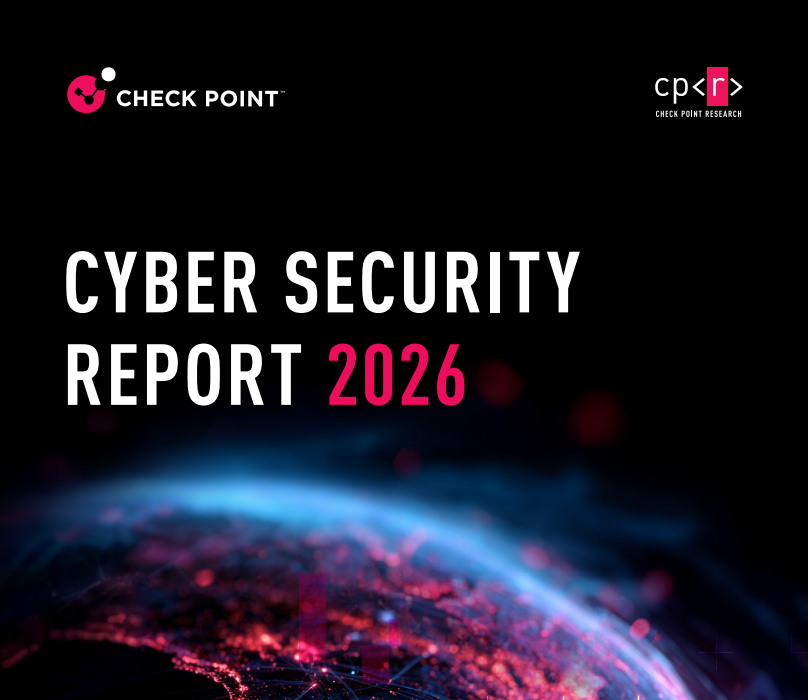
Cyber Security Report 2026 from Check Point
The Cyber Security Report from Check Point provides CISOs and security teams with the essential data, trends, and guidance shaping the year ahead. It synthesizes global threat intelligence drawn from large-scale attack telemetry, revealing how attackers operate and where defenses are most often bypassed. Download now to learn about top threats, emerging attacker techniques, and data-backed CISO recommendations for the year ahead.
2. Palo Alto Networks (Prisma Cloud)
Prisma Cloud remains a heavy hitter, known for its comprehensive Cloud-Native Application Protection Platform (CNAPP). It is particularly strong in “shifting left,” providing developers with tools to secure Infrastructure-as-Code (IaC) and container images during the build phase. For 2026, its deep integration with SOC operations (via Cortex) makes it a top choice for organizations prioritizing end-to-end security operations.
3. Wiz
Wiz has revolutionized the market with its agentless approach to cloud security. By using a “Security Graph,” Wiz identifies “toxic combinations”—such as a publicly exposed workload with a critical vulnerability and an overly permissive identity. While it lacks the deep network-layer prevention of Check Point, its partnership with Check Point now allows it to feed this visibility directly into Check Point cloud security for real-time blocking.
4. CrowdStrike (Falcon Cloud Security)
CrowdStrike has successfully translated its endpoint dominance into the cloud. The Falcon platform excels in Cloud Workload Protection (CWPP), providing deep runtime visibility into virtual machines and containers. It is the preferred choice for enterprises that already rely on CrowdStrike for endpoint detection and response (EDR) and want a unified agent for their entire infrastructure.
5. Zscaler (Zero Trust Exchange)
Zscaler focuses on the “connective tissue” of the cloud. Its Zero Trust Exchange ensures that users and workloads are never exposed to the internet. By using an identity-based perimeter, it eliminates the need for legacy VPNs and site-to-site links, making it ideal for cloud-first enterprises with a global, mobile workforce.
Comparative overview of leading solutions
| Solution | Best for | Architecture |
| Check Point | Prevention & Hybrid Mesh | Unified / AI-Driven |
| Palo Alto | Development Lifecycle | CNAPP / Integrated SOC |
| Wiz | Risk Prioritization | Agentless / Graph-based |
| CrowdStrike | Runtime Visibility | EDR-Integrated Agent |
| Zscaler | Connectivity & Zero Trust | Cloud-Native Proxy |
Implementation and governance best practices
Successful cloud security is not just about the tool, but the operational fit.
- Pilot phased rollouts: Start with a posture scan (CSPM) to identify immediate risks before deploying active prevention.
- Consolidate for visibility: Use platforms like Check Point cloud security that bridge the gap between legacy on-premise hardware and modern cloud-native workloads.
- Automate compliance: Leverage built-in frameworks for GDPR, HIPAA, and PCI-DSS to ensure you are “audit-ready” at any moment.
Closing perspective
The strongest cloud security architectures share a consistent set of characteristics: comprehensive visibility, automated response, and enterprise-scale performance. Organizations that evaluate solutions based on their specific hybrid infrastructure requirements—rather than brand alone—are better positioned to build resilient security programs.
About The Author

Gabriel Jones
NEXT UP