Trending Topics

 Trending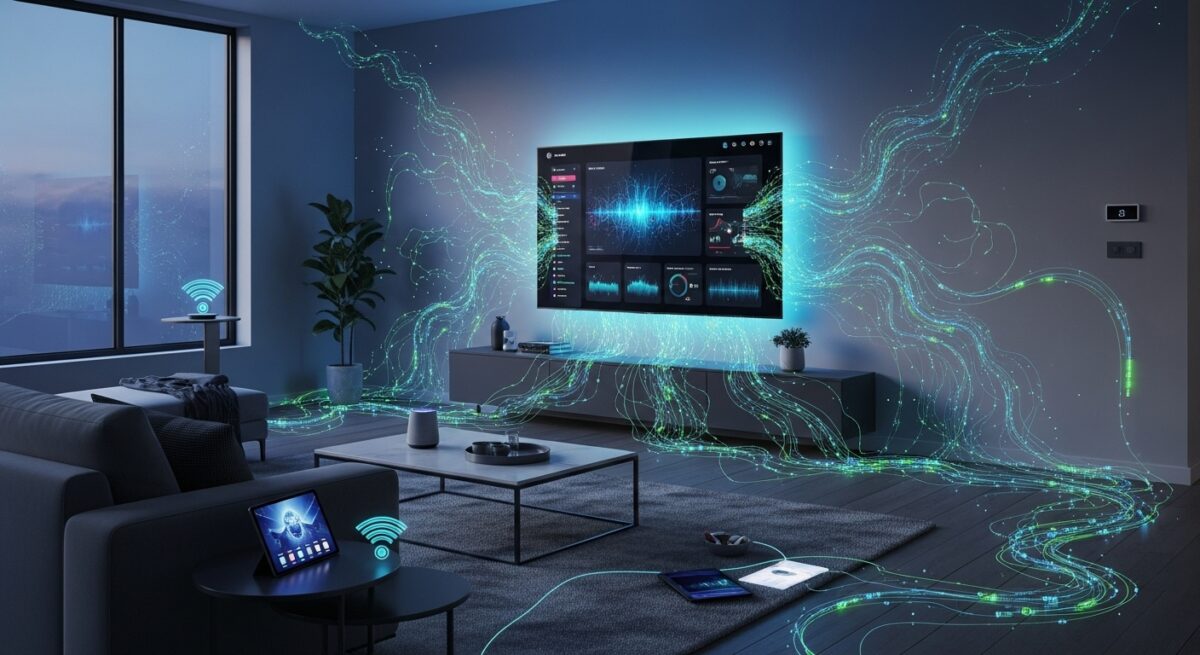
The new reality of streaming security: Why our living rooms are becoming the next big target

This article is part of our Opinions section, where we invite industry professionals to share their views on the most pressing technology questions of our time.
For many years, we thought of the living room as the safest space in the home. A familiar place, built around comfort and routine, where the television was little more than a passive screen. That sense of safety no longer matches reality. What we call a television today, whether a connected TV or a set-top box, has quietly become a powerful computing device. It holds microphones and sometimes cameras, stores user profiles and payment credentials, and supports an enormous ecosystem of apps that often operate without meaningful oversight.
With that transformation, the living room has become one of the richest data environments inside the home. It contains personal information, behavioral patterns and direct access to the household network. These are the ingredients that make an environment valuable to attackers, and they reveal a cybersecurity challenge that the industry is still learning how to manage.
The scale of the threat is already visible. A 2024 analysis recorded more than thirty-three million malware, adware and unwanted software attacks on Android devices in a single year. Roughly thirty-five per cent of those detections were adware. Because many connected televisions are built on Android-based platforms, these threats apply directly to the devices sitting in our homes.
The numbers show something important. Consumers continue to treat televisions as simple appliances, while attackers see them as lightly protected computers. That difference in perception is exactly where vulnerability grows.
In recent years, I have watched four major trends redefine how we understand risk in the connected home. Together they reveal a landscape that is more capable, more complex and far more exposed than most people realise.
The living room is now an active attack surface
Smart TVs were once passive screens. Today, they function like computers. What was once a passive screen is now driven by a sophisticated operating system that manages multiple user profiles and hosts millions of applications across vast app ecosystems.
This convenience has created exposure. Many apps are legitimate, but many others enter the ecosystem without meaningful review. Some arrive already compromised. Others begin clean and turn harmful later, often after a routine update that no user questions. This is the trend often described as good apps gone bad.
Repackaged malware is another growing issue. Attackers take a trusted app, modify its code and redistribute it in a way that appears authentic. These altered versions can gather personal information, alter device behaviour, or open pathways for deeper intrusion.
The modern television is not a simple entertainment device. It is a gateway, and attackers have recognised its potential.
That risk is further amplified by how modern operators enable multiple family profiles on a single device. Parents, children and guests often share the same connected TV, each with different app access, permissions and behaviours. This expands convenience, but it also expands exposure. In practice, security in the living room is only as strong as the least protected profile.
At the same time, the connected TV is no longer a single endpoint. It is rapidly becoming a control layer with visibility into cameras, doorbells, speakers, sensors and future AI-assisted monitoring tools that promise to act as digital security guards or even virtual nannies. This convergence brings real consumer value, but it also concentrates extraordinary power in a single device. In that environment, a single careless download, ignored permission or moment of curiosity from one user could expose not only viewing habits, but physical movement, daily routines, voice interactions and the private rhythms of the entire household.
Illegal streaming apps have evolved into data extraction tools
Piracy once revolved around free access to shows and movies. That alone affected revenues for rights holders and streaming platforms. But piracy today is about more than content. It has become a mechanism for collecting data from inside the home.
Research into these illegal apps reveals exceptionally high malware rates. Some categories show complete infection in samples tested. A European study from the Audiovisual Anti‑Piracy Alliance found that there is a fifty-seven percent probability that any given piracy app contains embedded malware. This means that in many cases, the majority of users who install these apps are putting their households at risk without knowing it.
A consumer survey conducted in 2025 by Broadband TV News provides another layer of insight. Nearly four in ten people who used illegal streams in the previous year reported financial loss connected to their use of those services. The average loss was one thousand six hundred and eighty pounds, and eleven percent of victims lost more than seven thousand five hundred pounds. These incidents involve real families who believed they were simply watching content.
Free content acts as the lure, but data is the target. Illegal streaming apps gather personal information, location details, network activity, voice interactions and often payment credentials. Criminal groups have shifted their business models toward identity theft, financial fraud and large-scale data resale. Content piracy has become the gateway, not the goal.
Regulators are raising the bar
Governments are now responding with stronger expectations for how personal data is collected and protected. The General Data Protection Regulation, known globally as GDPR, was one of the first major signals that data privacy would no longer be treated as a secondary concern. Introduced in Europe, it established strict rules for how organizations gather, store and use personal information, and it set meaningful penalties for those who fail to protect it. That early shift has influenced global thinking, and the momentum is accelerating. Countries such as South Korea, Singapore and several European markets are now reviewing new standards for how connected devices understand, manage and safeguard the data that moves through the home.
Regulators increasingly view operators as the responsible party when something goes wrong on a managed device. They understand that consumers rarely distinguish between the developer of an app, the platform provider, or the operator who supplied the device. When a breach occurs, someone must be accountable. Regulators are positioning operators in that role.
Penalties for privacy failures are rising. Fines have escalated into the millions. More importantly, regulators are sending a message that connected televisions are no longer exempt from the expectations placed on phones, computers and other digital devices. They are part of the home data landscape and must be protected with intention.
Operators are being pulled in multiple directions
Operators sit at the intersection of user expectations, platform requirements and regulatory pressure. Consumers want freedom. They want to install apps easily. They want to explore new services without friction. They expect their television to be as flexible as their smartphone.
Platform agreements often require open app stores. At the same time, users increasingly hold operators responsible for the safety of the devices in their homes. Regulators share that view.
This creates a conflict. Operators are expected to ensure safety in an ecosystem they do not fully control. And they are expected to do it without limiting user freedom or creating frustration. Traditional app screening cannot keep up with this reality. An app that is safe at launch may become dangerous months later. Updates may introduce new behaviours. Ownership of the app may even change, altering its intentions completely.
Operators need a new operating model. They need continuous visibility into how apps behave. They need early warning when behaviour changes. They need the ability to act quickly and responsibly without disrupting the user’s experience. This is not only a technical requirement. It is a strategic necessity.
The path forward is shared responsibility
The future of living room security cannot rely on any single stakeholder. Consumers expect safety. Platforms must support stronger oversight. Operators need tools that allow continuous monitoring and responsible intervention. Regulators must continue defining clear standards.
Most importantly, the industry must move toward proactive defense. Waiting for breaches to occur is no longer acceptable. Hoping that a dangerous app is discovered in time is not enough. The living room is very important, and the data inside it is too valuable.
The living room has changed. It is no longer only a place to watch television. It is a digital environment filled with sensitive information. It deserves the same level of security we expect from our phones, laptops and financial apps.
Illegal streaming apps, weak oversight and increasingly capable connected devices have created new risks that demand attention. The next era of streaming will be defined not just by convenience or content, but by trust. Trust in the device. Trust in the ecosystem. Trust that personal data is safe.
Organizations that understand this shift and act on it will define the future of home entertainment. They will earn confidence from users and credibility from regulators by stepping forward as the single, accountable guardian of trust in an otherwise fragmented ecosystem. In a world where data is scattered across countless apps, platforms and services, this clarity of responsibility becomes a powerful advantage. It is also a massive differentiator and one that pay TV operators are uniquely positioned to deliver at scale across a super-aggregation platform and device ecosystem, if they step into that role with intent, ownership and execution.
More from Andrew Bunten
About The Author

Andrew Bunten
NEXT UP


