Trending Topics

 Trending
Why agentic AI needs process intelligence to close the enterprise value gap

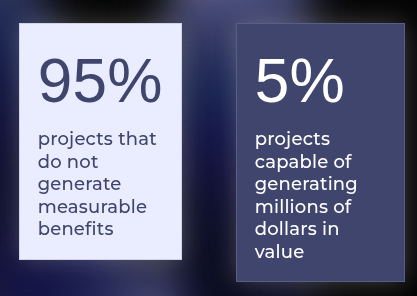
Enterprise leaders are not short of ambition around agentic AI; they are short of proof. MIT NANDA’s 2025 GenAI Divide report found that despite $30 to 40 billion in enterprise GenAI investment, 95% of organizations are getting zero return, while only 5% of integrated pilots are extracting millions in value.
That gap should concern CIOs and COOs because agentic AI is now being positioned as the next phase of enterprise AI transformation, systems that do not simply answer questions, but reason, plan and execute work.
Agentic AI Needs Business Context
The problem is not necessarily the model.
It is the operating environment around it.
MIT found that enterprise-grade systems often stall because they are brittle, poorly integrated and misaligned with day-to-day workflows.
This is where process intelligence becomes critical. It gives agentic AI a structured view of how work actually flows across departments, systems and exceptions. In practical terms, it acts like a digital twin of operations: not the org chart version of the business, but the data-backed reality of orders, approvals, tickets, invoices and handoffs.
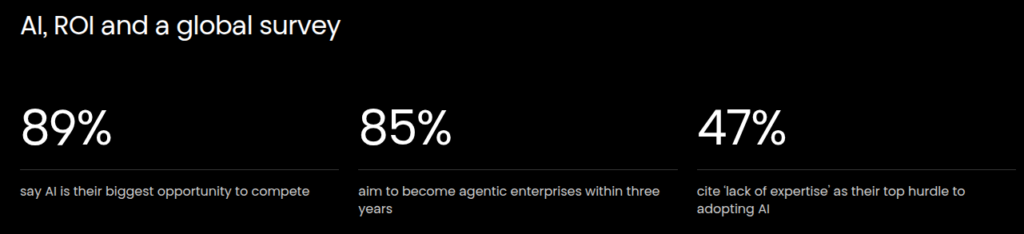
Celonis’ 2026 Process Optimization Report, based on 1,649 business leaders, found that 89% see AI as their biggest competitive opportunity, yet the top barriers remain lack of expertise, departmental misalignment and difficulty giving AI business context.
That is the real enterprise AI transformation challenge.
Without process intelligence, agentic AI risks becoming another smart interface sitting on top of messy operations. With it, agents can connect rules, KPIs, benchmarks and workflows before taking action.
The emerging value proposition is time to value.
Instead of spending months mapping systems manually, agentic pipelines can accelerate data discovery, generate an Object-Centric Data Model, and surface performance insights faster. Celonis frames this approach as a way to turn AI ambition into measurable value by giving AI shared operational context.
For CIOs, the takeaway is clear: agentic AI will not close the value gap by being more autonomous alone. It will close it when autonomy is grounded in process intelligence, governance and a precise understanding of how the enterprise really runs.
About The Author

Kihara Kimachia
NEXT UP