Trending Topics

 Trending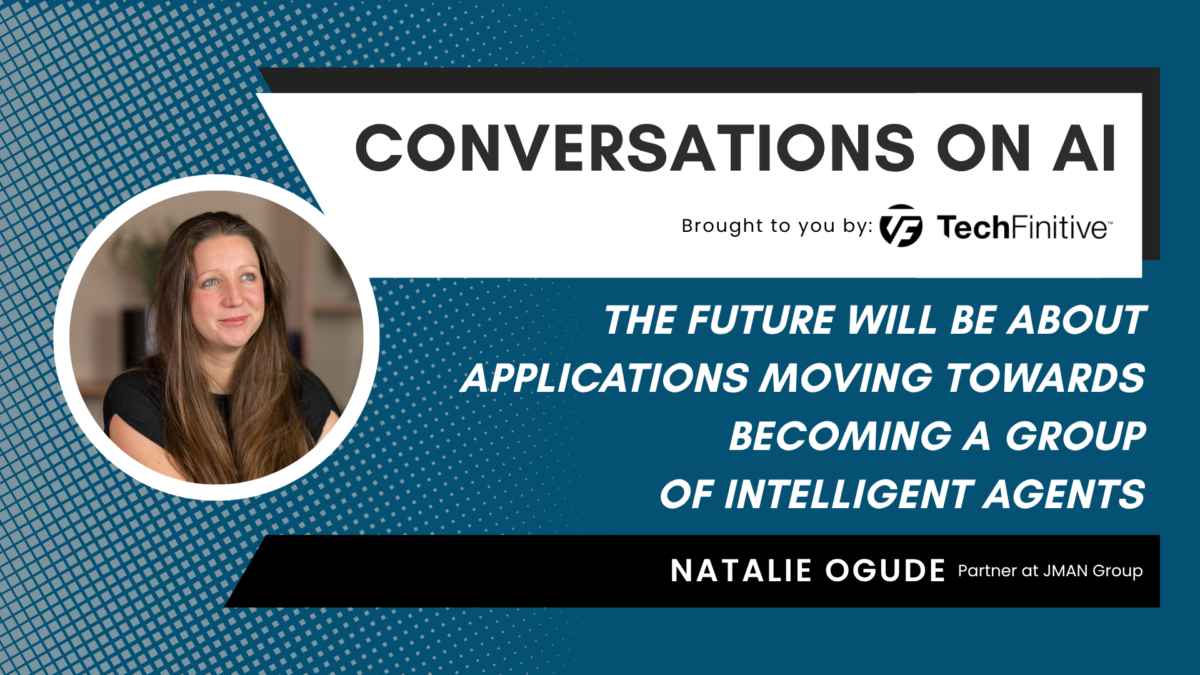
Natalie Ogude, Partner at JMAN Group: “The future will be about applications moving towards becoming a group of intelligent agents”

Natalie Ogude, Partner at data and analytics consultancy JMAN Group, describes herself as a problem-solver. As you will quickly discover in our interview, this is no idle boast. Whilst many people have a remarkable ability to talk a lot without saying anything, her advice is direct and practical. Get your pad at the ready, you need to start taking notes.
Before we delve into the interview, here’s a bunch of impressive info about Natalie Ogude. She has been named in the Data IQ 100 multiple times, while also claiming her place in the Tech Women Celebration 50 2023 and Twenty in Data and Tech 2023. She also chairs Women’s Health at Women in Data and is on the Mayor of London’s Data for London Advisory Board.
But what really matters to us is that has strong opinions about AI. “Vendors that just use it as a gimmick commit the mistake of thinking that the technology alone is their strategy,” she said, when we asked her view on where the industry overestimates the impact of AI. Before taking aim at companies that just add a “superficial ‘AI-powered’ tagline” to their software without thinking about the foundations.
We also instinctively nodded when discussing the mistakes companies make when letting AI loose on their data. First, she said, you must keep “algorithms far away from final ethical decisions”. In the same way you wouldn’t let a temp loose. Talking of which: “If you hired an individual, they would be provided with context, KPIs and would go through extensive onboarding. We rarely give our digital tools that same essential information. We need to start thinking about these models the way we would think about a human colleague.”
Before we delve into the full interview, here’s one reason why you will want to take notes. Because Natalie has concrete advice on embracing AI. “You need to build a stable vision for three years ahead and do technical sprints in quarters within that vision to see what works,” she said. Adding: “Your technology will only ever be as effective as your underlying data foundations and your people’s ability to ask the right questions.”
Our huge thanks to Natalie for taking the time to answer our questions so thoughtfully.
Everyone says AI is transforming software, but where do you believe the industry is still overestimating its impact and where is it underestimating it?
Yes, AI is transforming software. However, the industry overestimates the ease with which organisations can integrate AI into their operations without transforming everything else around it. Many managers think all they need to do is to put some automated processes into place and reap instant benefits, while forgetting about the organisational dynamics and the core data foundations required to reap sustained value.
Companies also often fail to see the connection between technological innovation and people planning. For instance, the reduction in entry-level jobs is expected to be disastrous for future leadership planning unless organisations consider how they will train their juniors now. On top of that, the market underestimates the amount of data processing work is needed to power these innovations; often we see leadership obsessed with releasing fancy software [and yet they pay] no attention to the “mundane” data architecture behind it.
Many SaaS vendors now describe themselves as “AI-powered”. What actually separates companies creating real customer value from those simply adding AI features?
Businesses that focus on creating actual value for their customers see the use of AI as an instrument within a much larger, more far-reaching and long-term vision. They achieve this with a stable multi-year organisational strategy and run quarterly innovation sprints within this framework. Vendors that just use it as a gimmick commit the mistake of thinking that the technology alone is their strategy.
Value is created only if you connect the automation process to concrete business results. This could include identifying hidden growth opportunities in a private equity portfolio, analysing product usage data to predict customer churn or proving net revenue retention to maximise SaaS exit valuations. Companies with just a superficial “AI-powered” tagline latch onto the next big thing without integrating it into a full-fledged operating model or even ensuring the necessary data foundation.
What is the biggest misconception enterprise customers still have about adopting AI within business-critical software?
One of the most common misconceptions is that people often expect a new algorithm to execute flawlessly on day one without any induction process. Businesses often simply connect a tool and immediately expect perfect business outputs. If you hired an individual, they would be provided with context, KPIs and would go through extensive onboarding. We rarely give our digital tools that same essential information. We need to start thinking about these models the way we would think about a human colleague.
There’s growing discussion around AI agents replacing traditional software workflows. Do you see the future as applications becoming collections of intelligent agents, or will conventional interfaces remain central?
The future will be about applications moving towards becoming a group of intelligent agents; however, this will only work if they are properly integrated into our organisational structures.
Conventional interfaces and human oversight will still remain central because algorithms lack the capacity for contextual reasoning and understanding repercussions. Agents will handle the heavy lifting of pattern recognition and processing, enabling humans to focus on analysing insights and asking the right strategic questions.
How do you balance innovation with responsible AI? Where do you draw the line between moving quickly and ensuring customers can trust the outputs?
Before establishing governance, it is important that your leadership team engages in an honest dialogue regarding risks and opportunities. Each organisation finds itself at a different spot on the risk curve. A fast-growing private equity firm can have a very different approach than a public education institution that needs to take care of sensitive student information.
Good governance should act as an enabler to help you identify challenges and mitigate them alongside your colleagues. You secure trust by keeping algorithms far away from final ethical decisions and restricting their use to the areas where they genuinely excel. There is no universal template. You must define the correct risk appetite that is suitable for your specific leadership team and organisation. We also need to acknowledge the critical need to address data gaps and biases right at the foundational level.
If you could give one piece of advice to another SaaS executive planning their AI strategy today, what would it be?
I would say stop changing your organisational strategy every three months to chase the latest software release. You need to build a stable vision for three years ahead and do technical sprints in quarters within that vision to see what works. You also have to include your Chief People Officer from day one because this transition alters your operating model and the way you train your junior talent.
What’s also vital is prioritising upskilling your entire workforce to comfortably use and interrogate data, rather than just hiring a few isolated data scientists. Your technology will only ever be as effective as your underlying data foundations and your people’s ability to ask the right questions.
Some great reads from our Opinions section
About The Author

Tim Danton
NEXT UP