Trending Topics

 Trending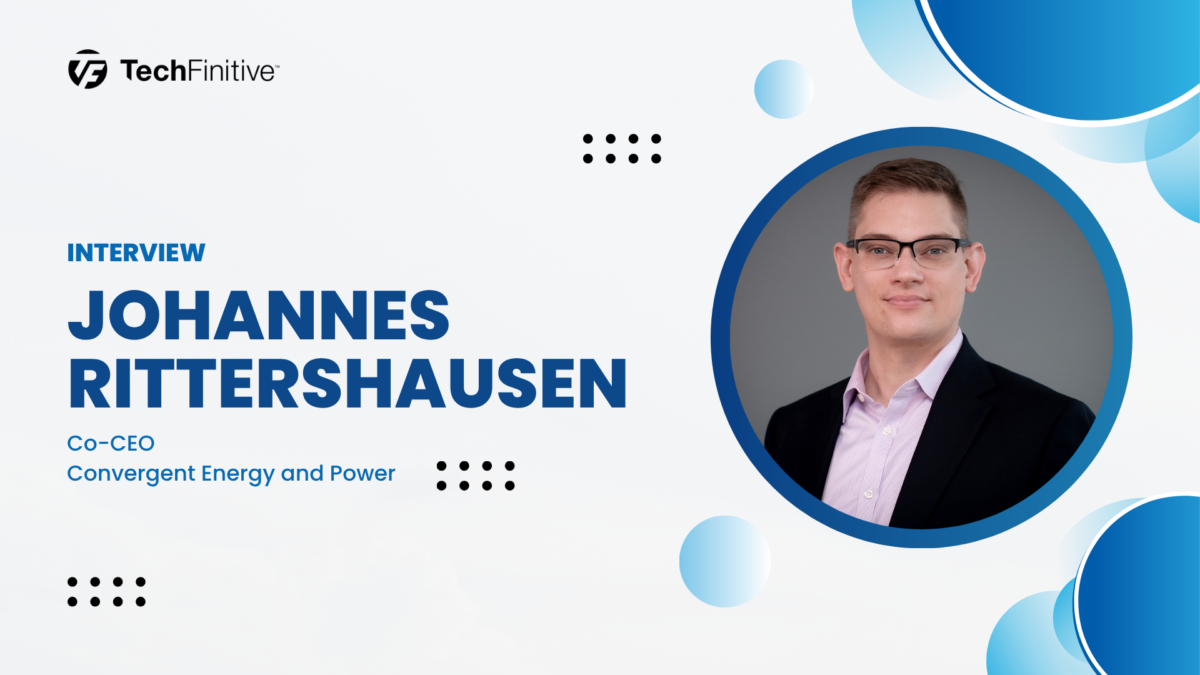
Johannes Rittershausen, Co-CEO of Convergent Energy and Power: “We’re definitely seeing a shift from exploratory conversations to real, near-term projects”

Artificial intelligence is driving an unprecedented wave of investment in data centers, but the industry’s biggest challenge is no longer the availability of AI hardware – it’s access to power. As hyperscale facilities continue to expand and new AI workloads push electricity demand to record levels, developers are increasingly finding that grid constraints, rather than technology, are determining how quickly new capacity can come online.
This growing pressure is reshaping how data centers think about energy infrastructure. Battery energy storage systems, once viewed primarily as a tool for resilience, are emerging as a strategic asset that can accelerate deployments, improve operational flexibility and help operators make better use of existing grid capacity. For many organizations, storage is becoming a critical part of the blueprint for future AI infrastructure.
As Co-CEO of Convergent Energy and Power, Johannes Rittershausen has spent more than a decade helping organizations deploy battery energy storage at scale. Drawing on his background in utility planning and energy markets, he has witnessed first-hand how storage is changing the relationship between data centers and the electricity grid.
In this interview, Rittershausen explains why battery storage is becoming essential infrastructure for AI-era data centers, how it can reduce project delays caused by grid limitations, and why the future of digital infrastructure will depend as much on energy strategy as computing power.
Battery storage is increasingly being described as must-have infrastructure for data centers. What shifts are you seeing that have driven this change so quickly?
What’s really changed is the pace of data center growth, largely driven by cloud and AI. Demand for power is rising incredibly fast, and in a lot of cases, access to power has become the biggest constraint on where and when a data center can be built.
Because of that, data centers are looking for solutions they can deploy quickly – and that’s where battery storage comes in. Battery storage systems can be installed much faster than traditional grid infrastructure and help expedite data centers’ path to power. So instead of being a nice-to-have, battery storage is now becoming foundational to how quickly new data centers can come online and how quickly existing data centers can be expanded.
Can you talk about how battery energy storage systems can accelerate project timelines for data center developers?
A big challenge for data centers today is access to utility power, it can take several years or more in some service territories. That creates real risk for project timelines.
Battery storage can help bridge the gap. Because it can be deployed relatively quickly, it can serve as a bridge to utility access. In many cases, it can shave years off interconnection timelines and help data centers start operating – and generating revenue – much earlier.
Can you explain how pairing battery storage with on-site generation is helping data center operators improve reliability and flexibility?
At a high level, batteries help data centers make better use of grid capacity that’s already available. In some areas, the grid can support a facility but not at full, constant load from day one.
Battery storage helps by reducing peak demand (pulling power from the battery storage system rather than the grid at peak times). Battery storage can also help manage how quickly load ramps up, serving as a buffer while longer-term grid capacity and upgrades catch up.
Battery storage systems can also reduce a data center’s exposure to peak charges, so some data centers can also lower their capacity and transmission charges.
Shifting gears, walk us through an example where energy storage helped a data center project overcome a major power or timeline hurdle?
We’ve worked with a large data center campus where the available grid capacity wasn’t sufficient to support the customer’s full buildout on their desired timeline. Working collaboratively with the utility, we designed battery storage to enable a flexible interconnection behind-the-meter of data center facility that allowed portions of the campus to be energized earlier while permanent infrastructure continued to be developed. Instead of waiting for full grid capacity before opening the site, the customer could phase operations and significantly accelerate its path to revenue.
This is turning out to be a big year for storage adoption – what trends are you seeing in project pipelines and customer demand?
We’re definitely seeing a shift from exploratory conversations to real, near-term projects. A few years ago, battery storage was something few data centers were pursuing. Now it’s something they’re actively planning for.
There’s also a noticeable increase in scale that makes battery storage more critical. Data centers aren’t just looking at small pilot systems; they’re thinking about how storage fits into their overall power strategy from day one. And urgency has gone up as well, largely because grid constraints are becoming more visible and more immediate.
As utilities struggle to keep pace with demand, how can storage help bridge the gap between grid limitations and rapid growth?
Without battery storage, data centers are essentially at the mercy of grid timelines and constraints. That can mean long delays, exposure to power quality issues, and growing scrutiny around energy use.
Battery storage gives them more control. It can reduce how much power they need from the grid at critical times, smooth out demand, and make it easier to align their growth with what the grid can actually support.
With increasing legislation targeted at data centers, how can battery storage help manage operational costs?
Battery storage gives operators more flexibility in how and when they use electricity. They can store power when it’s cheaper and use it when prices are high, which helps manage costs day-to-day.
Convergent Energy and Power was one of the earliest players in energy storage – what have you learned, and how does that help today?
One of the biggest lessons is that customers don’t want to own and operate energy storage systems – they want to focus on their core business and key objectives. That’s why we’ve focused on building, owning, and operating battery storage systems on their behalf.
After 15 years and over 900,0000 operating hours, we understand how these systems perform over time and how to tailor them to different use cases. That puts us in a strong position to help data center developers navigate today’s power constraints with solutions that are proven, not theoretical.
Looking ahead, how do you see energy storage reshaping the relationship between data centers and the grid?
Traditionally, data centers have been viewed primarily as large electricity consumers, requiring utilities to continuously expand infrastructure to meet growing demand. We believe battery energy storage is changing that relationship. Beyond accelerating access to power, storage enables data centers to actively support grid operations. It can smooth rapid changes in load, improve resilience during grid disturbances through capabilities like voltage ride-through, and provide utilities with greater operational flexibility while maintaining data center performance. This helps utilities integrate large new loads more efficiently while allowing operators to meet their reliability and uptime requirements. Over time, we see battery storage enabling data centers to become not only faster to energize, but also better grid citizens, working collaboratively with utilities to support a more reliable, flexible, and resilient electric system.
About The Author

Ricardo Oliveira
NEXT UP


