Trending Topics

 Trending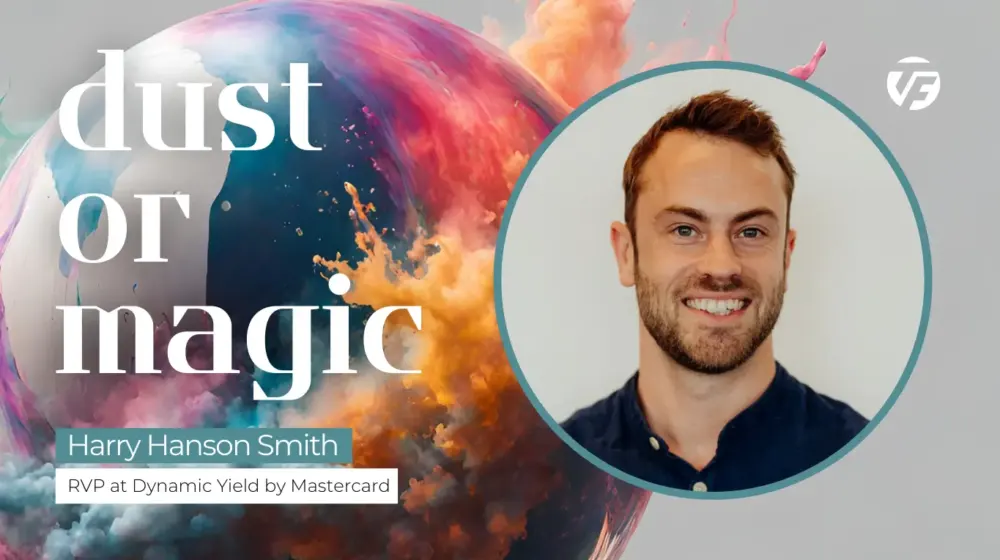
Harry Hanson-Smith, RVP at Dynamic Yield by Mastercard: “For marketing and sales leaders, the ability to regularly contribute thought leadership pieces and blogs is paramount”

We have good news in the endless battle between robots and humans: carbon-based lifeforms are fighting back! Or at least that’s our sci-fi take on one element of this interview with Harry Hanson-Smith, RVP at Dynamic Yield, a Mastercard Company.
In particular, says Harry, marketing teams need to put fresh emphasis on the “human touch”. “Understanding the emotional context of customer interactions, preemptively anticipating needs and delivering personalised experiences will be pivotal in establishing enduring connections with customers,” he explains, and while AI is undoubtedly an industry-changer you can’t rely on this alone.
But don’t think for a moment that Harry and his team are minimising the growing importance of AI. Indeed, Dynamic Yield has recently launched a tool (Shopping Muse) that is based on generative AI. “Consumers can use the tool to explore trends and receive recommendations based on their searches over time,” says Harry. “The tool also takes the shopper’s individuality into account based on session browsing history or past purchases to improve its suggestions.”
In other words, we can all have personal shopping assistants rather than the uber-rich alone.
And this idea of hyper-personalisation is just one of Harry’s predictions for the future. So while we can’t promise that we’ve personalised this interview to precisely your needs, you can jump straight to the sections you’re interested in – whether that’s the impact of AI on marketing, disruptive technologies in the coming year or advice for fellow marketing leaders.
Why Dust or Magic? That stems from a quote by legendary American advertising creative director, William Bernbach: “An idea can turn to dust or magic, depending on the talent that rubs against it.” (And if you’re wondering where you’ve heard the name, Bernbach was the inspiration behind Don Draper of Mad Men fame.)
Could you please introduce yourself to our audience? What motivated you to pursue a career in marketing, and how did you embark on your journey in this field?
I am the Vice President for Northern Europe, covering the UK & Nordics, for Dynamic Yield by Mastercard. I am responsible for the team driving new business & customer growth and acceleration in our priority markets. Ultimately, our mission is to bring greater personalisation to enterprise businesses so we can make digital experiences hyper-relevant, optimised and seamless for consumers.
I joined the company almost five years ago as Sales Director for UK & Nordics, and it has been quite a journey both for myself and the company. To see the company go from carving out a completely new category in personalisation and revolutionising the A/B testing / CRO space as a startup to being acquired by Mastercard is a testament to our industry-leading technology and amazing team. This is set to be another exciting year for the company as we accelerate growth in response to increased demand from more diverse markets.
What are your thoughts on the escalating integration of AI in digital marketing and its potential influence on the future of marketing, martech and social media?
The increasing integration of AI in digital marketing is a game-changer, revolutionising how businesses understand, engage with and convert customers. AI-powered marketing solutions offer unparalleled insights, allowing marketers to comprehend consumer behaviour at a granular level, personalise experiences and predict trends.
We are already seeing AI driving martech advancements, streamlining workflows, automating tasks and optimising campaigns. This efficiency enables marketers to focus on strategy and creativity while AI handles data analysis and customer segmentation. AI’s ability to adapt and learn from data is also a significant advantage. It facilitates adaptive campaigns, learning from user interactions and adjusting marketing messages in real-time for better results.
At Dynamic Yield by Mastercard, we can already adapt the entire onsite experience using AI according to the user behaviour, preferences and affinities of every single visitor with our powerful personalisation solution – even for first-time visitors. But what does this mean for businesses? This level of personalisation can significantly impact revenue by creating a more tailored and engaging experience for users, which in turn generates greater loyalty. Using a targeted tech-backed approach increases the likelihood of conversions, as users are more likely to find and purchase items that align with their interests and needs.
In this era of fast-evolving trends and deep learning algorithms, companies must adapt to changing demands and higher consumer expectations to move beyond short-term trends. Embracing technology is crucial to that agility – more than one in four retailers are currently using generative AI solutions, with another 13% planning to adopt them this year.
Recommended reading: ChatGPT isn’t Star Trek, so don’t let science fiction cloud your AI thinking
Do you anticipate any significant disruptions in marketing and sales technology for 2024/25? If so, what?
AI has already played a pivotal role in reshaping marketing and sales strategies. Its ability to analyse vast datasets, facilitate advanced personalisation and streamline routine tasks has proven invaluable. Looking ahead to 2024/25, we can anticipate a continuation of this trend, with AI becoming exponentially more sophisticated in its capabilities.
Despite the undeniable advancements in AI, it is crucial to recognise that certain aspects of the human touch are irreplaceable. Empathy, creativity and emotional intelligence are intrinsic human qualities that contribute significantly to the success of marketing and sales efforts. In the year ahead, businesses are likely to place an increased emphasis on striking a delicate balance between AI capabilities and human touchpoints, acknowledging that the synergy of both realms is essential for building authentic and lasting relationships with customers.
As AI takes on a more substantial role in handling routine tasks and conducting data analyses, the human touch emerges as a distinctive and valuable differentiator. Successful businesses will be those that skillfully integrate empathy into their marketing and sales strategies. Understanding the emotional context of customer interactions, preemptively anticipating needs and delivering personalised experiences will be pivotal in establishing enduring connections with customers.
The shift towards a more human-centric approach is not a dismissal of AI’s contributions but an acknowledgement that the convergence of technology and human understanding is where true innovation lies.
How do you think AI might evolve B2B marketing and/or ABM strategies in 2024?
For the year ahead AI is gearing up to shake things up in B2B marketing and ABM strategies. It’s simplifying workflows, letting us get creative with interactive content, and smoothly rolling out features in a way that keeps everything under control. AI is adapting on the fly to tackle the ever-changing challenges, and innovative tools are making it a breeze to whip up different versions of campaigns. Plus, we’re looking at seamless integrations with top-notch tech and a global control group for reporting – basically, a game-changer for efficiency and impact assessment. These advancements are giving marketers the power to navigate the dynamic landscape and deliver campaigns that really hit the mark. Exciting stuff!
How do you ensure you’re up-to-date with the latest marketing trends and technologies, and how do you integrate them into your strategies?
For me, staying on top of the latest marketing trends and tech involves a mix of intentional habits and a love for exploration. I carve out time to read industry publications, follow thought leaders and attend conferences or webinars whenever possible. But it’s not just about consuming information; it’s about translating that knowledge into action.
Each year Dynamic Yield hosts a series of events called Personalisation Pioneers, which brings together global tastemakers and leaders in marketing and customer experience to share insights on CRO, testing and personalisation strategies. This is where I also gain a deeper understanding of the latest trends, and next-level tactics, as leaders in marketing present high-impact use cases and methodologies. Each event provides meaningful connections with executives, marketers, product managers, developers and more – those who live and breathe this stuff.
Working across a range of sectors, such as Financial Services, e-commerce, Quick Service Restaurant (QSR) and Grocery/CPG allow for experimentation with new tools or tactics alongside our customers and their teams across projects of varying sizes. This hands-on approach helps me understand their potential and how they might fit into a brand’s broader business strategy. Collaborating with a team that’s also keen on exploring new ideas ensures a diverse perspective and a more comprehensive integration of these innovations into marketing plans.
It’s about a balance between staying informed and applying that knowledge practically, keeping the strategies dynamic and adaptable… and sometimes asking AI itself.
Recommended reading: Could you shoot a movie in Midjourney?
What piece of advice would you offer to fellow marketing leaders that has been particularly beneficial to you personally?
The one piece of advice that’s really stuck with me is to never stop learning – focus on the input and the output naturally falls into place. In the ever-evolving landscape of marketing, staying curious and open to new ideas, trends and technologies has been incredibly beneficial. It’s not just about mastering what’s current; it’s about continuously seeking out knowledge, adapting strategies and embracing change. It keeps things fresh, helps in finding innovative solutions, and ensures you’re always a step ahead in the game.
What martech technology has your company recently embraced and what difference has it made to your business?
We recently launched an advanced generative AI shopping tool for consumers, called Shopping Muse, which we are very proud of. Shopping Muse aims to recreate the store experience by translating consumer searches into tailored product recommendations and suggesting coordinating products.
Consumers can use the tool to explore trends and receive recommendations based on their searches over time. The tool also takes the shopper’s individuality into account based on session browsing history or past purchases to improve its suggestions.
Personalisation gives people the shopping experiences they want, and AI-driven innovation is the key to unlocking immersive and tailored online shopping, transforming eCommerce into dynamic shops rather than static shop windows. By harnessing the power of generative AI in Shopping Muse, we’re meeting the consumer’s standards and making shopping smarter and more seamless than ever.
What core values have played a pivotal role in shaping your approach to marketing and communication?
In my approach to marketing and communication, two core values have played a pivotal role: empathy and testing.
Empathy: Understanding the needs, concerns, and aspirations of the audience is fundamental. Empathy allows me to connect with individuals on a deeper level, acknowledging their unique perspectives and tailoring communication to resonate with their experiences. This approach ensures that marketing messages are not just broadcasted but genuinely resonate with the audience, fostering stronger connections and relationships.
Testing (start with what you do know, test to find what you don’t): This principle involves a commitment to data-driven decision-making. I begin with a solid understanding of the audience and market based on available information. However, recognising that assumptions may not always align with reality, I emphasise a continuous testing and optimisation process. This involves experimenting with various strategies, messages and channels, and using analytics to refine and adapt campaigns based on what resonates most effectively. It’s an iterative approach that prioritises learning from real-world interactions, allowing for a more agile and responsive marketing strategy.
By combining empathy with a commitment to ongoing testing and refinement, I aim to create marketing and communication strategies that not only align with the audience’s values and preferences but also evolve dynamically to meet changing needs. This values-driven approach fosters authenticity, adaptability and a deeper understanding of the audience, contributing to the overall effectiveness of marketing efforts.
Could you share some of your most noteworthy accomplishments that you take particular pride in?
Firstly, I have immense pride in the growth of the DY team and what has been accomplished. I joined when only a couple of other colleagues were based here in the UK. Whilst our larger sales and customer HQs were in New York and Berlin we had a total of four predominantly working remotely. The London office is now a team of over 40 talented individuals based in Mastercard’s European hub.
Another accomplishment in my role has been my growing confidence in regularly contributing thought leadership pieces and blogs. This transformation was inspired by reading Kindra Hall’s ‘Stories That Stick’ book, a resource that has fundamentally shaped my approach to storytelling.
For marketing and sales leaders, the ability to regularly contribute thought leadership pieces and blogs is paramount. In the dynamic landscape of technology leadership, effective communication is not just a skill but a strategic imperative. ‘Stories That Stick’ provided me with a practical framework, delivered through engaging narratives, enabling me to master the art of storytelling.
Regularly sharing insights and expertise through blogs and thought leadership pieces allows leaders to connect with a diverse audience, including customers, employees, investors and partners. These contributions not only showcase industry knowledge and thought leadership but also serve as powerful tools for building and reinforcing a brand’s narrative.
About The Author

Tim Danton
NEXT UP


