Trending Topics

 Trending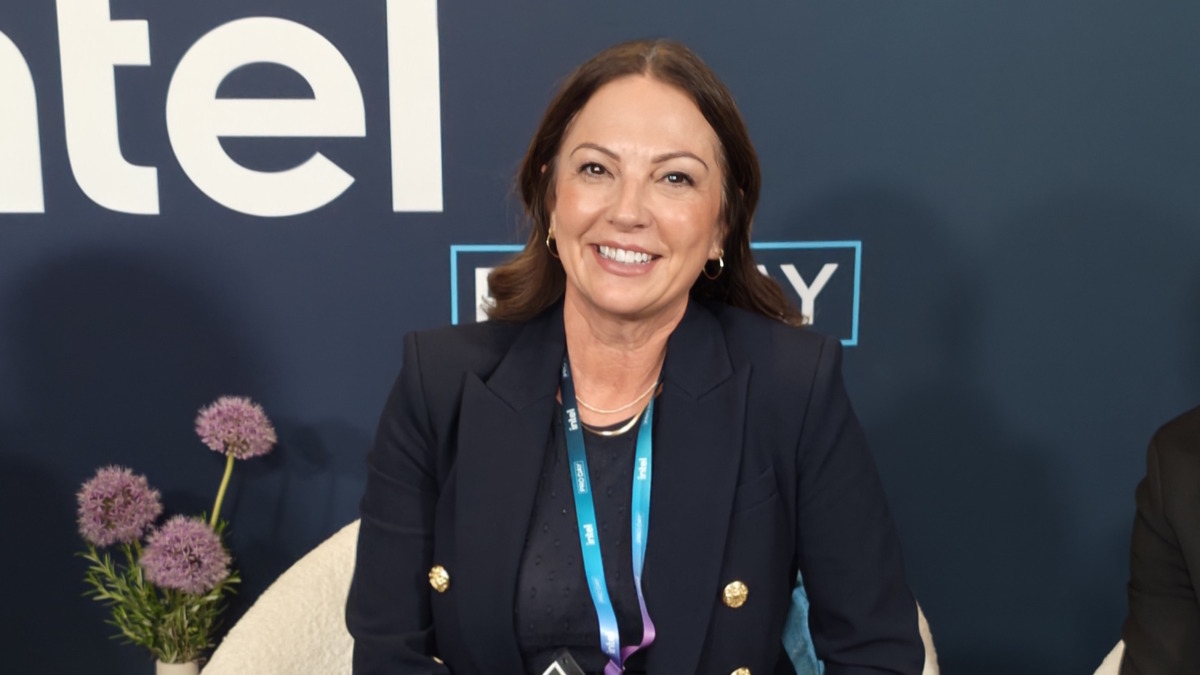
Use of Intel vPro is “skyrocketing” says Jen Larson, Head of Intel vPro

“Head of Intel vPro” isn’t Jen Larson’s proper title. Officially, she’s “Intel GM, Commercial Client Segments“, which sounds much more grandiose – but on all the occasions we’ve chatted it’s her passion for vPro that stands out. And that was equally true when we met at the Intel Pro Day in New York last month.
This marked the launch of Intel’s latest professional graphics cards and news that over 125 commercial laptops would go on sale with Core Ultra Series 3 chips with Intel vPro. We provide a full guide to Intel vPro here, but in short it’s the low-level technology that allows IT teams to manage laptops remotely.
There’s every chance that you’re using a commercial laptop – one designed for company rollouts – and if so it may well support vPro. Which is wholly pointless unless the tech is activated. And therein lies the battle for Intel: how do you make IT teams aware of how Intel vPro can make their lives easier and persuade them to activate it?
Intel vPro in 2026: how easy is it?
This brought me to my first question: how much easier is it to activate Intel vPro now compared to, say, a year ago? Is it a one-click install?
“I will say that it’s drastically easier,” said Larson. “You can activate in minutes versus days, a few steps versus multiple steps, as we had before, and no infrastructure for Intel vPro.”
One big change has come via Intune integration. This landed on 15 September 2025, and made it far simpler for businesses to activate their fleet of vPro devices. (You can read a handy guide to doing so here.)
This had an immediate effect, Larson told me. “We saw our activation skyrocket,” she said, adding that the 1,300+ activations figure quoted in her earlier presentation, during Intel vPro Day, was already out of date. The figure for global commercial customer activations since the Intune announcement now stands at over 1,400.
“So you can see the interest in vPro, because it’s simple,” she added. “And those are customers that are global. Those are customers that are across big, massive enterprises, government, education and SMB.”
Why activate Intel vPro?
One reason for Intel’s big push is the aftershocks following 2024’s CrowdStrike outage. This affected 8.5 million Windows PCs and disrupted industries across the world, but also highlighted the large number of businesses that weren’t using the Intel vPro technology that they had paid for.
So what would happen if the same type of problem struck today?
“The difference would be a lot of customers have activated vPro now, and so when you get that manageability capability and you’re able to utilise it in the event of an outage like that, it’s a very, very quick remediation,” said Larson.
She added: “I think there were many incidents that were reported in the news during [the outage] that were using vPro and not using vPro, and you could see the difference clearly.”
In short, that IT teams who had activated vPro could roll back their fleet with one simple command, while those who hadn’t needed to manually visit every single PC to roll it back to before the update. And remember, some of the affected companies had many thousands of PCs.
Listening to companies and partners
Much of the drive to simplicity has come from Intel’s customers, Larson explained. “One of the reasons you see what you’re seeing with vPro… is based on full customer feedback across all of those segments that I talked about a minute ago: large enterprise all the way down to the smallest business.”
The message was clear, said Larson. Those customers were saying: “Please don’t give us a new tool. Please integrate with the tools that I already have.”
Which is what, Larson claims, Intel has done. “We’ve integrated with DEX [digital employee experience] tools, we’ve integrated with the EDR vendors that they’re using – security ISVs, etc – so making sure that it’s super simple for IT.”
This allows the IT teams to “be more predictive and proactive,” said Larson, “but also from an end user perspective too.”
Intel vPro rivals: AMD… and Qualcomm?
In the earlier presentation, Intel had mentioned how it performed against AMD on several counts, but there was no talk of Qualcomm. This despite the fact that the Canadian chipmaker announced its Guardian technology – a rival to vPro – in September last year. Why was that, I asked?
“We have 2x the number of years experience to our closest competitor,” said Larson, evidently unable to bring herself to say the word AMD. Or Qualcomm. “But really vPro is unmatched across competition, because we’ve been in the commercial space for a really long time, 20 years.”
I suspect AMD would have a different view, but I’ll leave that to a separate interview with them in the future. (In the meantime, you can read my interview with AMD’s Rahul Takoo from CES this year, which focused on the role of AI in business PCs.)
Intel vPro: the 10-year promise
I had also noticed a mention of a ten-year baseline service promise for Intel vPro during the day’s talks. What, I wanted to know, did that actually mean for customers? It boils down to security updates, Larson explained.
“It’s backed by our security assurance programme, which is number one across the industry. And that’s all about bug bounty programmes, the red teams that we have, the investments that we’re making in security by design, all of those types of things,” she said.
“We have a very repeatable Intel platform update process. We’re very transparent with our customers to make sure that our customers are getting the updates that they require and have all the information behind them. And so that is now across vPro, where our customers need it, available for ten years.”
Top takeaways from Intel Pro Day
So from all Intel’s announcements at Intel Pro Day, what was Jen Larson most excited about? “I’ve got one for the end user side and one for IT,” she replied.
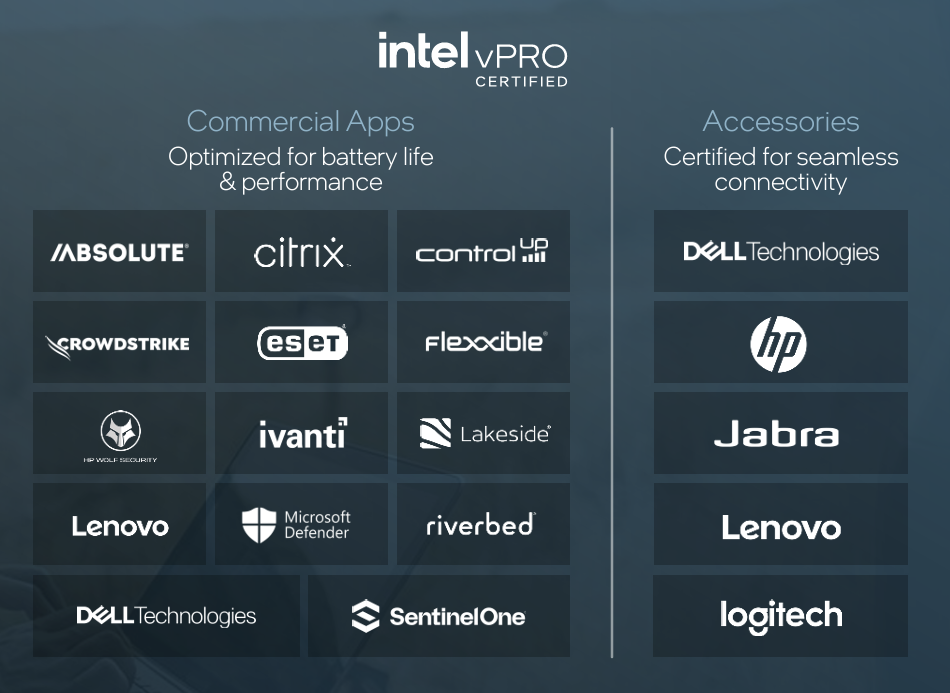
For end users, it was the all-new Intel vPro Certified Apps & Accessories Program. “With the Accessories Programme, I can walk and plug in just about anywhere. I can be in the office, I could be at Starbucks, or I could be at home, and everything’s just gonna work.”
The key idea being that Intel has worked with partners such as Dell, Jabra and Logitech to ensure that any certified product will “work seamlessly”, said Larson. “Performance, power optimisations, background activity savings, all of those things together.”
As can be seen from the excerpt from a slide below, Intel has also worked with a wide range of commercial apps to ensure optimum performance and battery life.
For IT teams, Larson picked out Device IQ for its “proactive predictive abilities and serving the end user”, she said. Here, the key idea is that Intel’s Device IQ offering will use telemetry data to spot problems before the user even notices them, and then suggest solutions to the IT team.
All of which sounds compelling. The question is whether it sounds so compelling that IT teams will start activating Intel vPro in even greater numbers so that we can avoid industry-crushing outages in the future. Let’s hope so. And, to keep things unbiased, likewise for AMD and Qualcomm’s rival technologies.
About The Author

Tim Danton
NEXT UP