Trending Topics

 Trending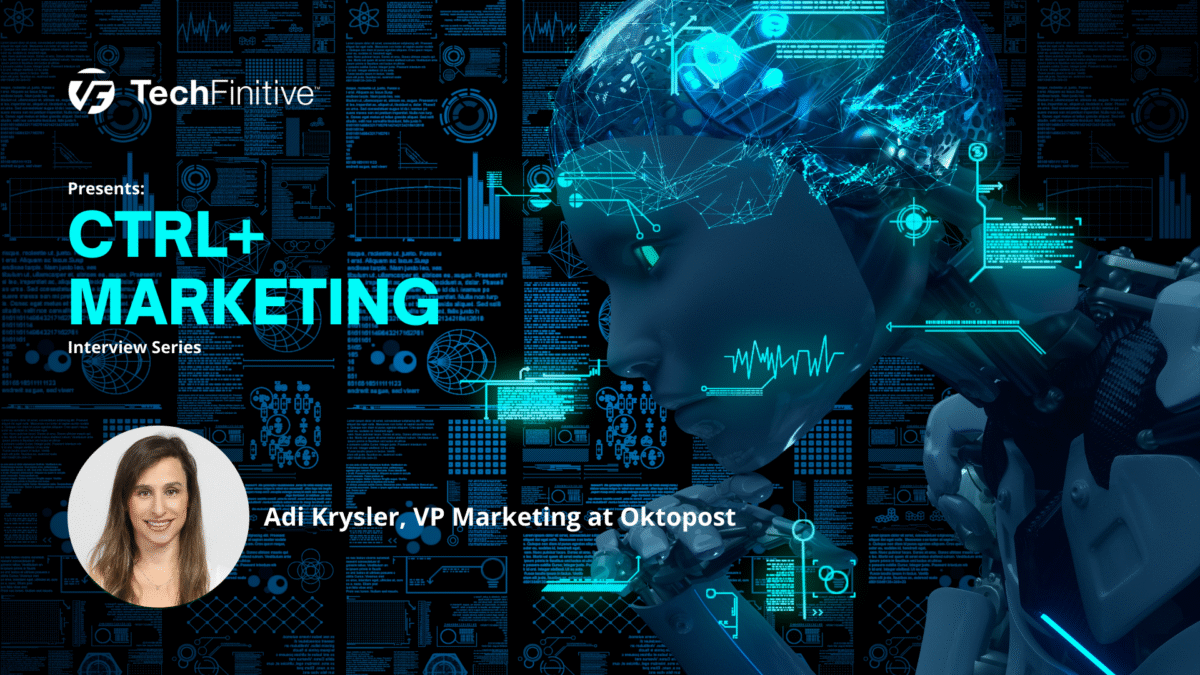
Adi Krysler, VP Marketing at Oktopost: “Don’t fall for the AI polish”

When it comes to navigating the ever shifting world of digital marketing, few leaders have as clear of a view as Adi Krysler. As VP of Marketing at Oktopost, Adi brings over 15 years of experience across tech giants and startups alike, for example at Wix and AppsFlyer, where she’s experienced firsthand how AI is rewriting the playbook.
For Adi, the biggest shift has been how visibility itself has been redefined. “If a brand doesn’t show up in AI search, they’re essentially invisible,” she explains. With website traffic down across the board as customers rely on AI instead of search engines, a whole new solution is required. And to Adi, that means focusing on Generative Engine Optimisation, which she sees as critical as SEO ever was.
But while GEO drives visibility, Adi is quick to stress that it can’t come at the expense of authenticity. “Yes, AI can deliver speed and scale,” she clarifies, but the real question to Adi is this: “Are we confident it can do the same for empathy or genuine customer connections?” At Oktopost, Adi is finding that by balancing the best of both worlds, pairing human voices with AI-driven efficiency.
In Adi’s experience, authenticity at scale can only come from amplifying those human voices. “When employees share thought leadership, customer stories or even simple observations about the industry,” she says, “it creates a ripple effect that no piece of generic content ever could”. By combining AI’s ability to create insights with the credibility of employee voices, Adi believes brands can scale trust without sacrificing connection.
With Adi’s philosophy in mind, we decided to open the interview with the fundamentals: how AI is already redefining her approach to digital marketing, and what that means for balancing scale with connection.
How has AI changed the way you approach digital marketing over the past few years?
Digital marketing tactics that once reliably drove traffic, leads, and engagement are no longer delivering the same impact they used to.
Now, AI is rewriting the playbook.
The biggest shift is simply that marketers are no longer tasked to optimize content for humans readers alone, we’re optimizing it for machines, too. Website traffic is down across the board because customers don’t browse like they used to, asking AI instead of Google for product comparisons, content summaries, and feature breakdowns. If a brand doesn’t show up in AI search, they’re essentially invisible, which is why Generative Engine Optimization (GEO) is quickly becoming as critical as SEO ever was.
This has led marketers to reimagine how content is distributed, what value looks like, and even how visibility is defined. Forced to create content that not only appears in search engine results, but that AI models will surface as well, the industry has had to adapt its strategies for newfangled tactics such as GEO (Generative Engine Optimization).
At the same time, demand for traditional content writers is shrinking and the role of the marketer is evolving in turn. Marketers are becoming pure strategists, people who can guide AI tools to produce content with purpose, consistency, and authenticity, while writers themselves are becoming editors, curators, and brand guardians.
AI-driven innovation is also driving the industry to reckon with how trust is built. Yes, AI can deliver speed and scale. Are we confident it can do the same for empathy or genuine customer connections? That’s where the human touch is still paramount to effective marketing. At Oktopost, we’re focused on finding the optimal balance by using AI to drive efficiency, while doubling down on authenticity through thought leadership and employee advocacy.
People too-often paint modern marketing as a “man vs. machine” gambit. In reality, the future of marketing will be built by marketers who know how to work with machines, without losing the authentic human voice.
How can AI-enhanced marketing create a connection that feels authentic to the humans who receive the communications?
The short answer is that AI is a tool and, like any tool, its impact depends on how you use it.
Yes, authenticity in marketing doesn’t originate from algorithms, and AI certainly can be used to churn out endless, mindless content at scale, devoid of authenticity.
To avoid this pitfall, marketers must do away with the notion that scaling with AI is about replacing humans. Rather, authentic human connections in an AI-driven world comes from the people behind the message, the values that drive the brand, and the purpose embedded in every piece of communication. In other words, the most effective marketers will be those who use AI as yet another tool to enhance human connection, not in an effort to replace it.
In fact, AI is uniquely able to create more authentic content at scale. Consider that AI can analyze massive amounts of data to uncover what audiences care about most, like topics, tone, timing, and more, all of which are insights that can help marketers craft messages that feel relevant and personal, not generic.
AI’s potential for enhancing personalization is at the core of Oktopost’s approach, one where AI is used to augment our ability to listen and respond with context, not just to speak louder or faster. We go to great lengths to pair AI-generated insights with employee-driven content, allowing our customers to “keep it real” without compromising on volume or scale. For example, AI can provide valuable data on key engagement trends, which real people, the genuine human advocates, can turn into authentic conversations.
With a communication strategy that’s both data-informed AND emotionally intelligent, marketers can build trust and drive deeper connections.
What does “authentic marketing” mean to you in an era of AI-generated content? Is true authenticity still possible at scale?
In a world flooded with AI-generated content, authenticity is no longer a nice-to-have. It’s the only way to stand out.
It’s absolutely possible to achieve this at scale but only if brands and marketers are willing to rethink their approach with a heightened focus on trust and consistent value.
Trust can’t be automated and credibility can’t be faked. What can be done is to empower the people behind the brand to speak, share, and engage as themselves. That’s where employee advocacy becomes critical, because when employees share thought leadership, customer stories, or even simple observations about the industry, it creates a ripple effect that no piece of generic content ever could. People will always choose to trust people over polished corporate messaging.
I’m a big believer in employees as a bastion of authenticity for brands as they offer something that no corporate LinkedIn account could ever replicate. While AI can help identify trends, optimize timing to post, and streamline execution for businesses, it’s the content that comes from someone with a name, a face, and a point of view that resonates most with audiences and converts leads into customers. Brands will scale trust not just by putting out more and more content, but by amplifying real voices across their organization. That, to me, is authentic marketing.
Has AI impacted your creative process — for example, in content creation, ad design or campaign ideation? If so, how?
It has, but not in the way people often assume. AI hasn’t replaced or outsourced creativity — rather, it’s changed where that process begins. What used to start with a blank page now starts with a trove of insights.
AI gives faster, clearer visibility into what’s resonating, what’s trending, and what audiences are engaging with across industries and platforms. That data helps marketing teams brainstorm smarter, launching campaigns that are no longer built on hunches but informed by real behavior, actual conversations, and real-time sentiment. By sharpening the strategy before anything is written, the resultant content is invariably more refined and effective.
For content creation and ad design, AI helps with acceleration as we can A/B test messaging variations, predict engagement performance, and optimize visuals dynamically based on what’s driving action. It reduces the guesswork and removes friction too.
That said, marketers must still remain intentional about keeping humans in the creative loop. While AI can replicate patterns, it can’t spark ideas that are truly original or emotionally resonant. Teams can use AI for speed and structure, but it’s the creative voice and storytelling aspect that makes a campaign memorable. That value still comes from people.
AI is now part of the creative process, but it doesn’t define it. It’s simply a catalyst for getting better ideas, faster.
How do you see the role of human marketers evolving alongside increasingly sophisticated AI systems?
The biggest shifts with AI are still ahead. As AI becomes more autonomous, there will be a natural handoff of executional tasks. Campaign creation, SEO optimization, asset resizing, even A/B testing, are all areas where AI can act faster, with more precision, and less resource strain.
Just because autonomous agents can help execute repeatable, rules-based functions, doesn’t mean marketing teams will become obsolete. Instead their roles will evolve and, in my opinion, become more interesting. The future of marketing belongs to strategists, brand builders and those who know how to guide AI systems toward outcomes, not outputs. Marketers will be responsible for defining voices, shaping narratives and asking the kinds of questions AI can’t answer like, ‘Is this message on-brand?’ or ‘Does this reflect our values?’ AI will inevitably get better at execution, but marketers will continue to lead in judgment and long-term thinking, and the strongest teams will be those where humans and machines are working together.
I like to think of AI as the new intern, someone fast, hungry, driven, and especially good with data, but who still needs strategic oversight to turn their raw abilities into meaningful outcomes. It can execute tasks, but only marketers can define brand voice, narrative, and build trust. The future isn’t to replace marketers. Rather, it’s collaboration at scale, with marketers acting as the conductors of a powerful AI orchestra.
Which AI trends or developments do you believe will have the biggest impact on digital marketing in the next 3-5 years?
The biggest shift on the horizon is AI as a decision-maker and not a task assistant. Right now AI supports marketers with research and execution, but over the next few years we’ll see it evolve into something more proactive where it can generate campaign recommendations, allocate budget across channels, and adapt messaging in real time based on customer and audience needs.
Autonomous marketing agents will be able to do more than optimize, they’ll be able to make decisions. Marketers will be there to define the goals and the voice while AI can execute against those frameworks with minimal oversight. This will dramatically compress campaign cycles and force teams to rethink how strategy is defined and deployed.
We’ll also see deeper integration of AI into the customer experience, extending personalization well beyond product suggestions. AI will be able to tailor full journeys, from content to outreach timing to material formatting, on a level that is not only hyper-individualized, but that can dynamically adapt in real time.
Finally, there’s going to be a massive focus on trust as AI takes on a greater role in content creation. AI may be able to target audiences on its own, but marketers will need to show how decisions are made. The potential for a smarter marketing ecosystem is readily available, and marketers will need to lead that evolution.
If you could give one piece of advice to marketing teams just starting to explore AI, what would it be?
Don’t fall for the AI polish. One of the biggest mistakes we see is teams becoming obsessed with GenAI’s ability to write an email or design an ad. They then inevitably mistake polished consistency for effective performance. In reality, just because an AI-written message is grammatically correct or visually clean doesn’t mean it resonates or builds trust.
The real question marketers need to ask themselves is: what problem am I trying to solve?
Before bringing in AI, the goal has to be defined. Are you trying to scale content? Improve campaign targeting? Reduce manual workload? The right tool for optimizing ad spend isn’t the same as the right tool for content repurposing or customer segmentation. AI is incredibly powerful but only when it’s aligned with clear business objectives.
My advice would be to treat AI as a teammate, not as a team in and of itself. It’s there to enhance the processes, not run them entirely. The most effective AI use cases happen when humans stay in the loop, curating, contextualizing, and bringing the emotional intelligence that machines will always lack.
So, start small and be clear about the outcome you want. Choose your tools carefully and remember that effective marketing isn’t about perfection but connection. AI can help you get there, but only if you stay intentional about how you use it.
More interviews
- Michelle Boockoff-Bajdek (BB), Chief Marketing Officer at Sitecore: “AI can deliver answers. But only you can decide which ones are worth acting on”
- Nathaniel Stich, Director of Growth Marketing at Scope3: “AI has fundamentally changed my creative process”
- Evanna Kearins, CMO at UiPath: “Embrace AI – but don’t forget the craft behind great marketing”
About The Author