Trending Topics

 Trending
What is DeepSeek — and what does it mean for your business?

Chinese company DeepSeek has unveiled an AI model that has shaken the world. Not only does it keep pace with American rivals, the company claims, but it does so for 5% of the cost.
In the days since that revelation, DeepSeek has been front of mind for tech CEOs, AI developers and those who invest in them. Tech stocks slid dramatically, led by Nvidia losing $593 billion from its market value. This, Reuters reported, was a record loss.
How can one little app cause so much stress?
American AI companies keep making large language models (LLMs) bigger in the hope that this leads to better results — which has largely held true.
But there are concerns that scaling laws will start to fail, leading to diminishing returns and spiraling costs. Beyond that, the high compute demands of such models means they churn through energy and water; this is why both the US and UK governments have prioritised building AI data centres.
DeepSeek takes a different route. It produces comparable results without all that compute, meaning it’s cheaper to run — and that China isn’t as far behind in the AI race as many believed.
Hence the stock sell-off, and President Trump calling it “a wakeup call for our industries”. That said, a shout out to OpenAI CEO Sam Altman, who sounded much more chipper than most in the industry: “We will obviously deliver much better models and also it’s legit invigorating to have a new competitor!”
What is DeepSeek?
DeepSeek is a Chinese AI research company that’s only a couple of years old. Like OpenAI, its aim is to make artificial general intelligence.
However, it uses a different architecture when designing its AI models than American rivals. While both models have hundreds of billions of parameters, DeepSeek relies on a system of “experts” that reduces which parameters are considered for a query. This is what leads to lower costs to run the model.
Beyond that, notes Scientific American, DeepSeek uses techniques such as internal reinforcement learning to improve the training process. And, rather than generating answers by predicting them word by word, it does multiple words at once.
DeepSeek claims its DeepSeek-R1 model is on par with OpenAI’s own top-end o1 model, and early users suggest it is comparable in many ways. The company also claimed it took only two months and less than £5 million to develop, but it’s unclear how accurate that is. In comparison, Altman has said that training ChatGPT-4 cost $100 million.
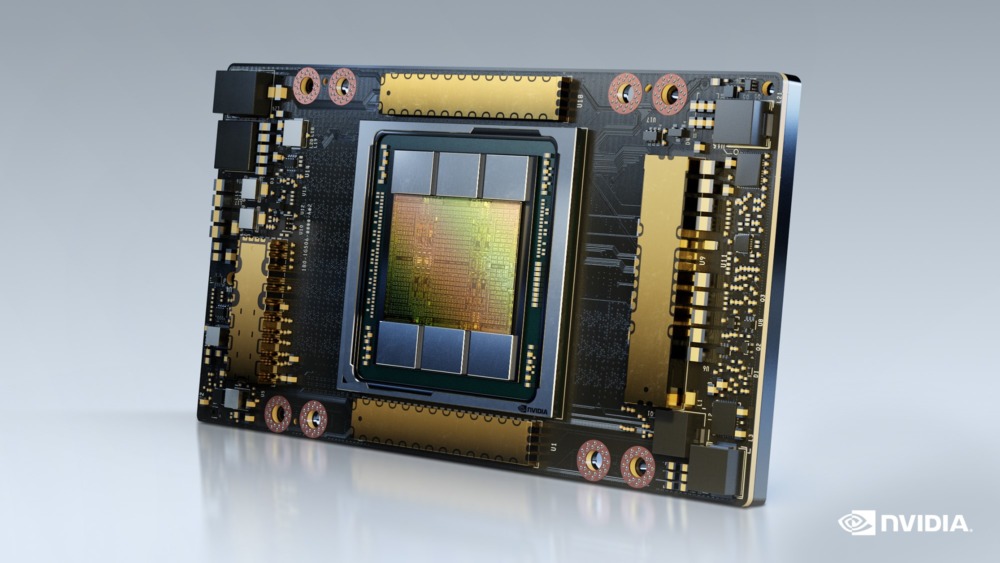
Then we come to the hardware these models are trained on.
DeepSeek said it used lower-powered Nvidia H800 chips to train the R1 model. That’s because Nvidia’s top-end A100 chips were banned by the US from export to China, though reports suggest DeepSeek had a stockpile to work with.
That has sparked the idea that DeepSeek’s push for efficiency stemmed from export-ban shortages — in other words, by trying to limit China’s technology sector, the US has inadvertently inspired innovation that’s now challenging its own AI industry.
Data downsides of DeepSeek
So you know how the US is panicking over TikTok’s dominance of social media, and may even ban the app or force a sell-off? That’s because the app is owned by Chinese firm ByteDance, and it’s seen as a national security risk to allow China to have algorithmic control over what video clips young people see.
Now, apply that to AI models: it’s clear that using a Chinese chatbot raises security issues for any data that’s inputted. Particularly if it that data could be commercially sensitive.
The risk is real. A report from Wired notes all the data, including chat messages and signup details, is sent back to China. The company’s privacy policy says: “We store the information we collect in secure servers located in the People’s Republic of China.”
Darren Guccione, CEO and Co-Founder of Keeper Security, noted in an email that organisations should consider the risks before using DeepSeek — and be aware that staff might try out the chatbot on their corporate devices.
“Inputting sensitive company information into these systems could expose critical data to state-controlled surveillance or misuse, creating a Trojan Horse into an organization and all of its employees,” he said.
“This also has significant BYOD (Bring Your Own Device) security and user-level implications since employees might download this application on their personal device which may then be used to transact on the organisation’s website, applications and systems,” he added.
On the upside, adds Wired, DeepSeek does have open-source AI models that can be downloaded and run locally. Plus, Perplexity will include DeepSeek models and host them in US or EU data centres.
There’s one more restriction to consider. This being a Chinese app, DeepSeek’s chatbots are unsurprisingly full of censorship: good luck finding any information about controversial subjects such as Tiananmen Square or Taiwan.
What does DeepSeek mean for AI in business?
There are two things for businesses to consider here — and both lead to AI becoming more accessible for all businesses.
First, as DeepSeek is open source, it’s available to anyone who wants it. Its high profile should also drive more attention and support for open-source AI, sparking and enabling research into these techniques.
Second, the current crop of AI is expensive — but evidently it doesn’t need to be that way. If DeepSeek proves successful, expect it to inspire different ways of designing models that are more efficient from existing AI giants as well as startups.
It’s the traditional “tick tock” IT innovation model: first build for performance, then optimise for efficiency.
In this case, more efficient systems mean cheaper ones. For businesses, that should lead to quicker return on investment than existing AI tools.
The final benefit, of course, is reduced environmental impact. Again, that could be great news for enterprises looking to show their green credentials.
Andrew Bolster, Senior Research and Development Manager for Data Science at Black Duck, noted that DeepSeek could make AI more accessible.
“DeepSeek’s achievement in AI efficiency (leveraging a clever Reinforcement Learning-based multi-stage training approach rather than the current trend of using larger datasets for bigger models) signals a future where AI is accessible beyond the billionaire classes,” Bolster stated.
Regardless of whether companies shift to DeepSeek or local rivals that leap onto the “smaller could work too” idea for AI, this could prove good news for businesses and their bottom lines.
Related articles
About The Author

Nicole Kobie
NEXT UP