Trending Topics

 Trending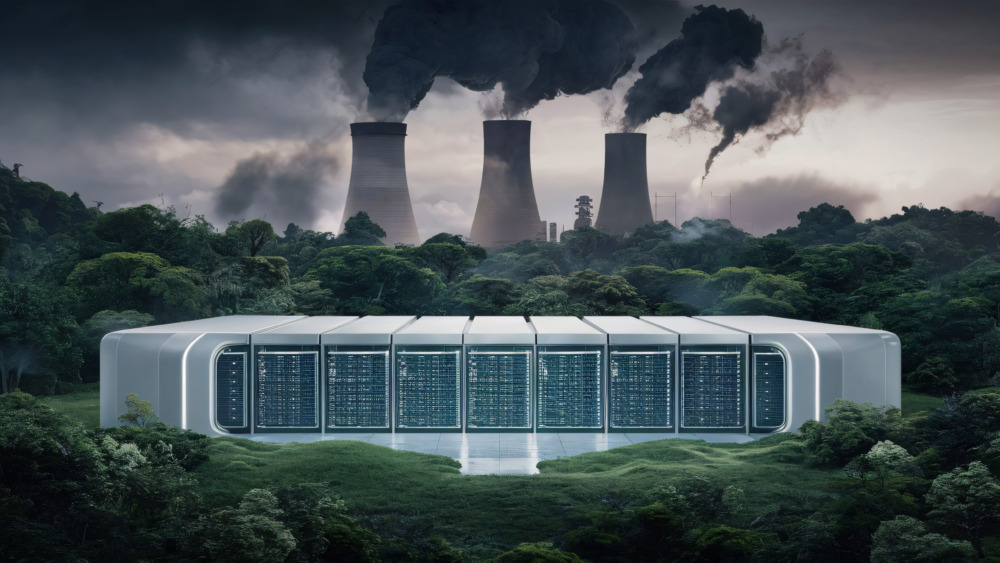
2025: the year data centres got interesting

It’s clear 2025 is going to be a big year for data centres: Microsoft plans to spend the equivalent of its annual profit building them globally to power its AI and cloud applications.
The rise of AI – and the looming backlash that may hit if generative AI and LLMs don’t pay off as predicted – have led to an equally sudden demand for data centres. But not just any will do, so many new ones are set to be built, chewing up land and power.
Microsoft is leading that charge. In a blog post last week, Microsoft President Brad Smith laid out a four-year roadmap for technology in the US ahead of Trump beginning his second term as president in a few weeks.
“Not since the invention of electricity has the United States had the opportunity it has today to harness new technology to invigorate the nation’s economy,” wrote Smith. “In many ways, artificial intelligence is the electricity of our age, and the next four years can build a foundation for America’s economic success for the next quarter century.”
AI infrastructure
To achieve that, America must first invest in infrastructure, secondly train people for careers in AI, and third export “American AI to our allies and friends,” Smith wrote.
On that first point, Smith said that Microsoft would invest $80 billion over 2025 on AI data centres – a big whack of cash even for one of the world’s most valuable companies. For full year (FY) 2024, Microsoft posted $88.1 billion in net income on $245 billion in revenue.
“In FY 2025, Microsoft is on track to invest approximately $80 billion to build out AI-enabled data centres to train AI models and deploy AI and cloud-based applications around the world,” Smith wrote. “More than half of this total investment will be in the United States, reflecting our commitment to this country and our confidence in the American economy.”
That’s an increase on already massive spending. One report suggested Microsoft spent $40 billion over an eight-month period in 2024 on AI capital expenditures, including $20 billion on GPUs and other chips, with $6 billion on operating costs alone.
Good news for tech…
This is good news for American tech, desperate to keep ahead of Chinese counterparts – but that’s not all down to data centres scattered across the country. Smith argues that some of the work is out of Microsoft’s hands and down to sensible decisions by the incoming administration, which has threatened significant sanctions before starting work.
“With a balanced and common-sense approach to export control policy, the United States can solidify the diplomatic relations that will be critical to global AI adoption,” Smith wrote, perhaps hoping to encourage good behaviour. Indeed, building out data centres will prove difficult if tariffs are applied against Chinese infrastructure makers.
That said, chip makers around the world have seen a rise in share prices after Microsoft’s plans were announced, with Foxconn posting record revenue in the fourth quarter, largely down to demand spurred by AI.
Bad news for the environment
AI is going to solve myriad problems, but first we need to exacerbate a few. Data centres require land, water and power – and the drive for the latter is sending big tech and cloud computing giants to invest in nuclear and even potentially turn to fossil fuels, hurting previous sustainability efforts.
While AI developers continue to discuss the potential existential crisis posed by artificial general intelligence (AGI) or an AI-powered super-intelligence, they’re exacerbating the climate crisis – an actual existential crisis, already costing the lives of many and billions of dollars.
Despite that, Microsoft Co-Founder and Former CEO Bill Gates has said we shouldn’t go “overboard” on concerns about data centres fuelling climate change. “Data centres are, in the most extreme case, a 6% addition [in energy demand] but probably only 2% to 2.5%,” he reportedly said in the summer. “The question is, will AI accelerate a more than 6% reduction? And the answer is: certainly.”
We could spend that $80 billion on climate mitigation techniques that we know work, of course, but that wouldn’t ensure American exceptionalism can continue by controlling this generation of AI, so never mind.
But if you’ve ever found data centres boring – surely not – data centres have become political, and now sit at the centre of debates on technological supremacy, the climate crisis, billionaire meddling, Chinese-US relations and so much more.
About The Author

Nicole Kobie
NEXT UP


