Trending Topics

 Trending
Three startups bringing blockchain into the real world


Blockchain is a digital technology, but it has real-world applications, letting machines talk to each other for automation, verification and transactions.
These three startups show how it’s done: automating the energy market so renewable power can flow from a small-scale producer to consumers, verifying physical infrastructure to power everything from electric vehicles to smart cities, and bringing transparency to agricultural transactions.
UrbanChain: building a renewable energy market
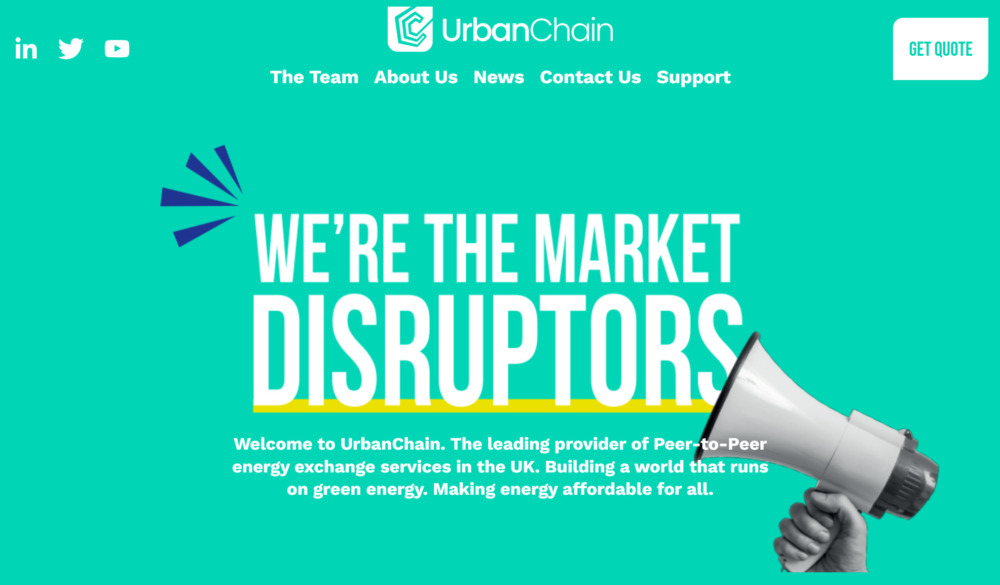
Founded in 2017, UK-based UrbanChain has one goal: build an alternative, peer-to-peer energy market powered by blockchain and AI to support renewable sources.
It may sound like buzzword bingo, but the aim is to let consumers buy – and even sell – their own energy. In short, to match renewable energy generators to individual buyers in an affordable, automated way.
“It enables end users to directly purchase traceable renewable energy, cutting out traditional intermediaries and providing greater transparency in the energy supply chain,” says Co-Founder Somayeh Taheri. “By giving consumers the ability to choose where their energy comes from and verify its renewable origins, UrbanChain promotes the adoption of clean energy and supports the transition to a more sustainable energy system.”
Why blockchain? Taheri pointed to the rise of distributed energy resources in properties and in communities, which are sometimes jointly owned. “This growing distribution of energy resources, ownership, and consumption necessitates a distributed system, like blockchain, to effectively manage this evolving energy landscape,” she said.
The UrbanChain system automates the interactions between renewable energy producers and customers, taking into account changing supply and demand, and deciding on the cost. “The system establishes distinct local energy markets based on factors such as the ownership and types of supply resources, price compatibility, and the required and available energy volumes,” Taheri says. “It then enables the energy exchange and automatically generates billing and invoice information.”
Next, UrbanChain is looking at batteries and electric vehicles, and how they can fit into this system, as well as scaling up in the UK and running pilot programmes in the US and India.
Agridex works to pay farmers
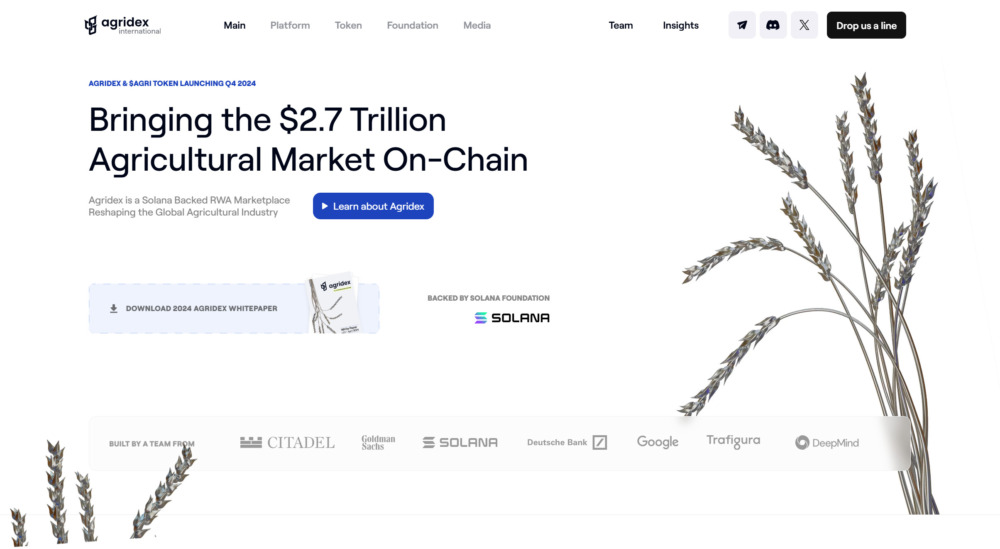
The global agricultural trade is plagued by high transaction fees, delayed payments, and fraud, all fuelled by a lack of transparency and hurting the profitability of farmers and the integrity of the supply chain.
That’s according to AgriDex, which was founded in 2020 in an effort to streamline transactions, get farmers paid promptly, and ensure food could be traced from farm to table.
For that, they turned to blockchain. Why?
“Its decentralised nature reduces reliance on intermediaries, thereby lowering transaction costs,” the company told us in an email. “The use of stablecoins also allows exposure to the US dollar and the option to hedge against local currency volatility while dramatically lowering the extortionate settlement fees that traditional methods provide.”
Beyond that, the immutability of blockchain records helps secure data and smart contracts allow near-instant, automated settlements, helping to avoid delayed payments. “By leveraging blockchain, we can offer a platform that is not only efficient but also fosters trust among all stakeholders in the agricultural supply chain,” the company said.
AgriDex designed its platform to be simple to use: create an account, get verified, and start trading. Farmers can list produce on the AgriDex marketplace alongside sustainability certificates, and buyers can browse and purchase. The use of smart contracts on the Solana blockchain means payments are made in seconds, at a cost of 0.5% rather than the usual 3-6%. Farmers get paid immediately, and buyers can track the product and see who handles it.
“By integrating blockchain technology with physical infrastructure, we aim to bridge the digital and tangible aspects of agricultural trade,” AgriDex added.
Next up, AgriDex is planning to expand its offering to include financing as well as insurance to farmers, using blockchain to keep it transparent, easily accessible, and affordable.
“We are also developing the tokenisation of invoices and financial agreements, unlocking significant trade finance opportunities and liquidity for underserved agricultural stakeholders. At the same time, this infrastructure offers financial service providers access to reliable, institutional-grade yields,” the company added.
But, as you may have discovered if you clicked the link, AgriDex isn’t open in all countries. While it worked for us with a VPN set to Europe, Asia and America, it said the service was unavailable in the UK.
How Minima is bringing blockchain into the real world

Founded in 2018, Minima aims to make blockchain work for everyone – without all the fuss. By addressing centralised control, Minima looks to offer secure and energy efficient applications in the real world.
“We achieved this by creating a fully decentralised, lightweight and quantum-secure protocol that can run directly on mobile and IoT devices as well as edge devices such as cars, robots and drones,” the company said via email.
“Overall we are focused on making blockchain truly useful and accessible to all, without an end user even knowing blockchain is involved,” company representatives added.
That’s possible by Minima letting every device – be it mobile, IoT or edge device – run a full but lightweight blockchain node, allowing trust without any central authority. Instead of external miners or validators, transactions are validated via a collaborative proof-of-work model called TxPOW. No-one is paid for taking part, with rewards the utility in whatever service is being provided.
“You can think of the Minima blockchain as the spine of a book, where each node keeps a record of only the pages that contain the transactions relevant to it,” the company says. “Each node contributes its pages to create the full book and can reference the pages against the spine whenever it needs to check validity. This is what enables the blockchain to be so light.”
Practically, this can be used to manage a variety of transactions on real-world infrastructure. Minima is working with Zeekr Technology Europe for electric vehicle charging via Zeekr’s wall box batteries. The car and the wall box can communicate to each other directly using the Minima system, even without an internet connection, allowing validation for a transaction to be verified locally.
“These transactions can be triggered by QR Code, Wi-Fi Direct, Bluetooth or NFC transfers, depending on the methodologies chosen by our partners for a given use case,” the company said. “This capability makes Minima a truly decentralized and censorship-resistant blockchain that works both online and offline, making it ideal for secure, p2p transactions anywhere in the world.”
Next up, Minima is working with Arm to develop “chain-on-chip” technology, with an aim to powering applications in smart cities, autonomous transport and IoT networks – in short, everything a modern city needs.
Related articles about using blockchain for business
About The Author

Nicole Kobie
NEXT UP