Trending Topics

 Trending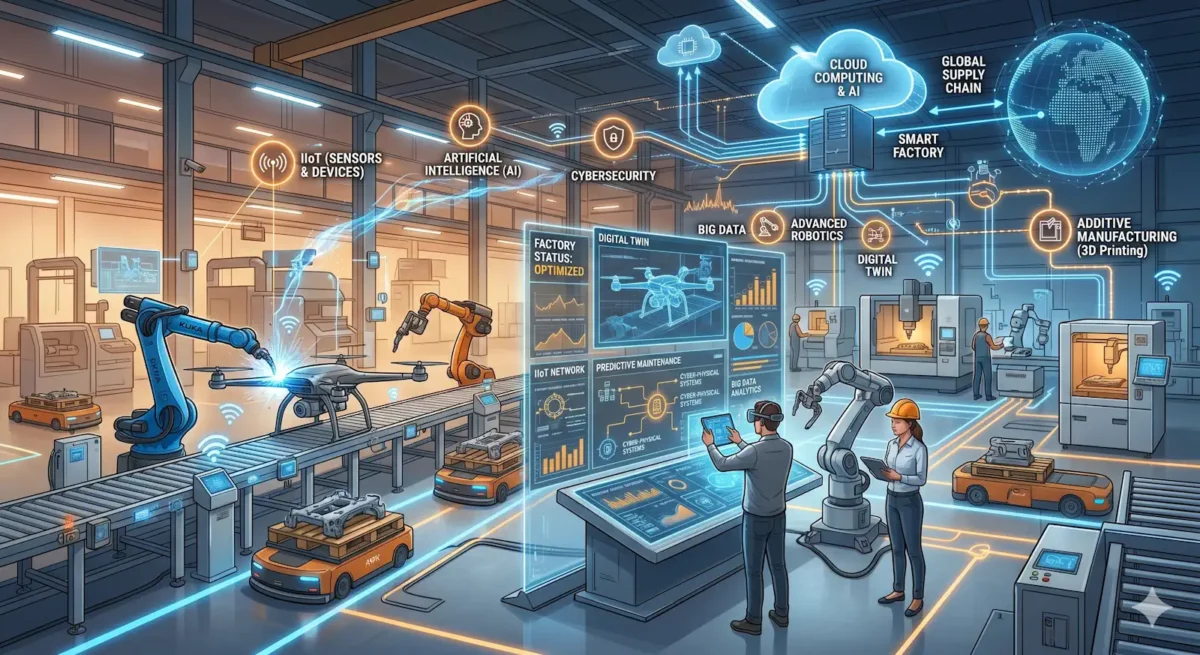
Syspro’s Industry 4.0 pivot: How a legacy manufacturing ERP is reinventing itself with AI and IoT

On a mid-sized factory floor, the pain is familiar: unplanned downtime, thin engineering teams, unreliable suppliers, and an ERP system that was built to record transactions, not interpret sensor data. That’s the problem Syspro is trying to solve. Its Industry 4.0 pivot shows how a legacy manufacturing ERP vendor can modernise around AI, IoT and predictive analytics without forcing customers into a risky rip-and-replace.
Syspro’s advantage starts with focus on manufacturing and distribution.
Unlike broader horizontal suites, the company positions itself as ERP built specifically for manufacturing and distribution, with almost 50 years in the sector and capabilities spanning food and beverage, automotive, industrial machinery, electronics, packaging, plastics, metals and chemicals.
Bringing AI into the ERP core
The most interesting part of Syspro’s strategy is its integration of AI, as opposed to bolting it on. For example, machine learning is surfaced inside operational workflows. Syspro says its AI models can be attached to its web-based interface using a “cards” infrastructure, allowing predictions, anomalies and insights to appear directly where users process transactions.
That matters because AI adoption in manufacturing often fails at the last mile.
A model that predicts equipment failure is useful only if maintenance, production planning and procurement teams can act on it quickly. Syspro’s use cases include predictive maintenance from sensor data, anomaly detection, demand forecasting and quality control using image analysis to spot deviations from standards.
Industry 4.0 without the rip-and-replace
Syspro’s IoT story follows the same practical logic. Machines generate real-time data, AI detects patterns, and ERP dashboards turn those signals into decisions. Syspro claims machine learning can enable operational predictions 20 times earlier than traditional threshold-based monitoring.
This aligns with a broader manufacturing shift we have already covered: predictive maintenance increasingly relies on sensor, IoT, and historical maintenance data to anticipate equipment failures before they happen.
For inventory and supply chain teams, the same logic applies. Combining ERP data with external demand signals can reduce stockouts, flag supplier risk, and limit excess inventory.
The risk is execution.
Larger suites from Infor, SAP, and Microsoft will remain attractive for enterprises that want global process standardisation, deep ecosystems and large-scale cloud programmes. Syspro must also ensure partners can deliver AI and IoT projects in plants where data quality, skills and change management are often bigger barriers than software.
Still, its trajectory is notable.
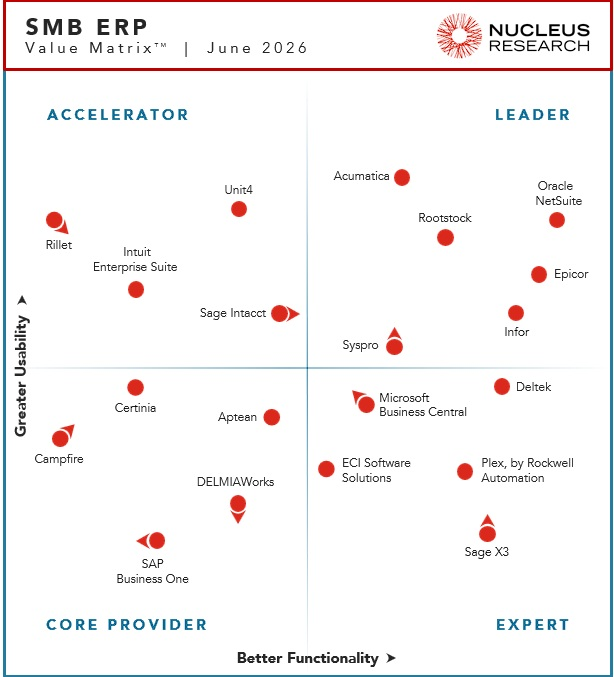
Nucleus Research named Syspro as one of the leaders in its 2026 SMB ERP Technology Value Matrix, alongside Acumatica, Epicor, Infor, Oracle NetSuite, and Rootstock.
The blueprint is clear: legacy ERP modernization won’t be won by chasing every enterprise feature. It will be won by embedding practical AI into workflows that manufacturers already trust.
About The Author

Kihara Kimachia
NEXT UP


