Trending Topics

 Trending
Six Isambard-AI supercomputer facts you need to know

Britain has a new brain, with the heavily trailed Isambard-AI supercomputer officially unveiled at the University of Bristol today. So what you do need to know? Other than what it’s actually being used for, of course. Here are six Isambard-AI supercomputer facts to impress your friends, family and colleagues.
How much did Isambard-AI cost to build?
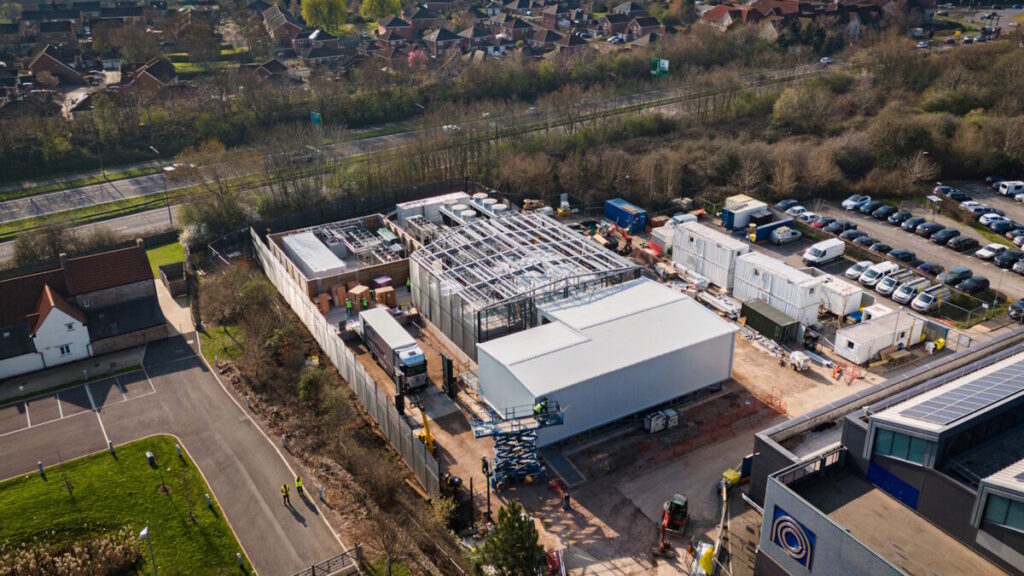
The total bill for building, delivering and rolling out the supercomputer comes to a cool £225 million. That’s around $300 million. All that money came from the UK Government as part of its £1 billion commitment to expand the UK’s AI compute capacity by 20 times within five years.
But the spending doesn’t stop here. Despite being the fourth most power-efficient supercomputer in the world, its running costs will run to roughly £75 million over the next five years. Again, the UK government is picking up the tab.
How fast is the Isambard-AI supercomputer?
The Isambard-AI supercomputer delivers 21 exaflops of AI performance. It’s the 11th fastest supercomputer in the world in terms of petaflops/sec, and comes fourth in the world for energy efficiency (although technically that was for the phase 1 version).
“The launch of Isambard-AI has brought the UK back into the global top 10 for public
supercomputing, marking our best ranking since 2002,” said the government’s press release.
“The AIRR [AI Research Resource will see the UK’s compute capacity increase to 420 AI exaFLOPS by 2030 – the equivalent of one billion people spending 13,316 years doing what the full AIRR will do in one second. That means all one billion people would have needed to start calculating more than 8,000 years before Stonehenge was built, without taking a break.”
While 11th fastest in the world may not sound too incredible, it’s a massive boost for Britain as its other best performers lie in 26th and 63rd place. Both of those – one built by HPE, the other by Lenovo – are new entries this year.
| Rank | System | Cores | Rmax (PFlop/s) | Rpeak (PFlop/s) | Location |
|---|---|---|---|---|---|
| 1 | El Capitan | 11,039,616 | 1,742.00 | 2,746.38 | USA |
| 2 | Frontier | 9,066,176 | 1,353.00 | 2,055.72 | USA |
| 3 | Aurora | 9,264,128 | 1,012.00 | 1,980.01 | USA |
| 4 | JUPITER Booster | 4,801,344 | 793.40 | 930.00 | Germany |
| 5 | Eagle | 2,073,600 | 561.20 | 846.84 | USA |
| 6 | HPC6 | 3,143,520 | 477.90 | 606.97 | Italy |
| 7 | Supercomputer Fugaku | 7,630,848 | 442.01 | 537.21 | Japan |
| 8 | Alps | 2,121,600 | 434.90 | 574.84 | Switzerland |
| 9 | LUMI | 2,752,704 | 379.70 | 531.51 | Finland |
| 10 | Leonardo | 1,824,768 | 241.20 | 306.31 | Italy |
| 11 | Isambard-AI | 1,028,160 | 216.50 | 278.58 | United Kingdom |
Source: TOP500 List – June 2025
What are the core components?
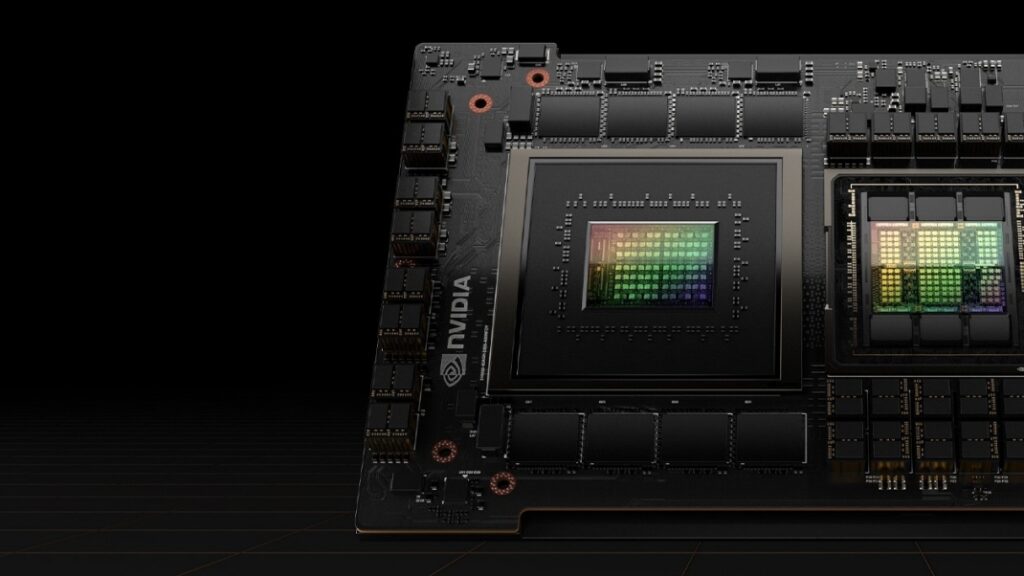
The Isambard-AI’s artificial intelligence stems from 5,448 Nvidia GH200 Grace Hopper Superchips. Each of which contains a 72-core CPU and Nvidia’s powerful H100 GPU.
Storage? How does 25 petabytes sound? That’s enough for over a million feature-length films in 4K. HPE’s Siingshot 11 interconnect keeps everything connected, while a thousand Intel processors help to co-ordinate the supercomputer’s activity.
Who made the Isambard-AI?
The simple answer to that is HPE, or Hewlett Packard Enterprise. And the company has form: it built six of the 11 supercomputers listed above. Including the two at the top of the list, El Capitan and Frontier.
HPE isn’t to be confused with HP Inc, which makes printers and computers. Hewlett Packard essentially split into two a decade ago, into one corporation focused on enterprises (similarly to IBM) and another on consumers and smaller businesses.
Huge credit must also go to Nvidia, for its its GH200 Grace Hopper Superchips that provide the muscle as described above.
How long did it take to build?
Remarkably, it only took 18 months for Isambard-AI to go from being commissioned to built. Normally this process takes three to five years for such a supercomputer.
“We treated the project like a high-performance processor,” said Simon McIntosh-Smith, Director at the Bristol Centre for Supercomputing. “We executed everything in parallel.”
The build was split into two phases. The reason we already talk about the Isambard-AI being put to use is that phase 1 went online in the summer of 2024, albeit with hundreds rather than thousands of GPUs.
It’s only now that phase 2 is active that it’s considered complete.
Finally, why is it called Isambard-AI?
That’s simple: it’s named after Isambard Kingdom Brunel, the legendary 19th century engineer who is famous for designing what was the longest suspension bridge of its time, the Clifton Suspension Bridge. Brunel also masterminded the railway connection between Bristol and London in the 1830s.
Not one to sit idle, Brunel also created the Great Western steamship. Built in Bristol, at the time it was the largest ship in the world at the time. More ships followed, each breaking new ground (if one can say that about ships).
Related articles on the Isambard-AI supercomputer
About The Author