Trending Topics

 Trending
How generative shopping experiences can boost your sales

We all know how AI language models can carry on conversations with spooky levels of fluency and knowledge. But the same technologies can also create a slick, engaging shopping experience for your website visitors. With AI-assisted searching, browsing and recommendations they can find the items they’re looking for quickly and easily – and you can ensure they see the perfect additional deals and promotions to boost your sales.
It’s possible to do all this yourself, but for most businesses it makes sense to use a hosted AI provider. That way you don’t need to invest in (and update) complex custom code, or costly hardware.
Here, we focus on Algolia. It is an established specialist in cloud services that integrate directly with major e-commerce platforms. And most pertinently for this article, it knows exactly how to harness the power of AI to make your catalogue of products more accessible than ever before.
Searching smarter with generative AI
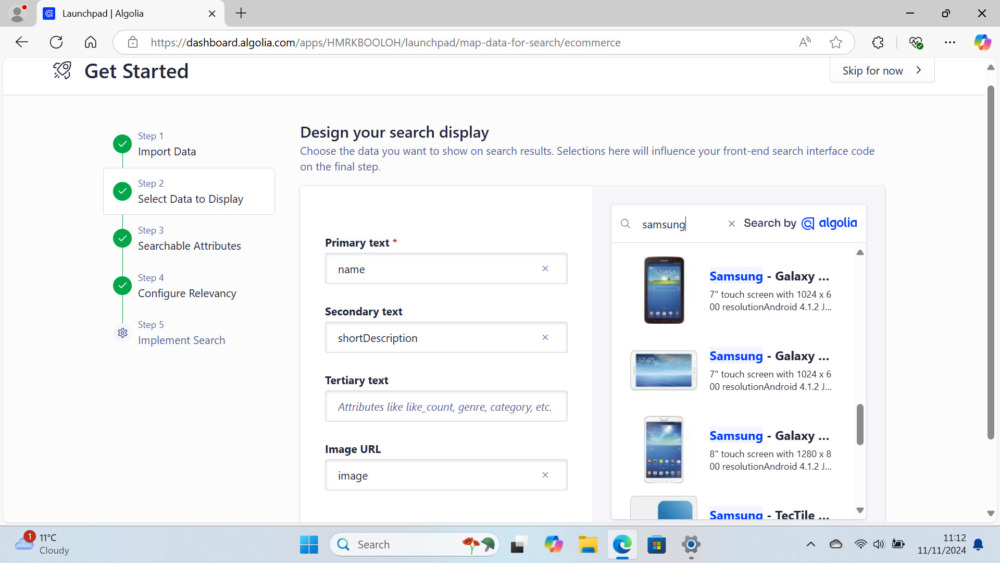
With any sort of sales, the most important thing is getting the right item in front of the right customer. Algolia’s pre-trained neural algorithms provide high-quality search results with no friction or fuss: customers can describe what they’re looking for in natural language, or even ask questions and get product recommendations in response.
This works thanks to a hybrid search algorithm, which combines AI vector searches with keyword recognition to understand the user’s needs and relay the most relevant results. It’s fast, too: Algolia’s clients report that searches are as much as 500 times as fast as legacy database search systems.
Those same capabilities can also transform the browsing experience. Once again, AI is used to identify and infer details about every item in your catalogue. This information is then used to automatically organise your offerings into meaningful categories, so visitors can browse and drill down to find the items they’re interested in. The idea is to provide smart, category-based search results that a traditional keyword search would miss.
In Algloia’s case, it learns from user behaviour too. That ways it can continually update and refine its search rankings and categorisations.
The result is a better search experience and happier customers – with no need to spend time and manpower manually sorting and defining product types. Nor do you need to push out tedious updates each time your catalogue changes.
Looking in the right direction
The next step is detailed reporting and analytics so you can keep track of exactly how customers are interacting with your site, and follow their journeys from landing to sale.
As well as making it easy to see what the AI’s doing for you, the data can expose emerging trends or blind spots in your presentation – information that can help you shape your offering to better match what customers are looking for. Perhaps even to update your marketing to provide a more appealing offering.
In Algolia’s case, a built-in simulator lets you track and compare ranking changes made by the AI, and an A/B Testing option lets you try out different rankings on your live site, to discover which perform best in the real world.
While helping visitors find what they’re looking for, Algolia can also ensure that your hottest deals get the exposure they deserve. In the integrated Merchandising Studio you can precisely customise the visuals and messaging your customers see while searching and browsing, and highlight new arrivals and deals.
Since the search engine dynamically re-ranks items according to demand, bestsellers will never be buried at the bottom of the page, but you can also “boost” or “bury” particular categories of product at any time to suit your business needs.

Stop Fraud in Its Tracks – Equip CISOs with a Smarter IAM Game Plan
With fraud losses hitting $485 billion globally and insider threats accounting for nearly 60% of breaches, CISOs face a perfect storm of vulnerabilities across customer, workforce, and partner identities. This checklist arms decision-makers with a proven IAM playbook to detect threats early, enforce least-privilege access, and accelerate compliance – before gaps become headlines.
The personal touch
Shopping AI doesn’t just help you understand what visitors are searching for – it can make recommendations tailored just for them. Simple examples include a drop-in carousel widget that provides a showcase of promoted items based on sales activity; AI-generated prompts can highlight products that are commonly bought together, have a similar look and feel, or go together in other ways.
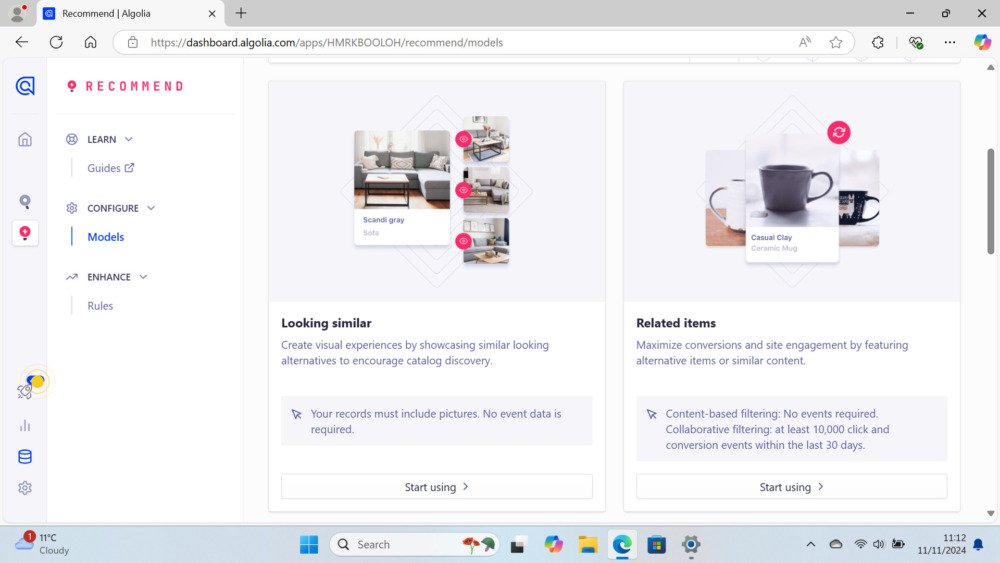
If you wish, you can take things further by building a fully tailored experience for each user – affecting their search results, browsing structure and other interactions. Choose your own criteria for categorising user interests and behaviour, or use the new personalisation feature to let the AI automatically learn about each customer’s preferences and create a bespoke experience to suit.
Populating the database
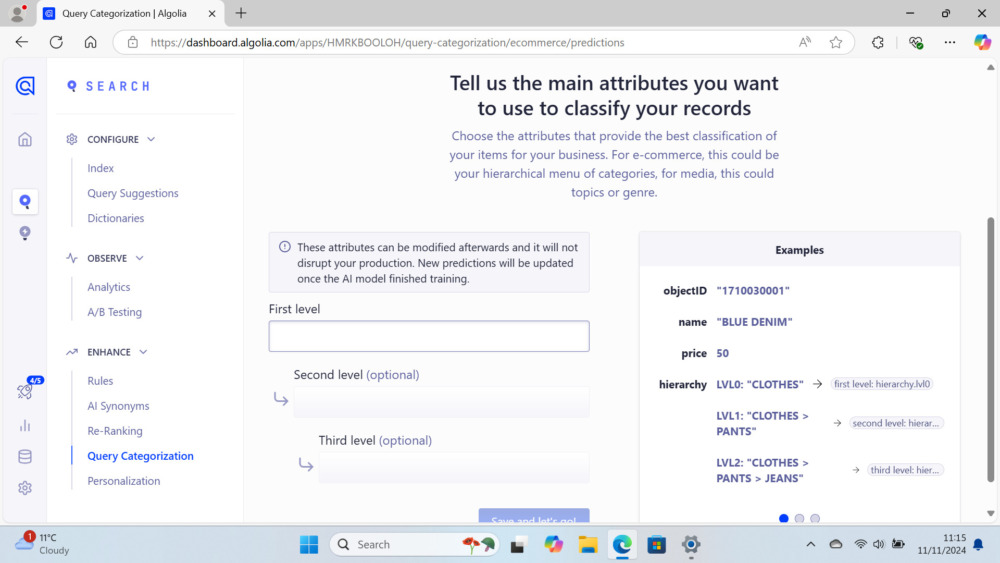
Algolia uses its own cloud servers for AI processing, so there’s no impact on your computing resources and no hands-on maintenance required. You can choose from datacentres in a variety of regions, including UK and European locations, to meet your needs for performance and data security.
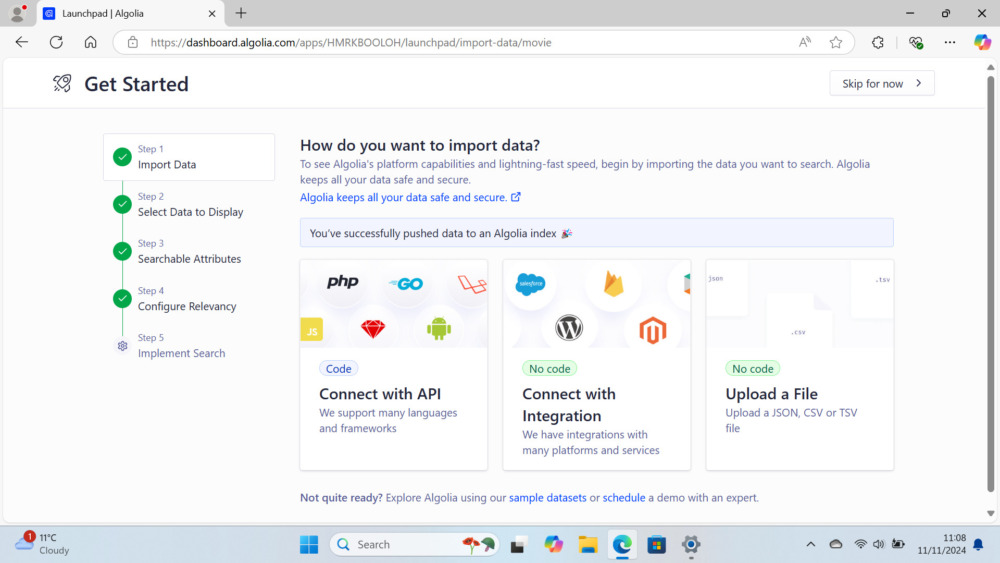
You don’t even need to manually upload your product offerings: Algolia works natively with platforms including Adobe Commerce, Salesforce Commerce Cloud and Shopify.
Other integrations connect Algolia to information-management systems such as WordPress and Zendesk – so as well as being a powerful tool for retail, it can provide instant AI-assisted search and cataloguing of internal databases, for knowledge workers or data providers. Other capabilities such as voice control and visual search support a huge range of uses, such as mobile access or image management.
Implementing Algolia
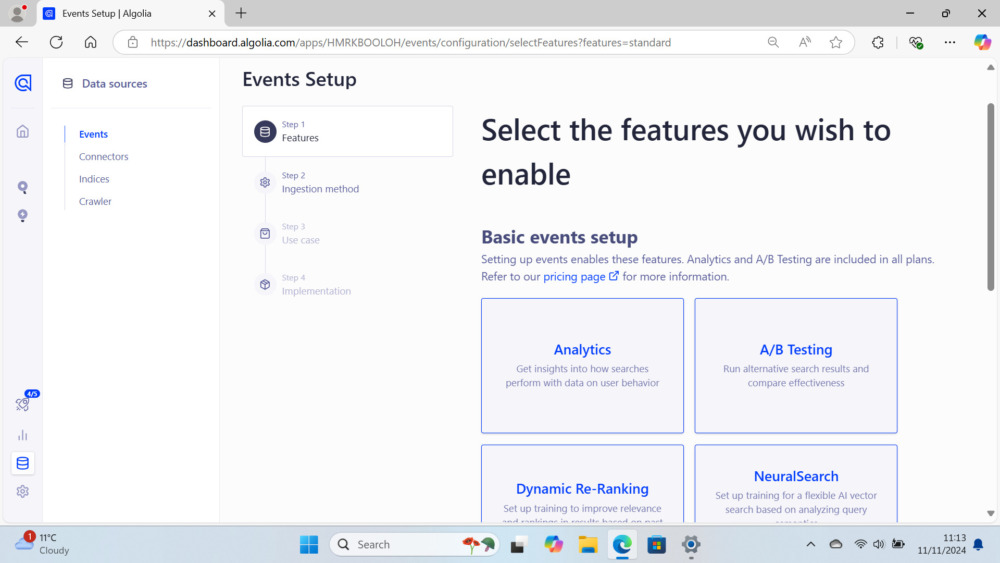
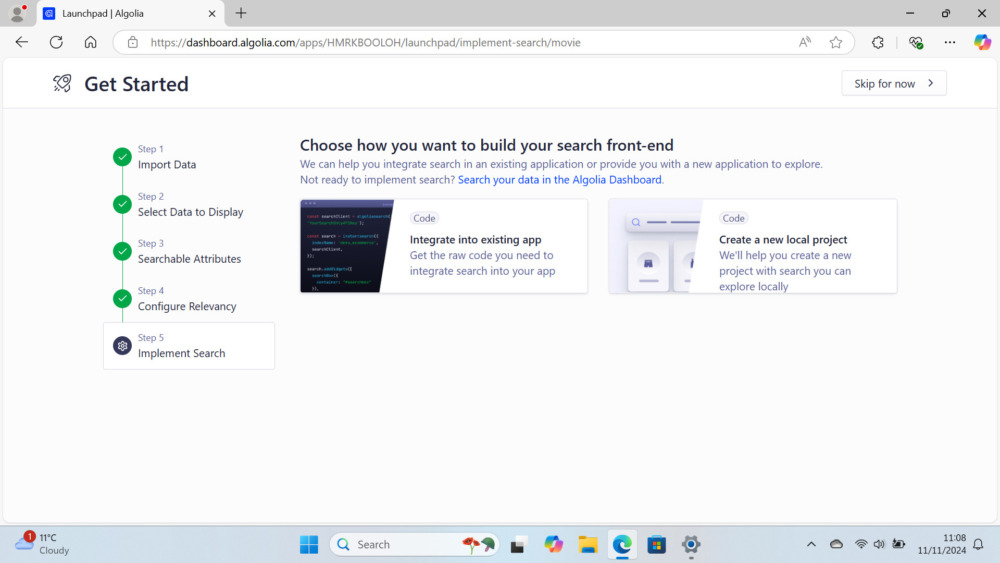
Setting up and managing Algolia’s AI capabilities doesn’t require any special AI expertise. The dashboard lets you browse and configure the attributes of each database item, set up custom dictionaries and queries and create rules that will govern how the AI behaves.
Algolia’s API supports C#, Go, Java, JavaScript, PHP, Python, Ruby, Swift and more, so whatever platform you’re using it should slot right in.
Nor do you need to design new interface elements to put Algolia in front of your customers. It provides a pre-made UI kit, designed to ensure smooth interactions on both desktop and mobile platforms.
You can embed individual controls, or work from larger templates to easily import Algolia features into your existing front-end. Free sample apps demonstrate what can be done, and how it’s implemented.
Can you trust generative AI shopping?
Even though consumer-facing AI is a relatively new field, more than 17,000 organisations across a wide range of industries are already using Algolia, including household names such as Decathlon, Slack, The Times, Twilio, Ubisoft and Walgreens.
But you don’t need to be a big business to take advantage of these AI services. Algolia’s startup programme offers free features for new ventures, while pay-as-you-go pricing ensures growing companies only pay for what they need
Meanwhile, annual plans help larger businesses who need regular budgeting. Whatever your needs there’s a tier to suit – and with an estimated three-year ROI of up to 382% (as calculated by Forrester Research in 2022) Algolia could be one of the best investments you ever make.
About The Author

Darien Graham-Smith
NEXT UP


