Trending Topics

 Trending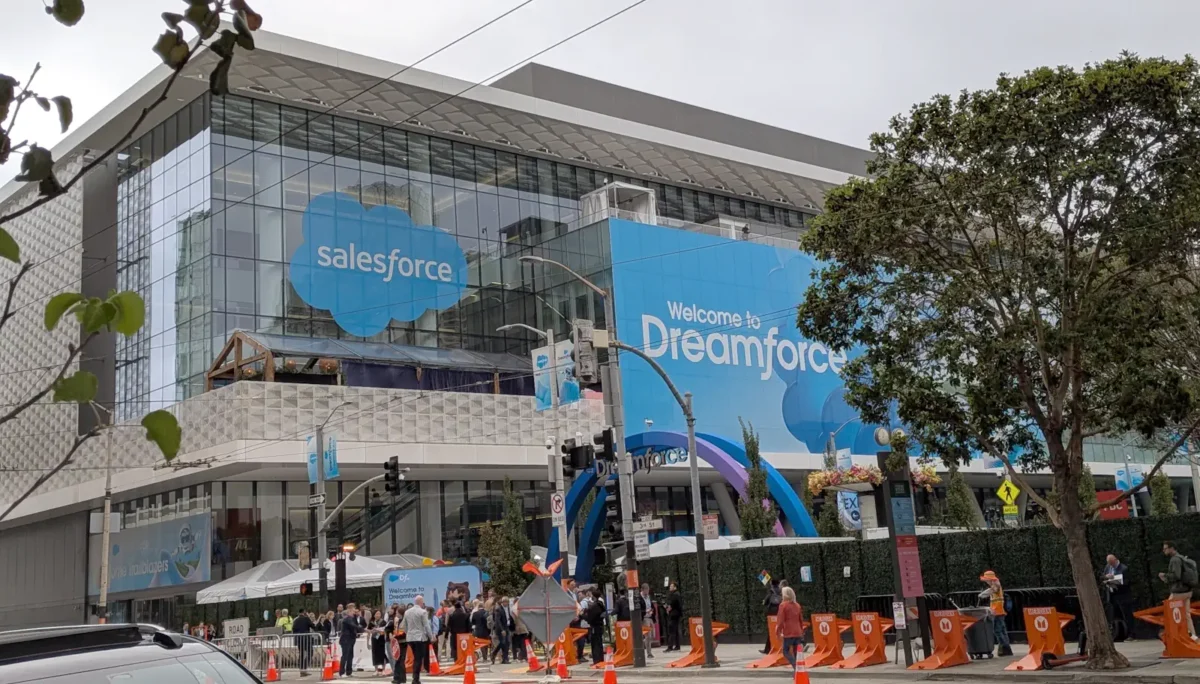
Dreamforce 2026: The five key takeaways

The crowds are departing another Dreamforce, traffic is returning to normal after the show closed off two of San Francisco’s busiest streets, and restaurants, hotels, and bars are counting their earnings after the biggest Salesforce convention to date.
Overall, the mood was positive. While an hours-long service outage on the second day of the conference caused red faces amongst staff, the feedback from attendees was good, with few grumbles.
But there was a lot to cover over this three-day event. Here, then, are my key takeaways from someone on the ground.
1. Salesforce is banking on AI to save it from a SaaSpocalypse
Over the last year, there’s been a lot of talk of how AI agents are going to steal business from traditional SaaS vendors.
According to Salesforce CEO Marc Benioff, nothing could be further from the truth, and he claimed that AI would not only turbocharge his business, but would change the way the industry used it. And it all boils down to data.
Salesforce has massive amounts of data points about how its customers use the platform, their past actions, and how they solve problems and interact with clients. That of that has all been stored and is ready for use in training AI models to suit Salesforce, in a way that outside vendors can’t match, several spokespeople claimed. It’s an argument Oracle is making too.
There is a compelling case there and it’s one based on scale. If you have the training data – and an AI agent that can use it correctly – then agentic commerce could make sense. The argument is that it’s the smaller SaaS vendors that will go to the wall. There may be a lot of wishful thinking going on and we’ll see.
2. Slack is the new normal
It’s been nearly six years since Salesforce bought Slack for $27.7 billion and it’s clear that it wants to get its money’s worth. From now on, Slack’s going to be the go-to tool for the company.
Benioff said he uses Slack more often than not when using his own company’s tools, and it’s clear the standard Salesforce interface we’re all grown used to is gone. Instead companies will be using AI to build their own versions, or just Slacking it.
“We’ve seen a lot of interface revolutions. We went from DOS to GUIs, and we went from GUIs to web, and we went from web to mobile,” Benioff said.
“You’re going to see AI interfaces that are dynamic and intelligent, that are composable and alive, and that can work with you in the fundamental administration of the applications, can work with you in building the applications, and work with you in operating the applications.”
So if you’re used to traditional interfaces get ready to start learning.
3. AI is going to be all-American
Anthropic has been in a long relationship with Salesforce, and it’s clear that the company is open to other relationships, within reason.
It was interesting that Anthropic’s CEO, Dario Amodei, got ten minutes on stage at the keynote, as did Nvidia’s Huang, who’s developed an AI agent with Salesforce. But Benioff devoted 45 minutes to a chat with OpenAI’s boss Sam Altman, where they agreed on slowing down AI development in the name of safety.
But noticeably absent from the discussion, and indeed from the conference, was any talk of working with non-American AI firms. You could have chilled a gallon of water when I asked a PR if Salesforce was considering working with Chinese vendors who are producing considerably more cost-effective models. It’s clearly not going to happen.
This makes sense from Salesforce’s perspective, but not for its customers, which brings us to the next point.
4. Stop nickel and diming us!
After talking to a lot of attendees the biggest complaint I heard was the extra fees Salesforce is charging for this glorious AI future.
One customer was really rather irate about Salesforce jacking up its prices for features she didn’t want. Her employer wanted a basic CRM system without all the bells and whistles but was seeing invoices jacked up and – even if they tried AI features – the costs were skyrocketing. They had pushed back and got reductions in costs after threats to move to another platform, but the upward pressure on prices is looking more and more inexorable.
The pricing strategy behind Agentforce is causing particular concern. Its pricing is opaque and subject to the whims of the seller. I heard more complaints about this than anything else in Salesforce’s portfolio.
The changing terms of the Agentic Enterprise License Agreement (AELA) are causing particular concern. Once Salesforce has customers hooked it looks like they will pay a heavy price when it comes time for renegotiation.
This is in line with the enshittification of so much business – once customers are on board, lock them in and start extracting value. There’s little sign that people are willing to give up on Salesforce yet, but this could be a long-term problem for the business if there are better alternatives to be had.
5. Salesforce hasn’t forgotten its culty roots
The first Dreamforce in 2003 had barely 1,000 attendees, but they were on a mission to convert the world to cloud computing. That San Francisco shindig was held just a few blocks away from the SF Scientology headquarters, and there was the same fervour for conversion – although Salesforce was a lot more convincing and did more good for humankind.
This year around 40,000 people flooded into the city and the battle over the efficacy of cloud computing has been won for decades. But there’s still a touch of the evangelical about the business, particularly among its Trailblazer community.
The Trailblazers are a mix of staff, developers, and users who are the evangelical of the company, and you only had to visit a couple of their sessions to see how hardcore they are. Even now that cloud is mainstream, and Salesforce is in an enviable position, these shock troops are still fighting the fight.
One of their brethren was awarded a gold lamé-colored jacket by Benioff himself for his years of service to the cause and, judging from the expression on his face, it was a career highlight. But there was still something a bit L. Ron Hubbard about the whole thing. We get it, folks, you won.
More by Iain Thomson
- Exclusive interview with Cindy Cohn: “The idea that the Big Tech companies are going to stand up for us against the government seems laughable”
- Meet Dan O’Dowd, Elon Musk’s least favourite billionaire
- Don’t panic, says Katie Moussouris: AI security isn’t replacing humans, it’s proving the need for them
- Letter from America: How Trump’s first year has transformed the US technology scene
About The Author

Iain Thomson
NEXT UP