Trending Topics

 Trending
Behind the scenes at Formula 1 British GP: the crucial role of technology

The great summer of sport is under way, and technology plays a more crucial role than ever. That’s true at Wimbledon but also at the British Grand Prix, which is arguably even more interesting from a tech perspective.
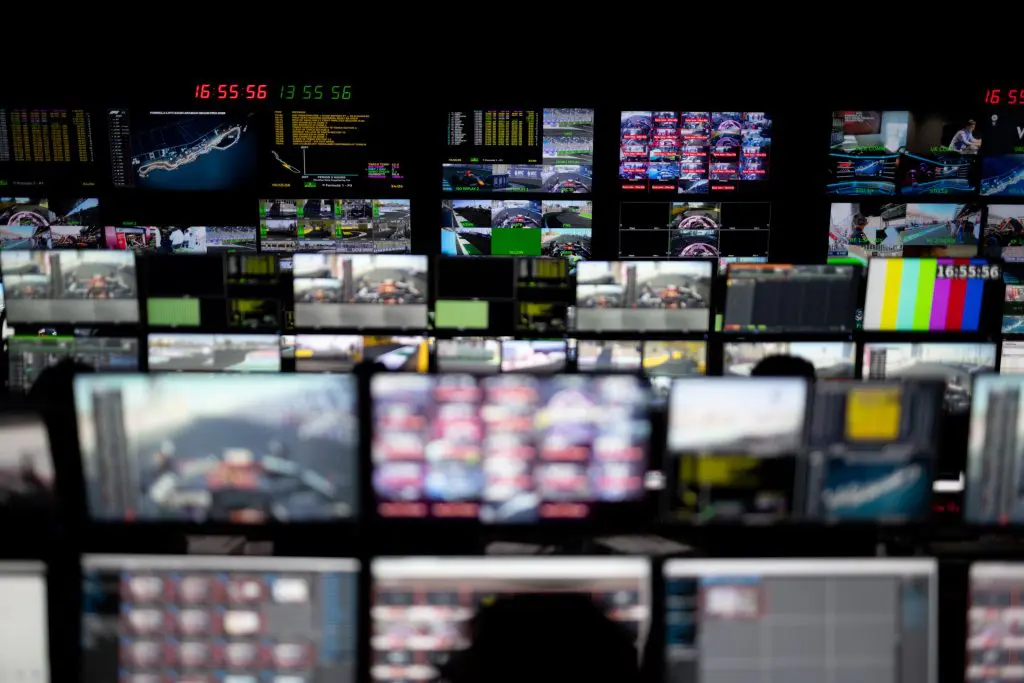
Take Silverstone, location of today’s Formula 1 British GP. The track is 3.66 miles long (almost 6km), and every centimetre needs to be captured. Along with 28 trackside cameras, seven roaming cameras and a helicopter cam, there are 90 cameras installed across the cars. To capture F1’s trademark roar, 150 microphones are scattered along the circuit.
That covers the audio visuals: now consider the telemetry, with 1,200 streams of data from each vehicle.
All this information needs to be swept up and transformed into a broadcast stream for F1 fans to enjoy live. And a version of that data must also be fed to each team, so that they can make the necessary strategic decisions.
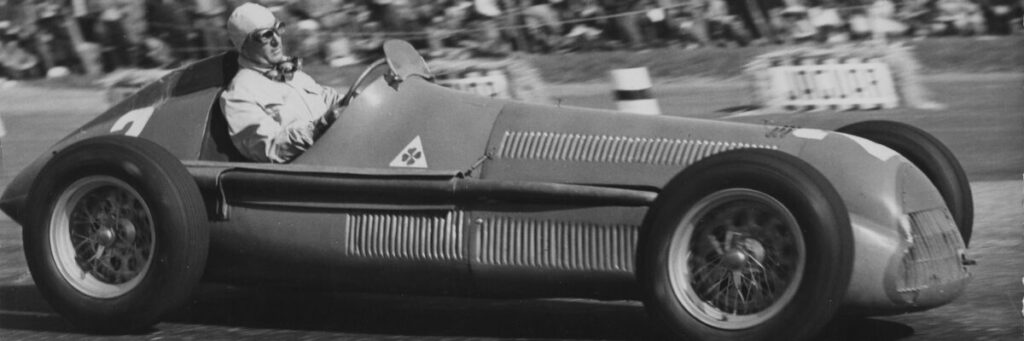
We’ve travelled a long way from 1950, when 120,000 spectators watched Giuseppe Farina sweep to victory at the world’s first Formula 1 race in his Alfa Romeo 158. It would be a further three years before any TV viewers could enjoy the race, when a highlights show gave non-attendees a taste of the spectacle.
At that point, in 1953, around 30 million TV sets existed in the world. Now it’s estimated that 1.6 billion people tune in to watch F1, whether live, on TV or on devices.
Scale of the F1 broadcast challenge
To see the scale of the challenge, Lenovo – F1’s official technology partner since 2022 and the Global Partner of Formula 1 as of last year – invited TechFinitive to the modest looking hut you see below. This is the ETC, Event Technical Centre, which is built from scratch for every race. It packs 750 pieces of equipment and 58 kilometres of fibre optic cables into its 375 square metres and takes five days to build.

“All those signals, from different cars, from different media, adds up to more or less 600 terabytes a week of data transmitted from this facility [the ETC] back to Biggin Hill for processing,” said Lee Wright, Associate Director of IT at Formula 1, during a behind-the-scenes tour.
180 staff will work on-site at Silverstone and they’re responsible for the signals sent back to base. “With all the cars on the grid, all the cameras, all the systems firing at once, we transmit about eight-and-a-half gigabits a second of data on both of our fibre optic links,” Wright explained.
At this point the F1 operations team at Biggin Hill, based in south east London at the F1’s Media and Technology Centre (M&TC), take charge. And more particularly the permanent collection of Lenovo servers that transform this messy mass of data into a single stream of video, audio and graphics for the world’s broadcasters.
Sustainability & Formula 1 technology
While F1 has earned a new generation of fans thanks to the hit series Drive to Survive on Netflix, it also has to battle arguments about its energy usage. It has committed to switch wholesale to sustainable biofuels for all F1 cars by 2026 and aims to reach Net Zero Carbon by 2030.
Part of this work stems from the technology. Six years ago, there was no ETC and M&TC: the whole broadcast infrastructure travelled around the world to each race, including the heavyweight servers. One of Lenovo’s key roles then, and now, was to work out savings stemming from new, more power-efficient technologies.
“We’ve done a lot of effort with Lenovo to reduce our technical footprint,” said Wright. “If you went back to 2019 we were 250 tonnes of freight. There were 40 cargo containers. And through that process of becoming a remote operation for production and just shrinking the size of the hardware that we were using, we’ve got three technical containers.”
He cited one example of reducing four rack unit servers, “fairly large units”, that previously rendered the timing pages that teams rely on (the ETC is also responsible for every aspect of on-track timing, with accuracy to one thousandth of a second). Now, Wright explained, that work is done by a “really tiny workstation”.
What’s coming next… and the inevitable role of AI
Just as every team in Formula 1 is racing for a millisecond’s advantage, so the technology team must hunt for innovation. That could be efficiencies, as in the example above, but it could also be using new technologies like AI.
Wright wouldn’t be drawn into any detail on how F1 will use AI in the future, but says that it’s already using AI PCs (made by Lenovo, naturally) to run mathematical models locally. Its coding team is also using AI to make software more efficient and improve commenting.
“We’re also working on AI proof of concepts that we won’t go into today, but there are some exciting developments in the industry,” said Wright. “And AR/VR glass activations as well for fan engagement.”
The F1 technologists have also created two tools to help the production team. “So there’s a tool called Track Boss that we developed that helps infer over data that the production team might not be able to see,” he said. “So to help tell if there’s another story along the track, something [like two cars] keep overtaking each other, something that we might then want to switch the programme to.”
All of which makes you wonder just what form F1 will take in another 75 years. Will viewers be able to jump from car to car in virtual reality, or even be able to take part in races as if they were there? We’ll let you know in 2100.
Related sports tech articles
- Behind the scenes at Wimbledon 2025: how IBM’s AI tools and hidden rooms provide a unique service
- Rio Ferdinand on data, technology and football: “It would have made me “100% a better player”
- How cloud computing transformed football – even at park level
- “Sports generate some of the richest datasets globally”: interview with Ryan Beal, CEO & Co-Founder of SentientSports
About The Author

Tim Danton
NEXT UP


