Trending Topics

 Trending
Rio Ferdinand on data, technology and football: “It would have made me “100% a better player”

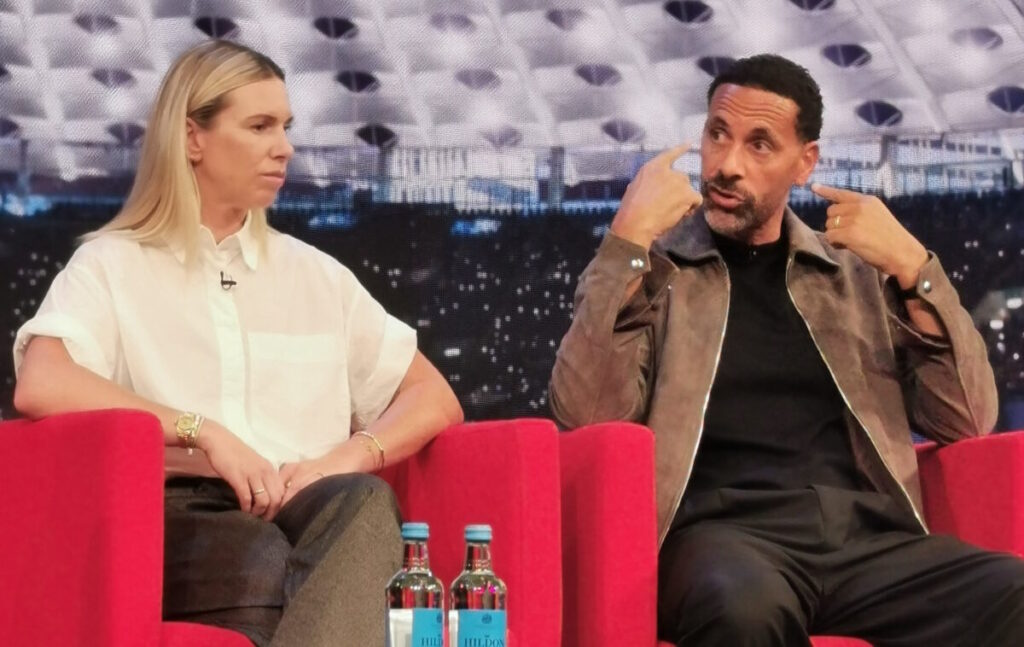
Yesterday at Lenovo Accelerate 25 in London, an event for Lenovo partners and customers, ex-Manchester United player and England international Rio Ferdinand told the audience that access to today’s level of data and insights would have made him a “100% better player”.
In an interview with Gabby Logan, former England goalkeeper Carly Telford and Rio Ferdinand explained the impact of data on the game in the past two decades. Here, in Match of the Day style, are the highlights.
Negotiating pay and finding new players
Few people consider footballers to be underpaid, but Rio Ferdinand described how one player used data to back up his argument for more pay when negotiating an extension on his contract.
“He went into the meeting with all this data printed out on sheets in front of him, and used it to say why he was still the best player in the world in that position,” said Ferdinand. We can’t reveal whether his arguments were successful or not…
Meanwhile, Brighton FC is using data to find new players. “They don’t buy anybody – they don’t even recruit in their workforce and staff behind the scenes – without data,” he said.
“Their success in terms of buying for very cheap and selling for £100 million to Chelsea and things like that, it’s been ridiculous.”
Using data to coach and improve football players
So how can data be used to give useful feedback to players? “You’ve got the egotistical players that think they always had a great game, and then you [can use the data] to go to them, well, actually you haven’t,” said Carly Telford.
“And then you’ve got the ones that hide in the shadows a little bit, they maybe don’t feel worthy enough, or that they are doing the right things. And that’s where you can hopefully give them confidence. You can show and demonstrate, having video technology and also data to back that up.”
Telford also believes you can use data to improve players’ technique. “You could be really good at something, but if you want to make it even better, how do we demonstrate that? How do we show the best of the best doing it repeatedly? And what do they do in their training sessions?”
The answer, you won’t be surprised to learn, is all in the data. Backing up your arguments and impressions with detailed information.
The dangers of hiding behind the data
Rio Ferdinand also made an interesting point about players who hid behind the data. “For instance, in my opposition [as centre back], I always ran the least, but I would argue it wasn’t a detriment to my performance or impact on the team.” After all, your best position – especially as a defender – may be right where you are.
But other positions on the pitch are different. “There were other players who didn’t run a lot, and the manager would go to them and say, I need more output from you.”
Still, that could mean that football players – naturally competitive – focused too much on the data than the impact.
“Wayne Rooney was an animal on the pitch, but he was so engrossed in getting his data on the Monday morning, he would be on that bike, waiting for the data to come up, then he’d go, right. I’m top for running, top for high intensity, and he’d be looking at others, going, where was you? You can’t say nothing to me.
“But it was a competition as well. So sometimes I’d see him in a game, and I’d say to him, are you running for the data?”
Data in football: the Zidane question
Not every change has been for the better. “Now we’re talking about a player, who’s the best for this era – comparing Cristiano and Messi, etc – it’s all data-driven,” mourned Ferdinand. “Whereas before, when you speak to a lot of players in my generation, a lot of the players considered Zidane as being the best in our generation.
“if you look at his data, he would be nowhere today. He didn’t score score a lot of goals – important ones, yeah – but he didn’t score a lot of goals, didn’t create a lot of chances.”
But the data misses something crucial: “Players who played against him realise actually his class was different, but if we go back to today’s metrics, the way people are being measured, it’s all data-driven.”
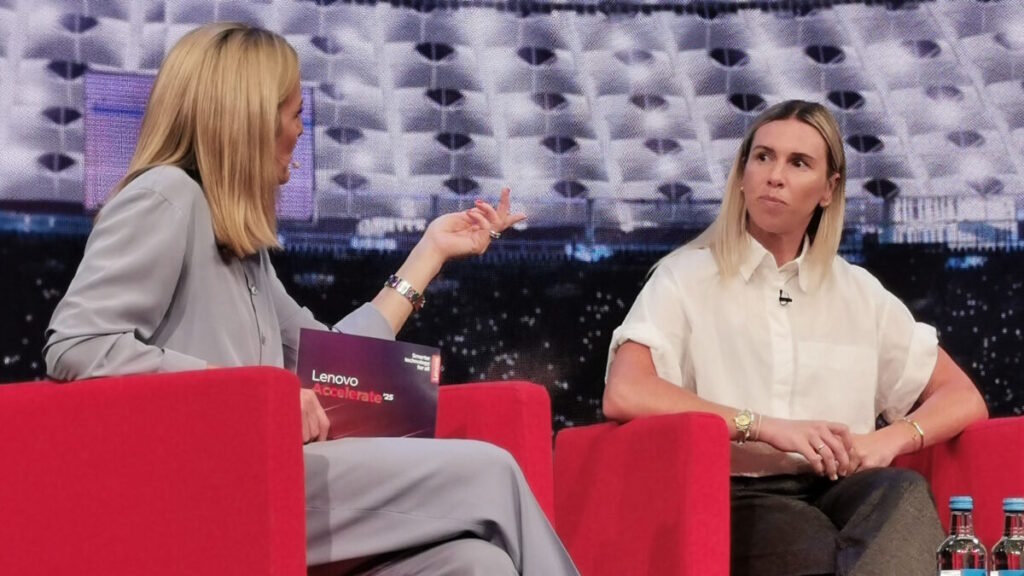
As Gabby Logan put it, the one thing data can’t capture is flair. “Look at players like Lauren James,” she said. “You want them to still have creativity. You want them to still think for themselves and not just be automated… you want them to see opportunities, to see space.”
“That’s something that can’t be replicated and can’t be data-driven,” added Carly Telford. “You have to allow the individual brilliance to be brought out.”
What lessons can businesses learn from the use of data in football? We’ll allow you, with your individual brilliance, to work that out.
Related articles
About The Author

Tim Danton
NEXT UP


