Trending Topics

 Trending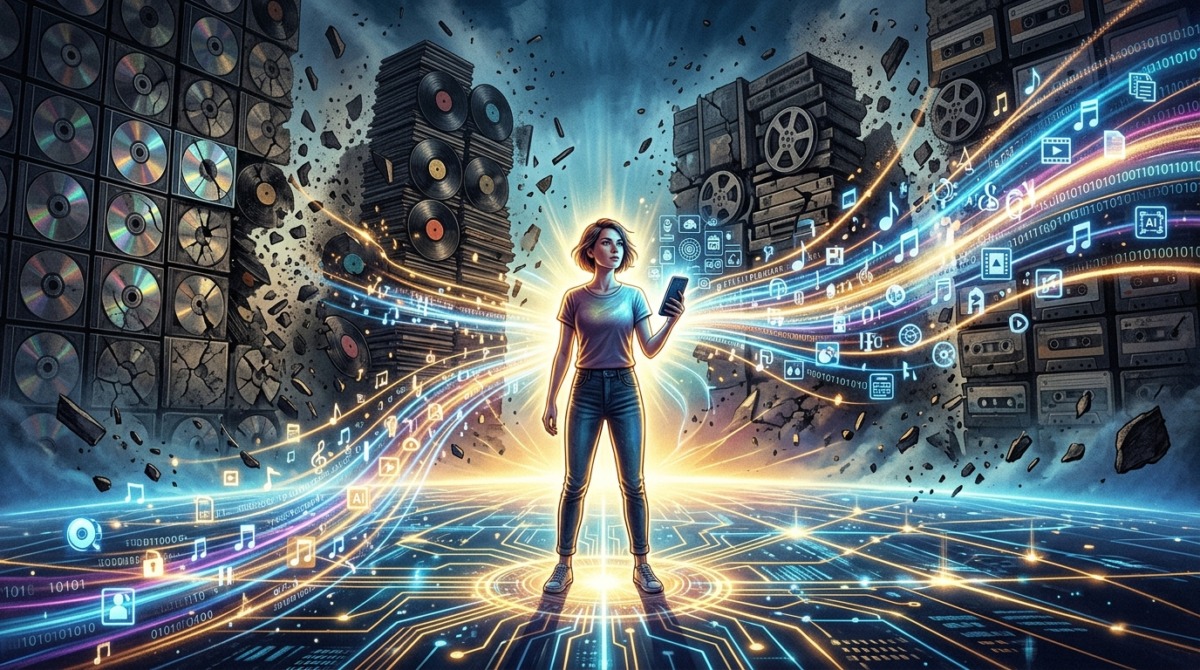
27 years later, we’re still living in Napster’s world

Table Of Contents−
Napster is often remembered as the service that nearly broke the music industry. A better description might be that it exposed a truth the music industry didn’t want to hear. Consumers had discovered a faster, easier way to get what they wanted, and no amount of litigation was going to make them forget it.
That’s why Napster’s 27th anniversary still matters. The technology itself is long gone, but the expectations it created are everywhere. We stream rather than buy. We subscribe rather than own. We expect content to be available immediately, on any device, almost anywhere in the world. In many ways, modern digital business is still operating according to rules that Napster helped write.
The responses below explore that legacy from different angles, but they keep returning to the same conclusion: Napster wasn’t really a story about music piracy. It was an early lesson in what happens when technology changes consumer behaviour faster than an industry can adapt.
What lasting impact did Napster have on the way technology disrupts established industries?
Alexandra Hayes – Generative AI & SaaS GTM Consultant | AI Product Strategy at WAPlus CRM
Napster’s most notable legacy is showing the world that consumers prefer technology that provides easy access, even against the resistance of existing markets. The music industry saw simplistically that Napster was a piracy phenomenon, but what the industry should have learned was that consumer expectations had irrevocably transformed. Users will always purchase the tools that make access to content and information simplest and best. Napster was the first example of how quickly the innovation of user friendly technology eclipses the old world of business. The companies that survive are the ones that continue to implement consumer friendly technology first rather than resisting.
Andrew Selepak – Professor at University of Florida
Napster was the beginning of turning the tangible into the digital. Prior to Napster, music was something we could touch like a CD, cassette tape, or record. Napster was 1s and 0s that we downloaded to a computer and then maybe burned to a CD. But for many, it was their first experience with media that they didn’t physically own, and a media that could be taken away from them. Two years later, Apple digitized music again with iTunes and Wikipedia digitized the encyclopedia. Napster revolutionized how we see media as something physical to something digital. And just as Napster was taken away from users by corporate and outside interests, the media we consume like movies on Netflix, videos on YouTube, music on Spotify, entries on Wikipedia, or recipes on Pinterest can be taken away from users by corporations and outside interests. Napster was the first example of, “You will own nothing and like it.”
What should today’s business leaders learn from the rise and fall of Napster?
Michael Salvaggio – CEO at SEO Brand
Napster’s biggest lesson for business leaders is that you can’t litigate your way out of a behaviour change. The music industry won in court and lost in the market. By the time they shut Napster down the consumer expectation of instant, frictionless access to any song ever recorded was already baked in. That expectation didn’t disappear; it just waited for a legal version to show up. iTunes came, then Spotify, then everything else. Every industry facing digital disruption right now is essentially in the pre-Napster moment of its own story. The question isn’t whether consumer behaviour will change, it’s whether you build the legal version first or let someone else do it while you’re busy suing people.
How did Napster change the relationship between consumers, technology, and content forever?
Harrison Mbemba, Founder of AuxChord
Napster permanently changed the relationship between consumers, technology, and content by disrupting the expectations around speed and ownership. In a time when the public depended on traditional media, like radio and television, or even cassette tapes and CDs, Napster introduced the idea of media-in-an-instant. It shifted power away from traditional gatekeepers and empowered consumers, paving the way for streaming platforms, creator-centric culture, and the overall digital economy we live in today.
Also from our featured section
About The Author

Ricardo Oliveira
NEXT UP