Trending Topics

 Trending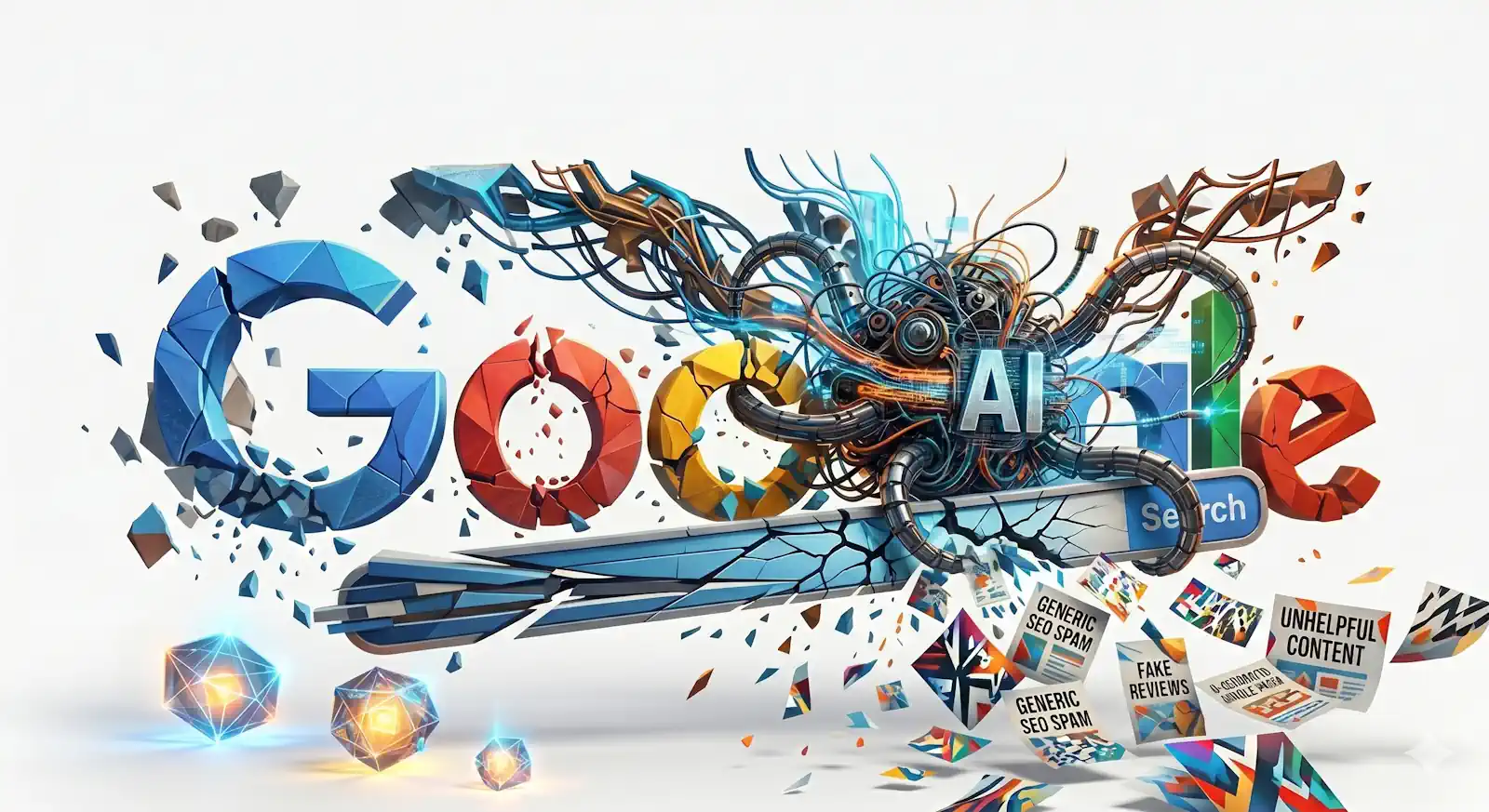
Is Google ruining Search with AI?

Google last week unveiled its “biggest upgrade” to its search tool since the company first hit the web. It’s needed. So let’s hope it fixes Google’s flaws rather than worsens them.
Here’s what the biggest upgrade involves narrowed down to three headline items:
- Building Google Gemini directly into the search box
- Integrating AI agents into search to work in the background on long-running projects
- Expanding search into Gmail and Google Photos, with user permission
That may not sound like much, but it’s shifting what search means. It will place users at the centre of each search by using their own data to personalise results. Not an entirely new idea for Google, of course. What is new is that it will personalise the results using AI.
“The goal of Search has always been simple: to help you ask anything on your mind – from quick facts to the deep, complex or hyper-specific questions that can be hard to articulate,” said Elizabeth Reid, VP of Search at Google. “To make this possible, we’ve continued to reimagine what Search can do with AI.”
If that all works, it’ll be splendid. After all, Google’s search has been less good of late, which is probably due to spam sites filling the web with well-optimised garbage. Anything that keeps Search working is good news for those still attempting to use the web for information.
It would also be good news for Google, which makes more than half of its revenue from Search. Just look at Google-owner Alphabet’s annual revenue of $402.8bn last year: the “Search & Other” division made up 55.7% of that total. A cool $224.5bn.
So Google doesn’t want us to all start getting our digital info from ChatGPT, DuckDuckGo, Ecosia or Startpage. But, despite having access to some of the best minds in AI, Google’s first round of search results using AI left plenty to be desired.
Google AI Overviews… what a palaver
As noted by The Verge, Google’s AI Overview immediately started returning odd results. For instance, it misinterpreted searches for the word “disregard” as an instruction to stop doing something. Similar issues were spotted with “ignore” and “skip”.
My own attempt to doublecheck the meaning of the phrase “without all the palaver” – it’s a funny phrase, okay – led to a generative chat style response.
“It looks like you want to skip the lengthy explanations and get straight to the point,” AI Overview said. “Please let me know what you are looking for – such as local restaurants, events, travel details, or quick answers – and I will provide a brief, direct response without fuss.”
Ironically, that actually did answer my question, but in a roundabout way. However, I was looking for a dictionary definition, such as that returned by the top traditional search result. A week later, I ran that search again: AI Overview is still acting like a chatbot rather than returning information.
A Google spokesperson told Android Authority that the search giant was aware AI Overviews was “misinterpreting some action-related queries” with a solution due soon.
AI not the answer to every problem
That’s one problem with AI Overview but there are others. One study suggested AI Overview failed to back up its claims via accurate citations 11% of the time.
All of that raises a wider question: if it doesn’t work all that well (yet or ever), should Google be cramming AI into search? On one hand, it would be increasingly difficult to buy into Google’s continued statements on the world-changing promise of AI if it didn’t dogfood the tech itself.
On the other hand, the whole point of Google’s Search, per its own motto, is “to organize the world’s information and make it universally accessible and useful”. If AI, be it in the backend or in AI Overviews, doesn’t help Google achieve that, then what’s the point?
Of course, Google infamously ditched one of its other mottos – Don’t Be Evil, which should be a low bar to reach to be honest – so perhaps we shouldn’t be surprised that Search is no longer about search but instead a marketing tool for generative AI.
AI Overview isn’t much use to the hype machine when it can’t return a sensible result when faced with a verb. But at least the results underneath the chatbot remain useful – for the time being, at least – showing there’s more ways to organise information to be “universally accessible and useful” than just AI.
That’s something many should remember right now.
More articles by Nicole Kobie
About The Author

Nicole Kobie
NEXT UP