Trending Topics

 Trending
What is Enterprise Resource Planning (ERP)?

It’s definitely not the sexiest acronym. However, behind those three bland letters is the digital backbone of every large company you have ever heard of. From manufacturing your breakfast cereal to getting your Amazon parcel on time, Enterprise Resource Planning (ERP) quietly powers the processes that keep businesses humming.
Let’s deconstruct it in more detail and show why it matters.
A brief history of ERP
Today, ERP is the management of all business processes, often in real-time via software and other technology. However, it wasn’t always this way: ERP began as basic inventory management software in the 1960s. It then evolved into MRP, Material Requirements Planning, for manufacturing.
By the 1990s, it had rebranded and expanded into other departments: finance, HR, logistics and more.
The term Enterprise Resource Planning was first coined by Gartner during this period. As technology became more powerful and sophisticated, companies suddenly found that they could centralise everything from payroll to procurement into one giant system and ERP as we know it was born.
What does ERP actually do?
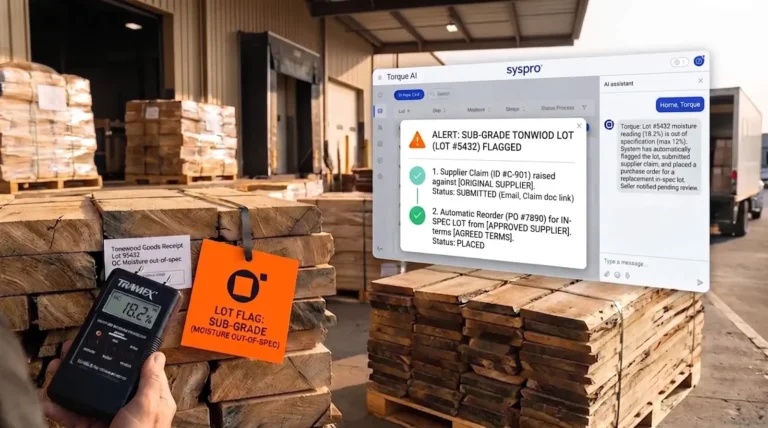
The best way to understand ERP and ERP systems is to think of it as one massive digital control centre connecting different business departments and units into a single shared system. So, when someone in sales logs a new order, inventory is instantly updated, finance gets the numbers, and logistics can plan delivery. Everyone is on the same page, using the same data.
Popular modules include:
- Finance – for accounting, budgeting, and reporting
- Supply Chain – managing inventory, procurement, and logistics
- HR – payroll, recruitment, and training
- Customer Relationship Management (CRM) – sales and customer data
Best practices keep ERP from going off the rails
ERP projects have a notorious reputation for going over budget or taking forever. This is often because companies underestimate the planning involved. Best practices include:
- Clear goals and leadership buy-in
- Process mapping before jumping into software
- User training to avoid confusion
- Change management to smooth the transition
A successful ERP rollout is as much about people as it is about tech.
Implementation: one step at a time
ERP varies from company to company. Depending on the unique requirements, it can be rolled out in phases: finance first, then logistics and so on (for example). Or it can be implemented all at once in a “big bang” approach.
Cloud-based ERP systems have made this more flexible, especially for mid-sized firms. Vendors such as SAP, Oracle, and Microsoft now offer modular, subscription-based platforms, cutting upfront costs.
The Good, The Bad and The Ugly of ERPs
Advantages
- Real-time data sharing across departments
- Improved decision-making and forecasting
- Streamlined operations and fewer manual tasks
Disadvantages
- High initial costs and complexity
- Disruption during implementation
- Risk of over-customisation leading to future headaches
Final thoughts: the rise of postmodern ERP
Traditional ERP was about one massive suite from one vendor. But the “postmodern” strategy mixes best-of-breed apps with a core ERP system. So, you might use SAP for finance, Salesforce for CRM and a separate HR platform, all connected via APIs.
Supporters of this approach say it is more agile, more customisable and more suited to the way modern businesses work.
ERP may still sound boring, but without it, the wheels of industry stop turning.
You might also be interested
About The Author

Kihara Kimachia
NEXT UP