Trending Topics

 Trending
4 things businesses can learn from the Lenovo Sphere keynote at CES 2026

Last night almost all 15,000 seats in the stunning Las Vegas Sphere were filled. And remarkably they stayed filled, despite the entertainment on offer being a two-hour presentation from Lenovo and partners on what this year has to offer.
The pace wasn’t always full throttle. And I started to fizzle in mild fear every time a laser-cutting effect came up, as that meant the seat buzzed uncomfortably for several seconds. But there were some interesting takeaways for businesses of all sizes, which I’ve distilled into four “lessons” below.
Personal AI is heading your way
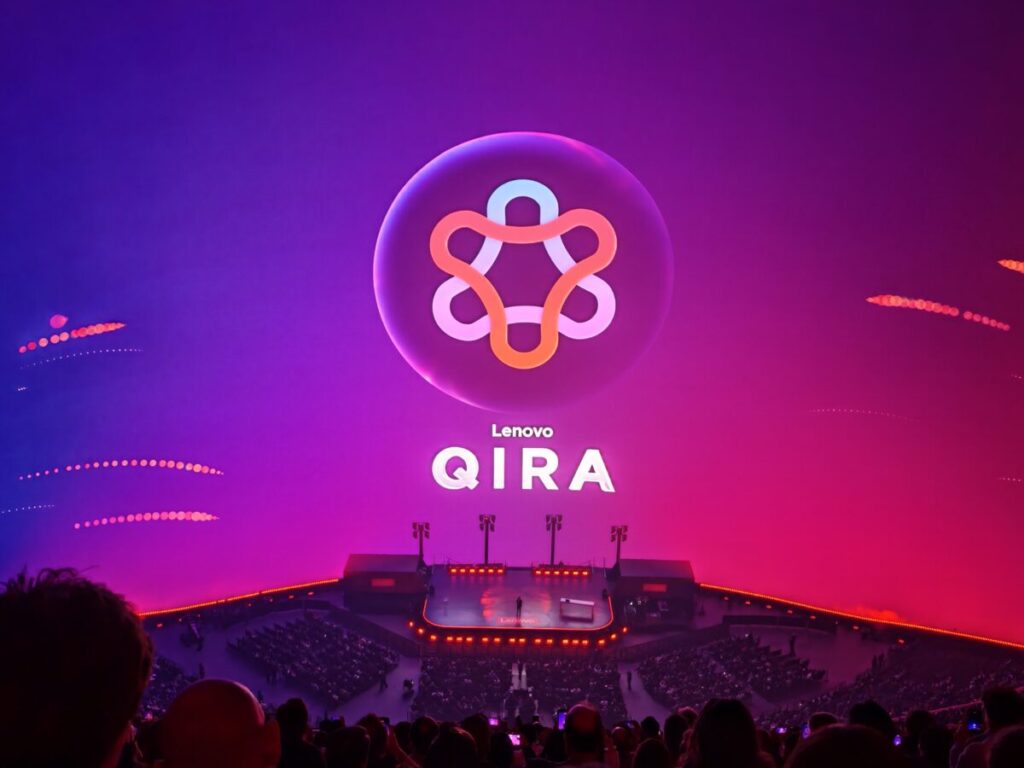
There’s no hiding from AI. In the same way that you would become a Luddite in the 1980s by ignoring PCs, so it is in the 2020s with AI. At its Sphere event, Lenovo piled on the AI syrup with its take on personal AI. That included a new pendant wearable from Motorola (a Lenovo company), which would “see what you see, hear what you hear”. A message we heard repeatedly, along with the caveat “with your permission”. But what about those around you’s permission?
Privacy issues aside, we are creeping closer to a personalised AI service that will fully understand you and your job. That will be able to take actions on your behalf if it’s totally confident you want them to be taken. All of which peaked with the announcement of Qira, Lenovo’s branded personal AI assistant.
Nvidia partnership to bring AI gigafactories
We’re already familiar with the idea of AI factories, a “full-stack infrastructure” that offers everything enterprises need to deliver AI solutions. That means data cleaning, model training, inference and delivery.
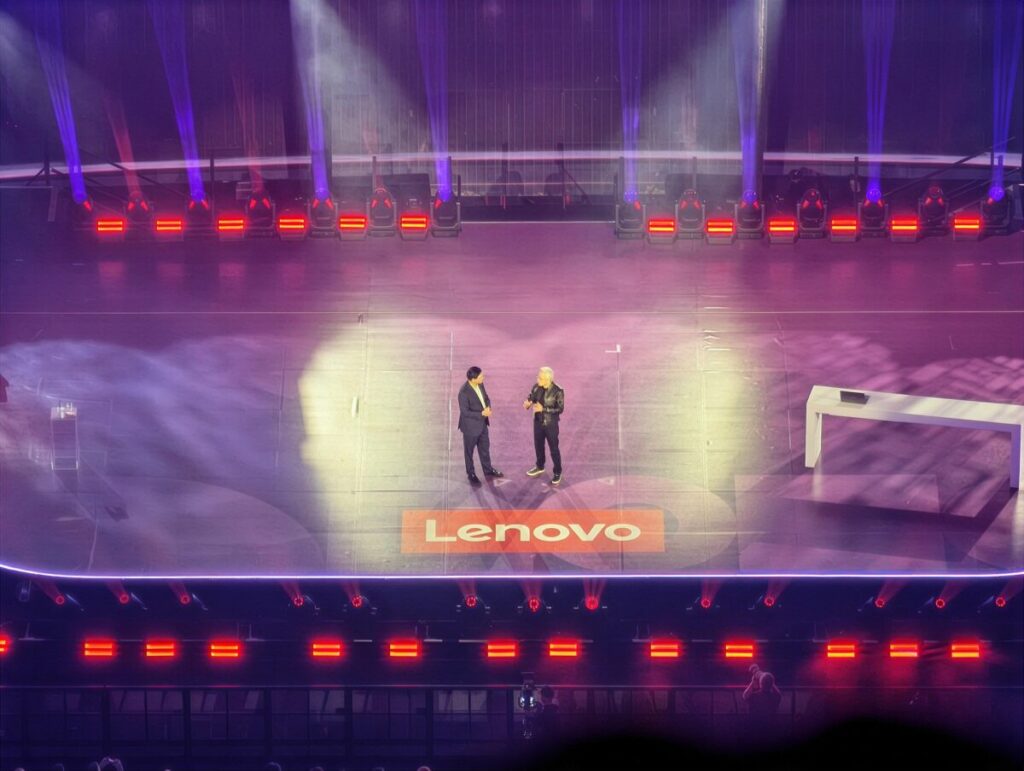
But what if your needs are greater than this? Nvidia CEO, and eighth richest man in the world, Jensen Hueng took to the stage to remind attendees that Lenovo builds half of the supercomputers on the TOP500 list. What better company for Nvidia to partner with to build AI gigafactories?
Think trillion-parameter agentic AI, the ability to scale to millions of GPUs, the use of Lenovo’s Neptune liquid cooling to help improve efficiency, and of course Nvidia’s full AI stack.
You should be thinking about building an enterprise AI just for your company
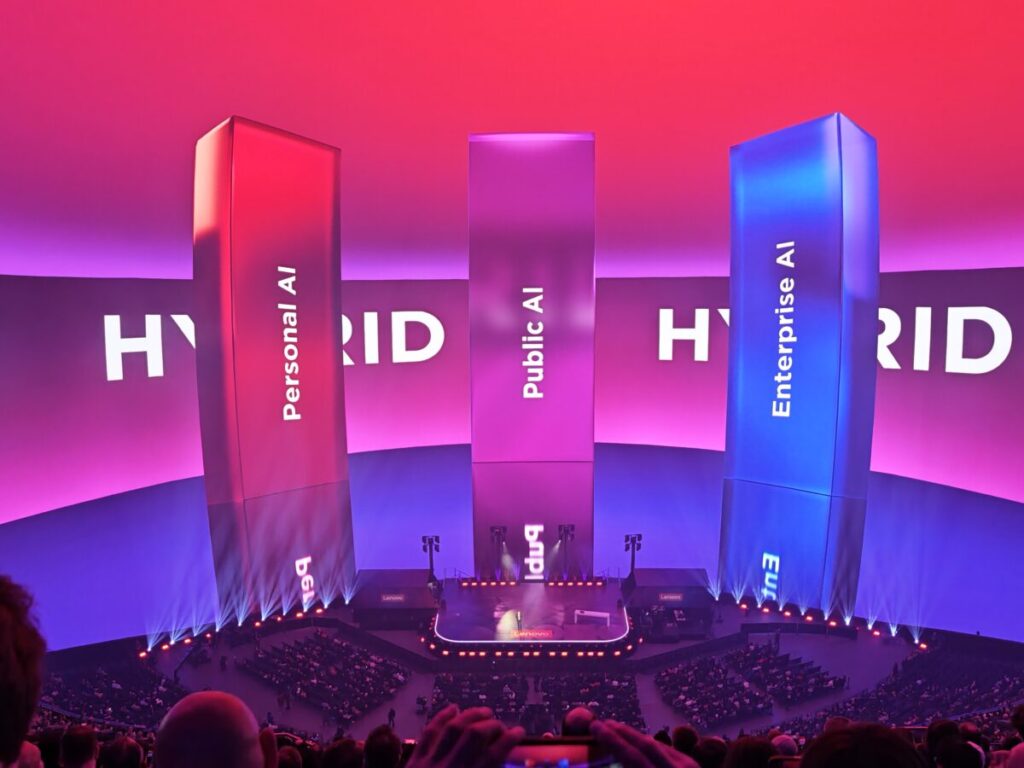
Along with personal AI, Lenovo pushed the idea of “Hybrid AI” for your company. It’s a mix of enterprise models that are guaranteed to be private and secure, public AI models and the personal models found on employees’ devices.
So if you don’t already have enterprise models, comes the clear hint from Lenovo, you need to do so pronto. Oh, and it will happily sell you AI PCs in the form of laptops such as the Lenovo ThinkPad X1 Carbon Gen 14 too.
Lenovo is very keen to support enterprises with their AI journey
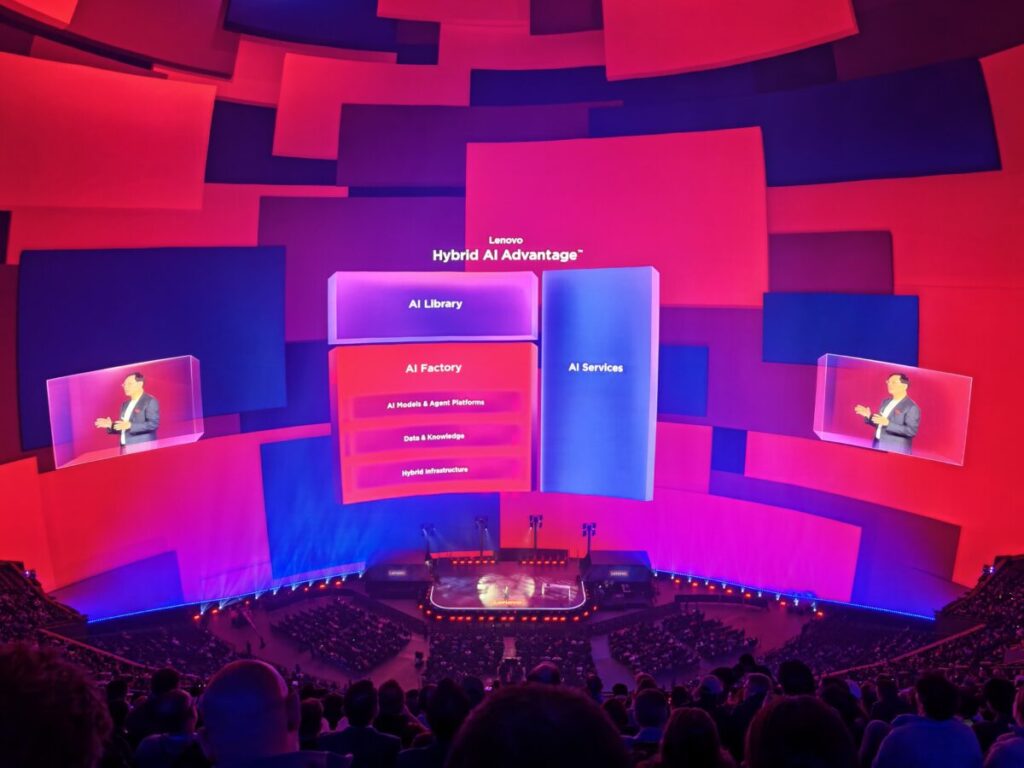
And there’s one final message I would give you from Lenovo’s Sphere keynote: it wants your AI money. Or, as Lenovo would frame it, it wants to be your partner to support you on your AI journey.
I didn’t do an exact minute count, but I would guess that at least half of the two-hour presentation reinforced the idea that Lenovo is the best positioned company to support businesses. Let’s hope that a good proportion of the 15,000 attendees were convinced, because word on the street is that Lenovo spent between $150 million and $200 million on CES in 2026. It needs to make that money back somehow.
More from CES 2026
- Wi-Fi 8 routers are starting to appear: here’s what you need to know | TechFinitive
- Dell resurrects XPS brand with that rarest of things: an admission that it was wrong
- Acer announces five Swift AI laptops built on Intel Core Ultra 3 Series processors
- First look review: Lenovo ThinkPad X1 Carbon Gen 14 complete with Space Frame!
About The Author

Tim Danton
NEXT UP


