Trending Topics

 Trending
7 innovative technologies swim coaches are using to take their coaching to the next level

This is a sponsored article brought to you by Seavu.
Coaching a stroke from the pool deck has always meant working with an inherently partial picture. You can see timing, breathing, and turns from above the surface, but the part of the stroke that determines efficiency, the catch, the pull, the body position underwater, has traditionally been guesswork or a hurried few seconds of video shot on a phone held over the lane rope.
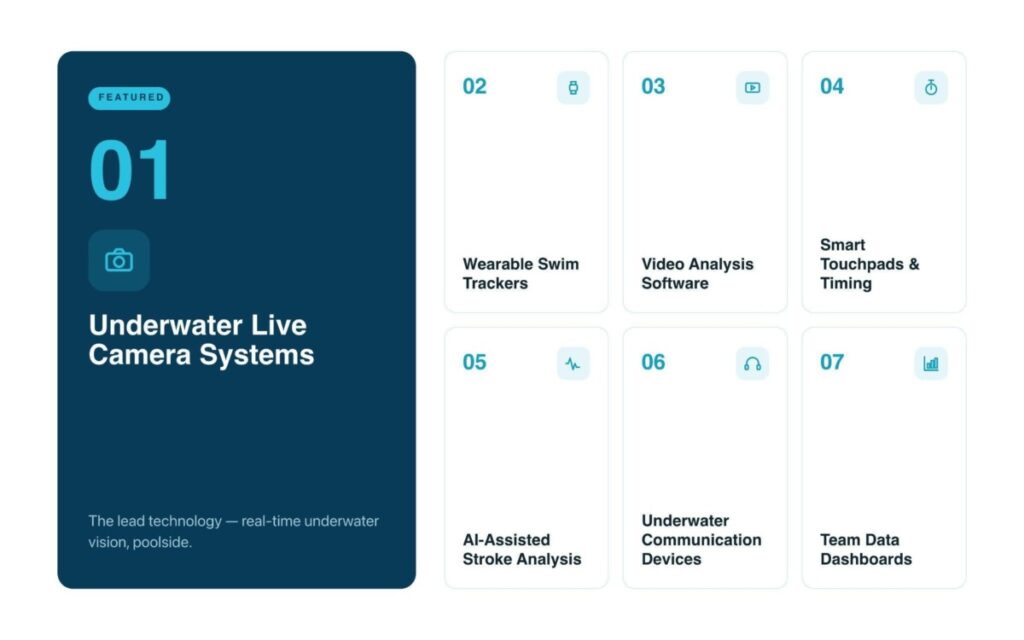
That is changing quickly. A new generation of tools is giving coaches direct, real-time visibility into what is actually happening below the surface, along with data that used to require a full sports science lab and a dedicated analyst to interpret it. Here are seven technologies reshaping how swim coaching gets done, from the pool deck through to full squad management.
1. Underwater live camera systems
The single biggest shift in pool-deck coaching over the past few years has been the arrival of affordable, easy-to-deploy underwater live camera systems. Rather than reviewing footage after the session, or relying on a coach ducking underwater with a handheld housing, live systems stream real-time underwater video straight to a phone or tablet on deck.
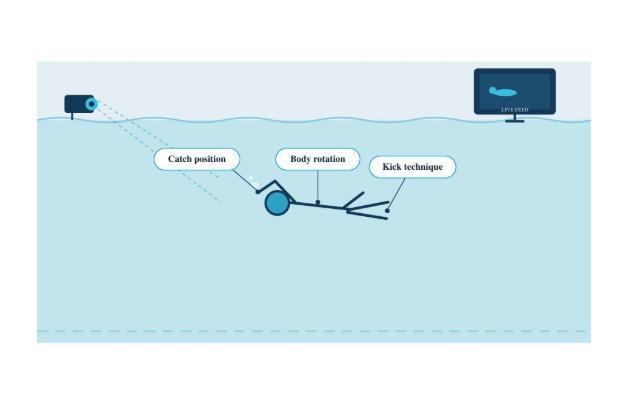
Seavu’s underwater swim coaching camera system is a strong example of where this category has landed. Its underwater WiFi camera systems pair a submerged camera with a transmitter that keeps a live feed connected to the coach’s device poolside, meaning stroke corrections around catch position, body rotation, and kick technique can be made in the moment rather than reconstructed from memory after the set. For coaches who want to see the stroke as it actually happens, rather than a delayed clip reviewed after the session, this is currently the most practical entry point into underwater coaching technology.
2. Wearable swim trackers
Wrist-worn and swim-specific wearables have moved well beyond counting laps. Modern devices can estimate stroke rate, stroke length, and SWOLF scores automatically, giving coaches a numeric layer to sit alongside what they observe visually.
- Automatic lap and set counting, removing manual tracking during high-volume sessions.
- Stroke rate and distance-per-stroke data that can flag efficiency changes across a session.
- Heart rate tracking for aerobic and threshold set monitoring in the water.
3. Video analysis software
Dedicated swim analysis software allows coaches to slow down, frame-by-frame, and annotate footage, whether captured from an underwater camera, a poolside tripod, or a handheld device. Drawing tools for body angle, joint position, and stroke path turn raw footage into a teaching tool that swimmers can actually see and understand, rather than relying on a verbal description of a technical fault.
4. Smart touchpads and automatic timing systems
- Automatic timing removes the inconsistency of manual stopwatch splits across a squad.
- Split data can be logged automatically against each swimmer’s profile for long-term trend tracking.
- Some systems sync directly with coaching apps, removing manual data entry after sessions.
5. AI-assisted stroke analysis apps
A newer wave of coaching apps uses computer vision to automatically flag stroke inefficiencies from video, such as early breathing, a dropped elbow, or asymmetric kick timing, without the coach needing to manually mark every frame. These tools are not a replacement for a coach’s eye, but they are a useful second opinion, particularly for identifying subtle patterns across a large squad that would be time-consuming to catch manually.
6. Underwater communication devices
Waterproof bone-conduction speakers and underwater audio systems allow coaches to deliver real-time cues directly to a swimmer mid-set, rather than waiting for a wall touch to give feedback. This is particularly useful for pacing work and technical cues that lose their value if delayed even a few seconds.
7. Team management and data dashboards
- Centralised platforms that pull together attendance, set data, times, and wearable data into one dashboard.
- Long-term trend tracking across a season, rather than isolated session-by-session notes.
- Easier communication of progress to swimmers and parents through shared performance summaries.
How squads and clubs are adopting this technology
Adoption of coaching technology tends to follow a fairly predictable path within clubs and squads, starting with individual coaches experimenting on their own initiative before tools become part of standard squad practice.
- Age-group and development squads increasingly use underwater cameras during technique-focused sessions, where visual feedback speeds up learning for younger swimmers.
- Masters and adult squads use similar tools to correct long-standing technical habits that are otherwise difficult to unlearn without direct visual evidence.
- Elite programs combine several of these technologies together, layering wearable data, timing systems, and underwater video into a single coaching workflow.
- Smaller clubs with limited budgets often start with a single underwater camera system before expanding into wearables or analysis software.
This staged adoption reflects a practical reality: not every squad needs every tool listed here on day one. Starting with the technology that addresses the biggest visibility gap, typically what is happening underwater, tends to deliver the clearest early return before layering in additional systems.
Getting buy-in from swimmers and parents
Introducing new coaching technology is not purely a purchasing decision. It also involves helping swimmers and, particularly for younger athletes, parents understand why a squad is adopting a new tool and what benefit it is expected to deliver.
- Frame new technology around specific technique goals, rather than presenting it as technology for its own sake.
- Show swimmers their own footage or data directly, since seeing personal results tends to build buy-in faster than a general explanation.
- For younger swimmers, keep feedback sessions short and focused on one or two corrections at a time rather than an overwhelming technical breakdown.
Bringing it together on the pool deck
None of these tools work in isolation, and none of them replace a coach’s judgement. What they do is close the gap between what a coach can see and what is actually happening in the water, particularly below the surface, where technique is made or lost. For squads and clubs weighing up where to start, an underwater live camera system tends to offer the most immediate, visible return, since it addresses the part of the stroke that has always been hardest to coach from the deck, and it tends to pay for itself quickly in faster technique corrections alone.
About The Author

Gabriel Jones
NEXT UP