Trending Topics

 Trending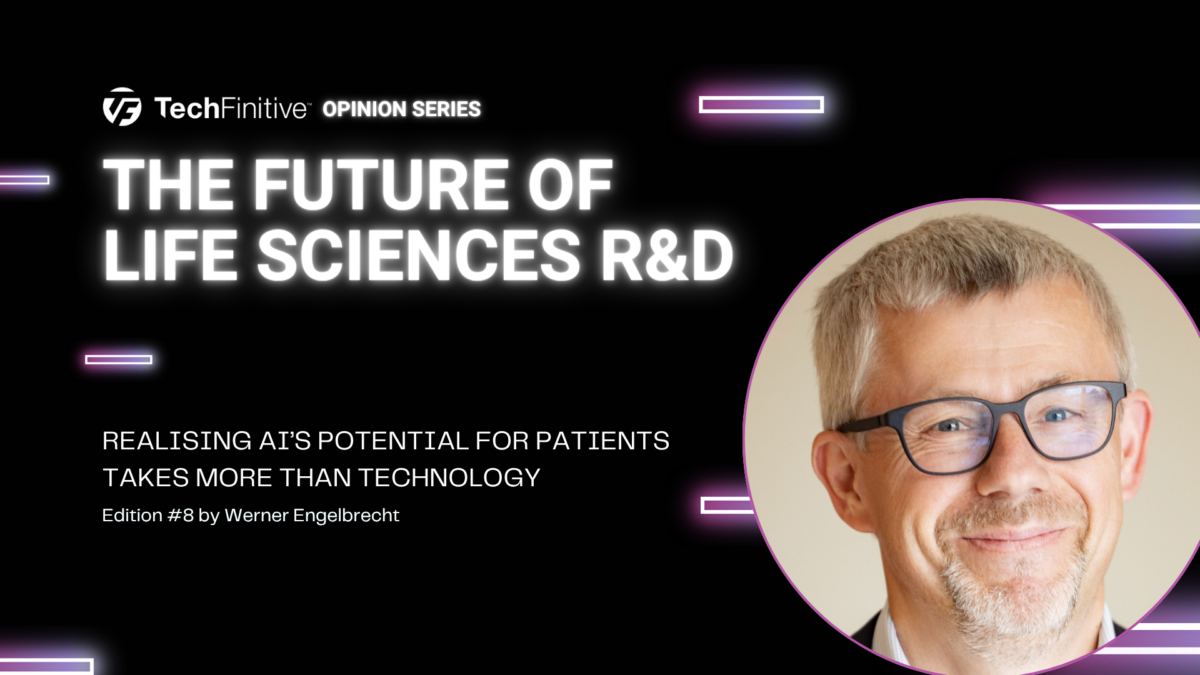
Realising AI’s potential for patients takes more than technology

As part of our new “The future of life sciences R&D” series, exploring how emerging technologies – from AI and digital trials to synthetic biology and advanced data platforms – are reshaping the future of drug discovery, clinical research, and scientific innovation, we invited Werner Engelbrecht, Senior Director Strategy at Veeva Systems, to share his views.
Across the series, one message has emerged consistently: the future of life sciences will be defined not only by advances in AI, but by the data, governance, and collaboration needed to deploy these technologies responsibly and at scale.
Here, Werner draws on more than two decades of experience across the pharmaceutical and life sciences sector to examine how organisations can translate AI’s potential into practical outcomes. Focusing on drug discovery, clinical trials, and the growing importance of connected data and regulatory trust, Engelbrect argues that long-term success will depend as much on strong foundations and collaboration as on the technology itself.
New AI use cases are emerging with potential impact across areas ranging from drug discovery to clinical trials. The discussion around AI is focused on how these technologies can support safe and effective treatments to patients in a practical, responsible and scalable way.
AI success is about more than the technology itself. It also depends on data, processes, collaboration and trust. The challenge is determining how to deploy AI consistently, responsibly and at scale in highly regulated environments.
Where AI is making a difference
Drug discovery is one of the clearest examples where AI is having a tangible impact. Researchers can analyse large scientific datasets, screen compounds, and identify promising candidates more efficiently. Because these activities are further removed from direct patient interaction, organisations have been able to explore AI applications more readily and learn where they can provide value.
Clinical development is also an area with great opportunity. Patient recruitment remains one of the biggest challenges in research. Finding suitable participants within study timelines is often difficult, particularly as treatments become increasingly targeted.
In oncology, for example, genomic and biomarker analysis provides a much more detailed understanding of a patient’s disease. This supports more personalised therapies, but it also makes matching patients to appropriate clinical trials more complex. This is an area where AI can help. Researchers can analyse larger datasets, identify potential participants more efficiently and support activities such as site selection and trial planning.
Applying these technologies more broadly raises another set of questions around data, governance, and how AI fits into existing clinical processes.
AI outcomes always come back to data
Many life sciences organisations still operate across multiple systems and functions, with clinical, regulatory, safety, and quality teams working in different environments. Valuable information exists across the organisation, but it is often fragmented across systems and teams.
This becomes particularly important when AI is introduced into regulated processes, where outputs depend heavily on the quality and consistency of the underlying information. That is why many organisations are focusing on the data foundations first. Understanding where data sits, how it is governed, and how teams can work from the same information can make a significant difference.
Technology plays an important role, as do processes and collaboration between teams. In many cases, the challenge is not a lack of data but bringing information from different sources together in a way that people can access and use consistently.
Making better use of health data
Addressing these challenges is becoming even more important as organisations work with growing volumes of health data.
Decentralised and hybrid studies are giving patients greater flexibility and reducing the need for frequent visits to research sites. Wearable devices, remote monitoring technologies and digital health tools are creating new opportunities to collect information throughout a study. For patients, this can reduce the burden of participation. For researchers, it provides greater visibility into patient experiences and outcomes.
Information is now flowing from electronic health records, clinical trial systems, laboratories, and connected devices. Bringing these sources together in a secure and consistent way is a priority across the industry as organisations manage increasingly complex data environments.
Access to health data will become increasingly important as AI adoption grows. Researchers recognise that valuable information already exists within healthcare systems, but differences in standards, infrastructure, and privacy requirements can make it difficult to use consistently across studies and countries.
As more research activities move beyond the traditional study site, they need to work with information from multiple sources.
Building trust in AI
Alongside advances in technology, the AI regulatory environment continues to develop as the technology advances.
EU frameworks such as the EU AI Act, Clinical Trials Regulation and ACT EU are increasing expectations around transparency, governance, and accountability. More recently, the European Medicines Agency (EMA) and US Food and Drug Administration (FDA) published joint guiding principles for good AI practice, providing additional clarity around oversight and risk management.
Regulation is often viewed primarily through the lens of compliance. Yet by providing the governance framework needed for trust regulation can accelerate adoption within organisations.
Transparency is a good example of how to gain trust. Additional reporting requirements may add more complexity, but they can also strengthen confidence among patients, research sites, and regulators. Greater visibility can help patients find relevant studies and better understanding the research process.
The same principle applies to AI. Trust in new technologies depends on the data, processes and oversight that support them. As AI becomes more widely used across research and development, those foundations are critical.
The next challenge is ensuring those AI applications can operate consistently within regulated environments and increasingly complex research programmes. Data quality, collaboration, governance, and patient trust will play a major role in determining how successfully organisations can put AI into practice.
Ultimately, the goal remains the same – helping patients gain access to new therapies while preserving the quality, oversight, and trust that clinical research depends on.
About The Author

Ricardo Oliveira
NEXT UP