Trending Topics

 Trending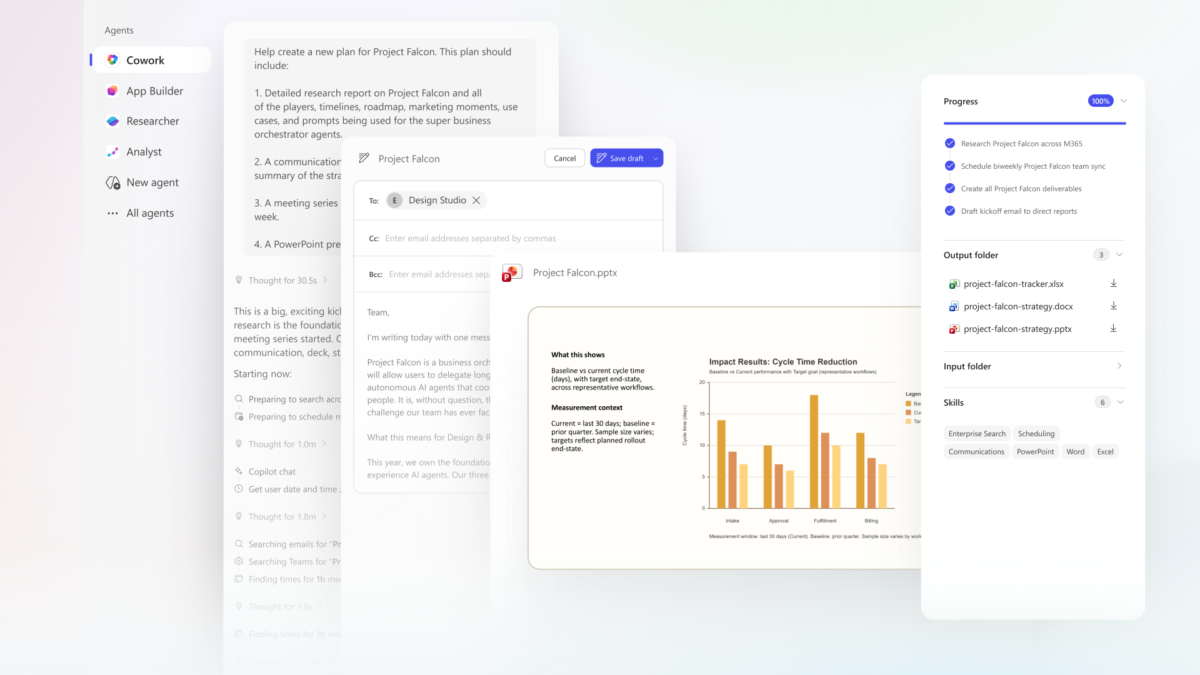
Microsoft goes multi-model with Copilot Cowork

Microsoft is adding Anthropic’s Claude Cowork to Microsoft 365 Copilot, stepping further away from its formerly exclusive partnership with OpenAI and towards a multi-model future. In doing so, it may finally make Microsoft Copilot AI a genuinely useful office helper.
Copilot Cowork will let users delegate tasks to the tool, with the work happening in the background across Outlook, Teams, Excel and the rest.
Before we dive into specific examples, it helps to know the background. Last January, Microsoft and OpenAI began to open up to more partners, ending their exclusive relationship in favour of letting the AI developer seek additional infrastructure providers beyond Azure. A move that came amid wider concerns about tensions between the two companies.
Microsoft, meanwhile, is starting to include a wider range of models into its systems. In a blog post, Charles Lamanna, Microsoft’s President for Business Applications & Agents, said Microsoft’s multi-model approach will become Copilot’s superpower.
“Your work is not limited by one brand of models,” Lamanna said. “Copilot hosts the best innovation from across the industry and chooses the right model for the job regardless of who built it.”
He also emphasised its business-ready credentials. “Copilot Cowork runs within Microsoft 365’s security and governance boundaries,” said Lamanna. “Identity, permissions, and compliance policies apply by default, and actions and outputs are auditable.”
Claude Cowork meets Copilot
The addition of a potentially useful AI tool is timely. Microsoft has struggled to convince people to use Copilot, while recent sector-specific tools for Claude Cowork were deemed so potentially helpful they tanked stocks in affected markets.
“Microsoft’s launch of Copilot Cowork signals a strategic shift in its AI approach, showing the company moving Copilot away from reliance on OpenAI alone and toward a multi-model architecture that includes partners such as Anthropic,” said Forrester’s VP Principal Analyst JP Gownder.
“The move also highlights the current limitations of Microsoft’s existing Copilot agents: while the company has talked extensively about autonomous ‘agents,’ they have so far struggled to take meaningful action compared with newer agentic systems such as Anthropic’s.”
Gownder added: “At the same time, Copilot Cowork clearly taps into the growing hype around Anthropic’s Claude Cowork concept, but significantly extends it by embedding the capability across Microsoft 365 applications rather than keeping it as a desktop-centric tool.”.
How Copilot Cowork could help users
Microsoft has been working towards letting Copilot take “action” over the last year, Lamanna noted. By adding in Claude Cowork, that’s now possible.
“By connecting the experience to Microsoft’s WorkIQ context layer, the company is positioning Copilot to understand a user’s work, documents and workflows across the enterprise, which could make these agents far more useful inside day-to-day productivity tools,” said Forrester’s Gownder.
To use Copilot Cowork, describe what you’d like to happen, and Cowork will dig around in your emails, meetings, messages, files and data to complete the task “with the same understanding you bring to your job,” said Lamanna.
Examples provided by Microsoft include cleaning up your calendar by rescheduling meetings to build bigger blocks of time to focus, pulling together a briefing document and deck for a customer meeting, or gathering data on a company, packaging it into a ready-to-email format complete with citations.
Cowork starts by turning the request into a plan, which runs in the background while you get on with your other work. The system has clear checkpoints for progress, and will ask for clarification if needed, with changes and actions approved before action is taken. Lamanna said it’s possible to have a dozen tasks running at once.
“Copilot works independently without you giving up control,” Lamanna added.
The trick to convincing companies and their human employees to use AI is clearly making sure it’s actually useful – picking the best model for the job is at least a step in the right direction.
About The Author