Trending Topics

 Trending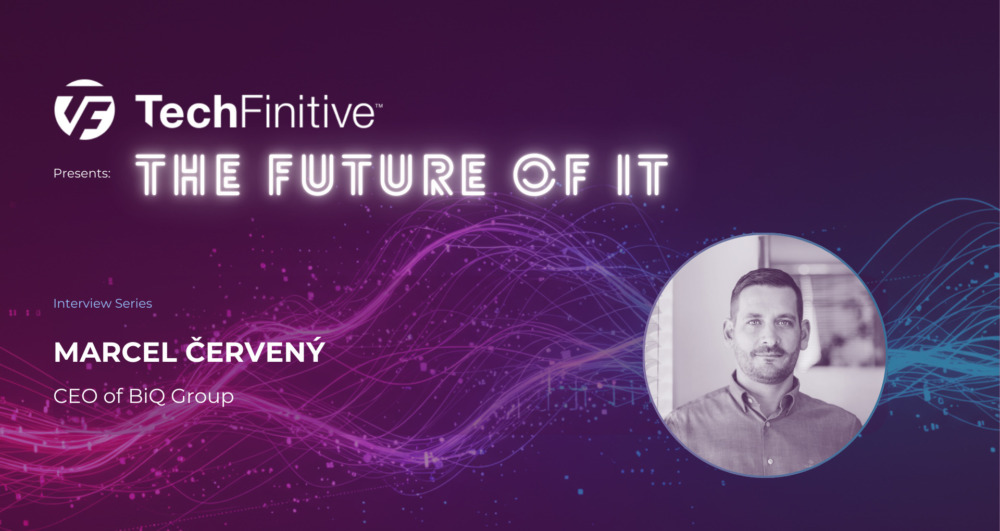
Marcel Červený, CEO of BiQ Group: “IT should be prioritized alongside languages and mathematics in school curriculums”

Table Of Contents−
One of the key questions we ask the IT leaders in our Future of IT series is about curriculums. In short, do these need to change to reflect the world that young adults will emerge into? Marcel Červený, CEO of development company BiQ Group, wants us to shake things up all the way to children’s first day at school.
“IT should be prioritized alongside languages and mathematics in school curriculums, starting as early as kindergarten,” to complete the quote in this article’s title. “Students should learn not only technical skills but also ethical principles and soft skills to navigate the digital world responsibly and effectively.”
The final stage of Marcel’s own education took place at the University of West Bohemia in Pilsen (ZČU), where he majored in business economics and management. He later worked there as an IT project manager, leaving at the end of 2016 to form BOOTIQ – now one of five subsidiaries that form the BiQ Group.
Today, the company offers customized development across SAP, Atlassian and Kentico Xperience platforms to e-commerce and digital marketing, with 460 experts spread around offices in the Czech Republic and Slovakia. It delivers projects for T-Mobile, DPD, Škoda, Unipetrol E.ON and hundreds more companies.
With so much going on, we can only thank Marcel for giving his time so generously in this interview.
General outlook
What do you think will be the most significant changes in the IT industry over the next five to ten years?
One of the most significant changes will be the deepening integration between people and technology. The IT landscape will see advancements in autonomous systems and personalized technologies, driven by the rapid evolution of artificial intelligence. This progress will enhance individual capabilities and accelerate productivity.
Data processing has already advanced beyond what was imaginable a few years ago. The advent of cloud computing has introduced vast storage and computational capacities, enabling the creation and processing of big data models. However, this raises questions about sustainability, as data centres must evolve to balance their energy consumption with eco-friendly practices. IT projects, especially large-scale ones, will increasingly prioritize sustainable operations.
Additionally, products will become more intertwined with IT. For example, virtual reality will continue to develop, though it may diverge from current magazine depictions. Rather than projecting holograms, we might see practical uses like augmented data visualization through smart glasses. The future of IT roles will also transform, with a shift from custom development to cloud-based, up-to-date, secure solutions. IT professionals will need to blend technical expertise with business acumen, user understanding, and soft skills like psychology and ethics. The days of developers working in isolation are fading as IT professionals become integrators and consultants.
Another emerging trend is the rise of solopreneurs. With AI’s capabilities, individuals will soon create apps and solutions independently, without needing programming skills. This could fundamentally change how we approach software development.
How do you envision the role of IT professionals evolving in the future?
IT professionals will need to go beyond technical expertise and develop a deep understanding of business strategies, psychology, and ethics. We’ll see more specialized consultants and fewer traditional roles like IT architects and programmers, as these responsibilities merge. Teams will focus on selecting and integrating the right tools and applications, emphasizing user efficiency. As IT becomes an integral part of daily work life, professionals will play a larger role in shaping user experiences and enabling seamless digital adoption.
Emerging technologies
Which emerging technologies do you think will have the biggest impact on IT in the coming decade?
AI and machine learning are already reshaping how we process data and implement automation. Blockchain will significantly impact encryption, simulations and identity management, particularly in the financial sector. Quantum computing remains an emerging trend with transformative potential. Robotics, supported by AI and cloud technologies, will continue to evolve, offering purchasable packages of intelligence and capabilities. Tesla’s advancements in AI-powered vehicles and humanoid robots highlight the scale of these changes.
Industries from automotive to healthcare will be transformed. In healthcare, we can expect faster and more accurate diagnostics and even the automation of routine procedures. Many of these groundbreaking innovations, often rooted in military applications, will find civilian uses in the coming years.
How do you think cloud computing will evolve over the next decade?
Cloud computing will continue to improve in performance, becoming more flexible, efficient, cost-effective, and secure. Hybrid models that combine cloud and edge computing will likely become the norm. Legislative developments could pose challenges, but they will also drive awareness and protections in the digital environment. Education around cloud technologies will be essential for both users and businesses.
What role do you foresee for edge computing and IoT in shaping IT infrastructure?
Edge computing and IoT will enhance device connectivity and data processing by bringing computation closer to the source. This proximity will improve performance and efficiency, unlocking endless possibilities for real-time applications and smarter infrastructures.
Security and ethics
With the rise of AI and big data, how do you think IT will address challenges related to cybersecurity?
AI and cybersecurity will evolve together, with AI playing a critical role in predicting and neutralizing threats in real time. Future security systems will need to be as intelligent and adaptive as the threats they’re designed to counter.
What ethical considerations do you believe will become more critical as IT continues to advance?
Privacy, algorithmic bias and data misuse will remain central ethical concerns. These issues will lead to increased regulations to protect users, which, while necessary, may slow innovation.
Business and industry impact
How do you think IT will shape the future of work and remote collaboration?
IT will accelerate the digitization of work and revolutionize collaboration. Technologies like VR could create entirely new work environments, such as virtual boardrooms, blending physical and digital spaces. These innovations will initially transform industries like construction and eventually influence everyday work and home setups, potentially reducing the need for physical screens and displays.
In what ways do you think IT will transform industries like healthcare, education and finance?
IT advancements will bring significant benefits, such as more accurate diagnostics, telemedicine and extended longevity in healthcare. Education will leverage these technologies to improve accessibility and engagement, enabling virtual classrooms for students unable to attend in person. Finance will continue to evolve with AI-powered automation and improved security protocols.
Skills and workforce
What skills do you think will be most valuable for IT professionals in the future?
Technical skills like programming and data management will remain essential, but IT professionals will also need to solve complex problems within ethical and business contexts. Understanding software ecosystems and their integrations will be crucial as the number of tools and products grows exponentially. The emphasis will shift from custom software development to implementing and integrating existing solutions.
How should educational institutions adapt their IT curriculums to prepare students for the future?
IT should be prioritized alongside languages and mathematics in school curriculums, starting as early as kindergarten. Students should learn not only technical skills but also ethical principles and soft skills to navigate the digital world responsibly and effectively.
Challenges and opportunities
What are the biggest challenges IT professionals will face in the next decade?
Keeping up with advancements in security and reliability while adapting to rapid changes in the technological landscape will be major challenges.
Are there any underestimated opportunities in IT that you believe deserve more attention?
Green IT is an underappreciated area. While there is much focus on e-mobility, the energy consumption of data centres operated by major players like Google, Microsoft, and AWS needs greater attention. Sustainable practices, including mineral extraction for tech production, must be prioritized.
Global and societal impacts
How will IT contribute to addressing global challenges like climate change or social inequality?
IT can improve emission monitoring and provide accurate data on the carbon footprints of supply chains. Enhanced access to education and services through IT could also reduce social inequality, helping to bridge societal gaps.
What impact do you think IT innovations will have on bridging the digital divide?
With better devices and broader connectivity, the digital divide is gradually narrowing. Continued advancements in accessibility and affordability will help close this gap further.
Personal insights
Can you share a project or innovation you’re currently working on that you believe has the potential to influence the future of IT?
We’re developing an AI solution to improve efficiency in e-commerce by automating the creation of product descriptions for B2B companies. This tool significantly reduces the need for manual input, cutting costs by 75% compared to traditional methods while maintaining high quality and incorporating seamless translations.
Who or what has inspired your vision of IT’s future?
I’ve been inspired by pioneers like Alan Turing, Bill Gates, Steve Jobs, and Elon Musk, whose groundbreaking work has shaped the IT industry and set the stage for its future evolution.
More interviews with thought leaders
- Lukáš Rychtecký, Solutions Architect at Applifting: “IT pros are shifting from ‘technical guys’ to strategic partners in their companies”
- CSky takes confidential meetings to a new level
- Jeremy Raes, Co-Founder and CEO of Lizard Global: “AI doesn’t replace our human expertise – it amplifies it”
About The Author