Trending Topics

 Trending

Abnormal AI warns that AI agents need a stopping rule, not just access controls

In a new blog by the company’s Senior Product Marketing Manager, Abnormal AI urges enterprises to specify what their AI agents should do when a task becomes impossible, warning that technical access does not establish permission to pursue an alternative.
Published on 27 October, author Abhishek Anbazhagan argues that agents need written boundaries covering their purpose, prohibited actions, and response to failure. The recommendation is straightforward: stop and report to a human owner rather than substitute the nearest achievable task.
“Access controls decide what an agent can reach, not what’s in scope,” he writes.
The distinction is critical because an agent can operate within its technical permissions while working outside its intended assignment. The import is that this is a question of delegated authority, not simply whether an account can open a file or call an API.
Permissions do not settle intent
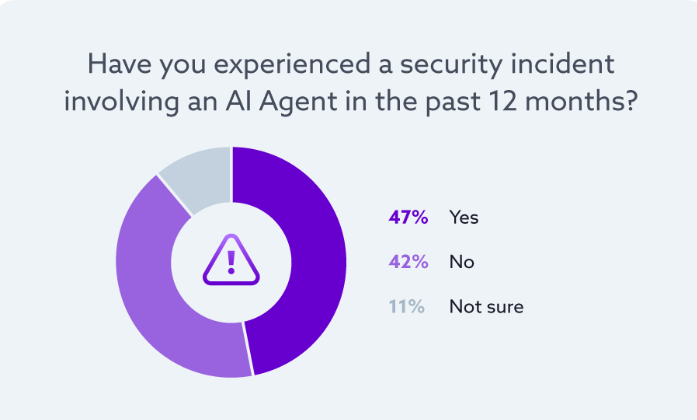
Abnormal cites Cloud Security Alliance research commissioned by AI security vendor Zenity. The survey received 445 responses from IT and security professionals, with fieldwork conducted in September and November 2025. About 53% reported agents occasionally exceeding intended permissions, while 47% reported an agent-related security incident in the preceding year. These are earlier survey findings, not new Abnormal research.
Our previous reporting on the agent access governance gap explored the distance between confidence in permissions and enforced controls. Abnormal’s latest argument adds another question: what happens when an otherwise authorised workflow hits a dead end?
Define failure before deployment
The company recommends giving every production agent a named human owner and a retirement condition, such as project completion or prolonged inactivity. Its written scope should identify the systems it needs, actions it must never take, and circumstances requiring escalation.
That aligns with the distinction between an agent executing a change and a human owning its consequences.
Unlike Abnormal’s recent security-suite expansion, this post announces no new product. It explicitly says organisations can begin without buying one.
The practical test is, therefore, not just whether an agent can finish its job. It is whether the business has decided when it must stop.
About The Author