Trending Topics

 Trending

Buying ERP software is only the start. Who owns adoption?

An ERP project can meet its launch date and still leave the business working much as it did before.
The software is running.
Staff have attended training.
Yet familiar spreadsheets remain the easiest way to get things done.
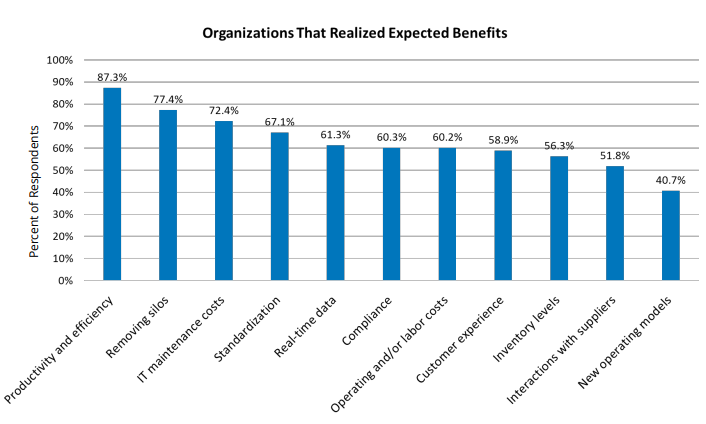
Employees often struggle to figure out how to use new complex enterprise software. Getting employees to change how they work is a separate challenge. Panorama Consulting Group’s 2026 ERP Report, based on 170 responses collected between January 2025 and January 2026, found that benefits involving changes to operating models were the hardest to realise. It also found that fewer than a quarter of organisations reported an intense focus on organisational change management.
For distributors choosing an implementation partner, reliable usage is the more useful test: not simply whether the system goes live.
Epicor’s addition of Conveyance Solutions, a specialized consulting company, to its Australia and New Zealand partner programme offers a starting point. It’s akin to drafting a top-tier coaching squad to help players level up. The consultancy supports mid-market industrial distributors using Prophet 21, with an emphasis on change management and adoption. Rather than another product launch, the partnership raises a practical question about implementation accountability.
Put adoption in the contract
“Adoption-first” needs to mean something buyers can evaluate. Ask who will observe existing workflows, identify unnecessary steps, and decide which practices should change before configuring their replacements.
Training should follow the same logic.
Can purchasing staff handle a supplier discrepancy?
Can warehouse employees resolve an inventory mismatch?
Can finance investigate an exception without returning to a parallel spreadsheet?
These are acceptance tests worth agreeing on before implementation begins.
They also put Epicor’s 90-day cloud ERP promise in perspective. A deployment timetable describes when a system becomes available. Buyers still need separate evidence that employees can perform their work effectively.
Keep someone accountable after launch
The contract should name both a business owner and a partner contact responsible for reviewing adoption after go-live. Agree what they will measure: task completion times, errors, unresolved exceptions, and continued dependence on manual workarounds.
As Epicor moves customers towards cloud ERP, buyers should assess ongoing support, not just migration capability. Ask how the partner handles upgrades, refresher training and process changes.
The same discipline applies to AI-assisted configuration. Faster ERP customisation does not remove the need for testing, documentation or clear ownership.
Conveyance’s appointment does not itself prove better customer outcomes. Buyers should request references and before-and-after evidence.
The deliverable is adoption, not a completed installation, but a business that can work confidently without the implementation team beside it.
About The Author