Trending Topics

 Trending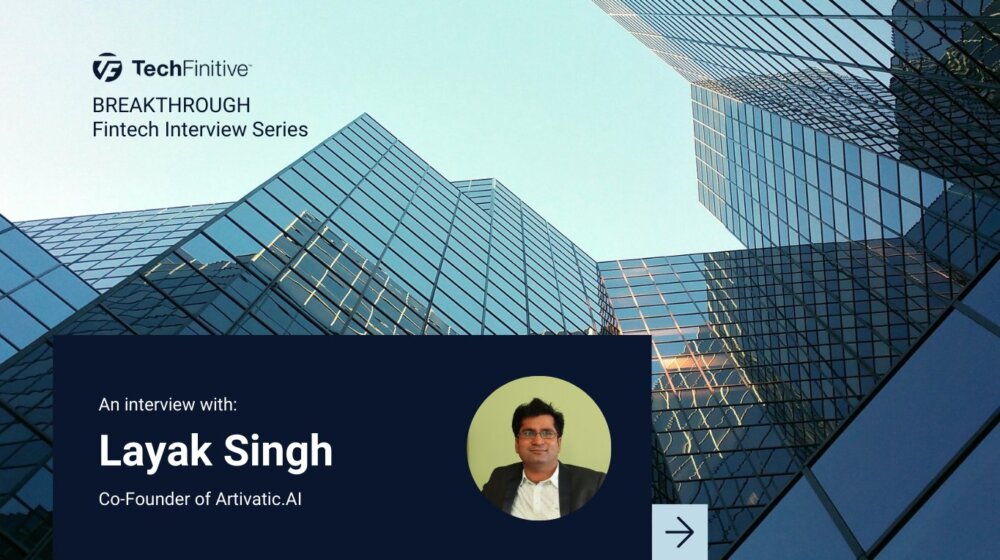
Layak Singh, Co-Founder of Artivatic.AI: “To perform in this era, traditional finance and banking companies need to align themselves with the digital forces”

Layak Singh is the Co-Founder of Artivatic.AI, a global risk and decision-making platform that automates human decisions in insurance and healthcare sectors. So it’s no surprise that he sees a bright future for artificial intelligence technology.
For instance, he sees that it could help to bridge the digital divide in India. “India’s financial inclusion index reveals a significant disparity of approximately 43%,” he says. “Despite 800 million active internet users, there remains untapped potential in smaller markets.”
And just to put that number into perspective, 800 million is the number of active internet users in the European Union, the UK and the USA combined.
So think of this interview as opportunity spotting. Not just an insight into the market in India, but for young people who want to follow in Layak’s footsteps and join the fintech revolution.
Recommended reading: Accelerating RegTech adoption is a gamechanger for the UK’s financial sector
Could you please introduce yourself to our audience and share how you ended up working in fintech?
I am the Co-Founder of Artivatic.AI, a leading AI insurtech and healthtech company, part of D2C Consulting Services Private Limited (which also owns RenewBuy). I have been a serial entrepreneur, active in the AI space, working extensively to find AI-based solutions for the insurance and health sectors.
Sensing the need for an end-to-end smart AI infrastructure for banks and financial firms, I founded Artivatic in 2017 with my partner. The company assists insurance companies in building personalised risk profiles of consumers, tracking and understanding their financial and behavioural journeys, and developing real-time intelligence based on those patterns.
I am an alumnus of IIT Kharagpur and hold a B.Tech in Manufacturing Science and Engineering. As an individual, I believe, I was born with an entrepreneurial spirit. I have built many communities around Bangalore, including Bootstrap Bangalore, and 2Weekends Hakathon. I have also been in advisory roles at multiple startups, a speaker at universities and incubated a few startups at my office in Bengaluru.
What do you think traditional finance and banking companies can learn from disruptors in the fintech space?
Allowing secure access to consumer data with licensed and authorised service providers, through APIs, will allow traditional banks to develop new apps and services, tailored to consumer needs. Account aggregator frameworks will build consumers’ confidence in controlled data sharing, for better financial services and a holistic view of their financial wellbeing.
India’s financial inclusion index reveals a significant disparity of approximately 43%. Despite 800 million active internet users, there remains untapped potential in smaller markets. Leveraging digitisation and technology, banks and financial institutions can bridge this gap and promote financial literacy, unlocking opportunities and providing broader access to financial services.
Related reading: How to increase subscribers and ARPU in the video streaming industry
What are your top three fintech predictions for the upcoming years?
I would like to highlight the insurance/InsurTech industry here.
Data Risk Profiling for Cross-Selling: Data risk profiling will revolutionise cross-selling in insurance. By analysing consumer data and behaviour, insurers have started identifying opportunities for cross-selling additional products or coverage. For instance, a policyholder who recently purchased auto insurance may be offered a bundled package including home insurance or health coverage. Incorporating data risk profiling into cross-selling has led to a 20% increase in success rates, expanding insurers’ revenue streams while providing customers comprehensive coverage.
Fraud Intelligence: By analysing extensive datasets for anomalies and patterns, insurers will proactively detect and prevent fraudulent activities. Recent data from industry associations indicates that adopting fraud intelligence has led to a 40% decrease in fraudulent claims payouts, safeguarding both insurers’ financial health and policyholders’ premiums.
Sales Intelligence and Smart Onboarding: Insurance companies are making substantial investments in advanced data analytics and AI-driven tools to boost sales intelligence. Streamlined onboarding processes, featuring a three-click product buying experience, are becoming the new norm. These initiatives have yielded a 25% increase in lead conversion rates, as per recent reports. Furthermore, data-driven insights have elevated persistency rates by an average of 20%, ensuring long-term consumer relationships.
Recommended reading: Lucy Cohen, CEO and Co-Founder of Mazuma: “It’s no longer acceptable to wait three weeks to open a bank account”
Which fintech sectors do you believe are prime for investment in 2025 and beyond?
India’s fintech sector will show a huge growth trajectory in the coming years, and within fintech, I expect InsurTech and PropTech to become prime for investment in 2025 and beyond.
What advice do you have for aspiring professionals wanting to work in fintech?
The first piece of advice for the youth today is to understand the fintech landscape; understand emerging trends and technologies, knowing the industry players so that the aspiring ones can gain insights about the market dynamics. It is also important to acquire skills in areas such as coding, data analysis, machine learning, blockchain and cybersecurity, depending on one’s interests and career goals.
One should look at building relations working in the sector to get better know-how about the functionality of the industry. Networking in events, conferences, online forums and social media platforms can open doors to receiving valuable mentorship and job opportunities within the industry. While there are plenty of opportunities in the Indian fintech sector, being aware and receptive to growth in the industry is the key to growth for aspiring professionals.
About The Author

Tim Danton
NEXT UP