Trending Topics

 Trending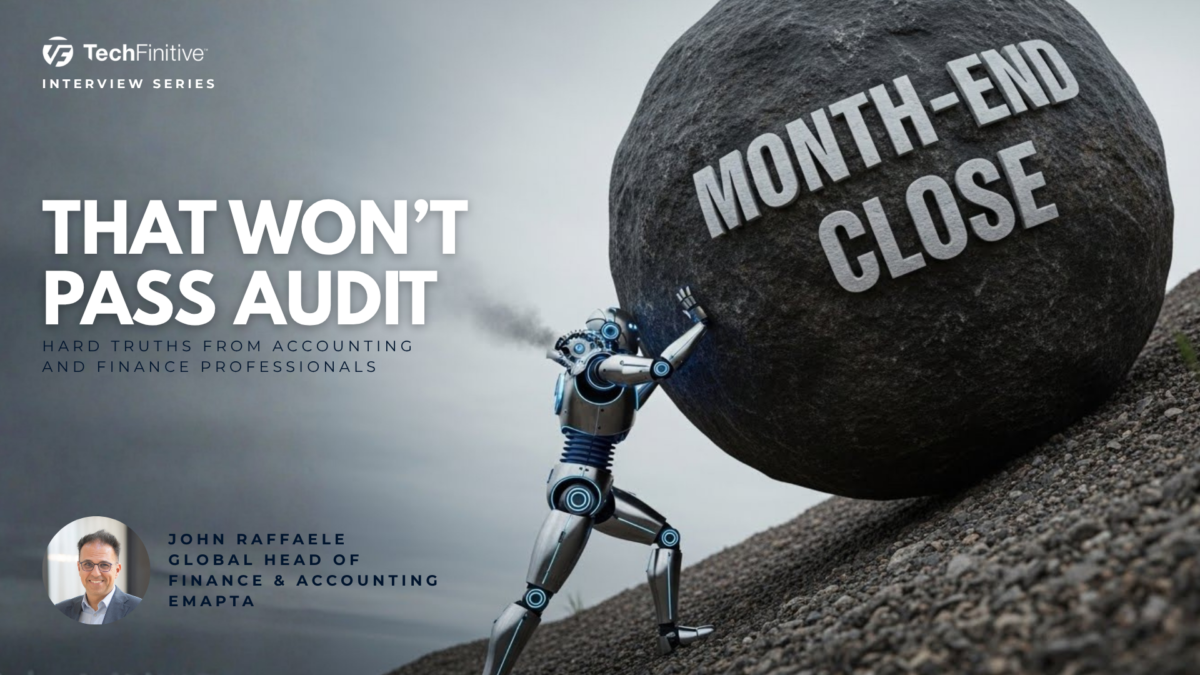
John Raffaele, Global Head of Finance & Accounting at Emapta: “Finance has moved from ‘scorekeeping’ to ‘sense-making'”

With three decades of leadership experience across corporate finance, it’s worth listening to say what John Raffaele has to say on the matter. Even if, as he tells us right at the start of this interview, the “finance function has gone through more changer in the last five years than in the previous fifteen”!
John joined Emapta as Global Head of Finance & Accounting last year, where he leads the design and delivery of scalable offshore finance operating models for multinational organisations. Prior to this, he played a pivotal role in scaling HLB Mann Judd’s offshore finance capabilities – in partnership with Emapta. For those who don’t live in Australia, HLB Mann Judd is an award-winning chartered accounting firm based in Sydney. As is John himself.
In this wide-ranging interview, John shares his views across the finance function, including the role of AI and automation. And if there’s a theme it’s that the challenge of aligning finance functions with business needs in 2026 requires a lot of planning.
“The biggest misconception is that modernising finance is a systems project,” he told us. “In reality, it’s an organisational behaviour project. Clean data requires better operational processes. Faster close cycles require upstream accountability. Real-time analytics require decision-makers to actually use the insights.”
This is where we gain our headline quote, that finance has moved from scorekeeping to sense-making. Yet, John points out, “many organisations still resource, structure and measure finance as if it were a back-office cost centre. The companies that get ahead are the ones that recognise the shift early, build multidisciplinary teams and treat finance as a strategic engine, not an after-the-fact reporting function.”
Which brings us to our first question: how the role of finance has changed and what organisations still get wrong.
How has the role of the finance function changed in the last three to five years, and what do most organisations still underestimate about that shift?
The finance function has gone through more change in the last five years than in the previous fifteen. The traditional mandate around accuracy, control and compliance hasn’t gone away, but it’s no longer enough.
Finance has become the operating system of the business. Executives expect real-time visibility, predictive insight and support for rapid decision-making in a way that simply didn’t exist a few years ago. What many organisations underestimate is the magnitude of change required around the operating-model to deliver that.
Leaders assume the shift is primarily technology-driven: add a new reporting tool, buy an AI module, automate a handful of reconciliations. But the real transformation happens upstream. It happens in standardising processes that were historically designed locally, in building data discipline across functions that never thought of themselves as data creators, and in bringing finance closer to operations than ever before.
The biggest misconception is that modernising finance is a systems project. In reality, it’s an organisational behaviour project. Clean data requires better operational processes. Faster close cycles require upstream accountability. Real-time analytics require decision-makers to actually use the insights.
Finance has moved from “scorekeeping” to “sense-making”, but many organisations still resource, structure and measure finance as if it were a back-office cost centre. The companies that get ahead are the ones that recognise the shift early, build multidisciplinary teams and treat finance as a strategic engine, not an after-the-fact reporting function.
Which accounting or finance processes are still more manual than they should be, and what’s stopping teams from automating them?
Many accounting and finance processes remain overly manual today because they sit across systems and teams that were never designed to work together. Month-end close workflows, reconciliations, revenue recognition and intercompany work are still far more manual than most organisations would care to admit.
It’s not because automation doesn’t exist; it’s because the underlying processes were never designed for automation in the first place. When each business unit uses slightly different inputs, when data definitions vary across systems, or when approvals depend on email chains and tribal knowledge, automation has nothing stable to anchor to.
The real barrier isn’t technical capability, it’s readiness. Automation requires process consistency, defined decision points and clean upstream data. Most finance teams are under pressure to “just get the numbers out,” so they become experts in workarounds rather than root-cause improvement. When capacity is already stretched, it’s easier to preserve manual steps than to redesign the workflow entirely.
The other barrier is fear of breaking something that already works, even if imperfectly. Many teams worry that automating a flawed process simply accelerates the flaws.
Organisations that succeed in automation usually start by simplifying. They eliminate unnecessary variations, standardise policy interpretation and redesign the workflow before introducing technology. Only then does automation stick. Until teams are willing to slow down long enough to fix the foundation, they remain stuck in manual cycles that consume time and drain value.
What impact has AI had on your finance or accounting workflows so far, and where do you see the most realistic near-term value?
AI has introduced both opportunity and friction into finance, often simultaneously. The tools themselves are increasingly capable, but the workflows they are entering are often not. In our environment, the most immediate impact has been in augmentation rather than replacement. AI accelerates everything that depends on pattern recognition: identifying anomalies, preparing first-pass variance commentary, classifying transactions, and surfacing outliers that would have taken hours to find manually. These are meaningful productivity lifts, but they don’t replace the need for human judgment.
The realistic near-term value of AI lies in three areas. First, in improving data quality. AI is exceptionally good at detecting inconsistency, missing values and mismatched records. That elevates the accuracy of downstream reporting without requiring armies of analysts. Second, in creating leverage for overstretched teams. AI-generated drafts of reconciliations, audit schedules or management commentary shorten cycle times and improve review quality. Third, in enhancing controllership. Continuous monitoring and automated exception detection strengthen the control environment without adding administrative burden.
Where AI has been least effective is in environments that lack process discipline. If the data is inconsistent or if decision points are ambiguous, AI amplifies confusion rather than reducing it. For the near future, the biggest wins will come not from replacing people, but from redesigning workflows so AI can operate in a controlled, predictable manner that actually improves outcomes.
What are the biggest integration challenges between finance systems, and how do they affect accuracy and agility?
The hardest integration challenges today stem from system sprawl. Most organisations have accumulated layers of ERP customisations, payroll exceptions, billing rules and reporting solutions that were never designed to talk to each other cleanly. When data definitions drift over time, the “customer” in one system means something slightly different in another and forces finance to translate. That translation work is slow, manual and error-prone. As a result, integration complexity has become a technology as well as a governance problem.
The impact on accuracy is significant. When teams are constantly reconciling mismatches between systems, they spend more time validating numbers than analysing them. Small discrepancies become major time sinks. That slows down the close, introduces the risk of late adjustments and weakens confidence in the numbers. Agility suffers even more. When finance leaders want faster forecasting, scenario modelling or operational insights, integration becomes the bottleneck. You cannot move at the speed of the business when your data moves at the speed of manual spreadsheets.
The companies that solve integration challenges tend to standardise aggressively. They rationalise chart-of-account structures, centralise master data governance and enforce consistent policies across business units. Technology then becomes the enabler rather than the patch integration improves as tools get smarter, and the business becomes more disciplined. Until that happens, speed and accuracy will always be limited by the weakest link in the system landscape.
How do you balance speed and automation with control, auditability, and regulatory compliance?
Balancing speed with control is the central tension of modern finance. The mistake many organisations make is treating speed and control as mutually exclusive. In reality, well-designed automation strengthens the control environment. The challenge lies in resisting the temptation to automate before a process is ready. When controls are ambiguous, when approvals depend on tacit knowledge, or when reconciliations rely on judgment rather than rules, automation introduces risk rather than reducing it.
The balance starts with clarity. Every automated workflow needs a documented decision point, a defined error threshold and a clear set of exceptions that require human review. Rather than removing people from processes, automation should reposition them to review exceptions, validate outputs and intervene when patterns break from historical norms. This model delivers speed without sacrificing compliance.
The other crucial component is auditability. Automation must leave a trace. Every adjustment, every exception, every data transformation needs to be visible and reproducible. When auditors can see the logic, test the rules and understand the lineage, trust follows quickly. But when automation becomes a black box, confidence erodes.
The organisations that get this right build automation hand-in-hand with governance. They involve internal audit early, design with transparency in mind and ensure the finance team understands the workflow logic. Speed without control is reckless; control without speed is obsolete. The modern finance function needs both.
What advice would you give to finance leaders under pressure to digitise but lacking internal buy-in or technical resources?
The biggest mistake finance leaders make under digitisation pressure is starting with technology. When buy-in and resources are limited, the most powerful thing you can do is start with the problem, not the tool. Identify the processes that consistently slow the business down, create errors or consume disproportionate time. Once the pain is undeniable, buy-in follows naturally. People don’t resist technology; they resist disruption that doesn’t solve their daily problems.
The second piece of advice is to build momentum through small, visible wins. A fully automated close is aspirational, but cleaning one upstream data source or standardising a single reconciliation process is achievable. When people see cycle times improve, or manual steps disappear, scepticism fades. In environments with limited resources, progress compounds more than investment.
The third recommendation is to look outside the four walls of the organisation. Many finance teams simply don’t have the bandwidth or capability to redesign processes, integrate systems or operate new technology. Outsourcing or hybrid delivery models give leaders access to expertise and capacity they wouldn’t be able to build internally without disrupting the team.
Digitisation isn’t about having the most sophisticated tech stack. It’s about having processes that are simple, stable and scalable. When finance leaders prioritise sequence over speed by fixing foundations first and then automating, the transformation becomes far more manageable, and buy-in grows because it works.
About The Author

Rowan Campbell
NEXT UP