Trending Topics

 Trending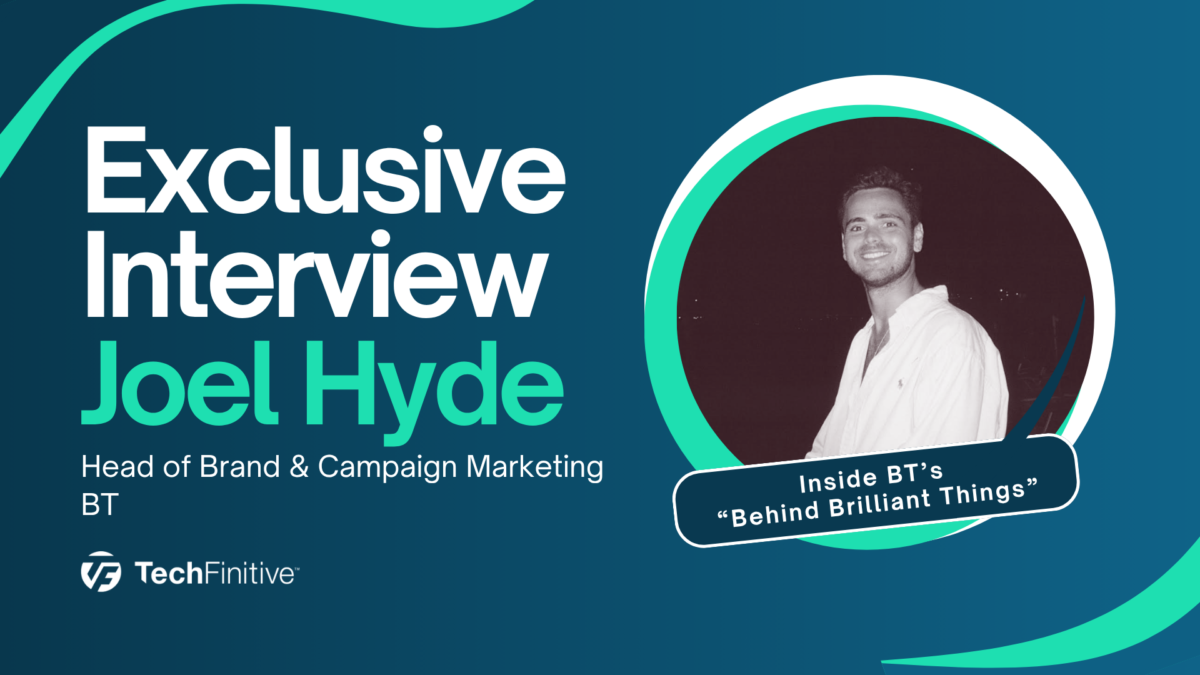
Joel Hyde, Head of Brand & Campaign Marketing at BT: “Time, budget, expertise; all of them are scarce in a small business”

Cybersecurity has long been marketed through fear. Headlines warning of ransomware, phishing attacks and data breaches have become commonplace, yet many small and medium-sized businesses still lack even the most basic cyber protections. The challenge for organisations is no longer convincing businesses that cyber threats exist, it’s helping them believe that improving their security is both achievable and worthwhile.
That shift in thinking is beginning to reshape how organisations talk about cybersecurity. Rather than focusing solely on risk and compliance, many are positioning cyber resilience as an enabler of growth, innovation and customer trust. For SMEs in particular, where limited time, budgets and in-house expertise often stand in the way of stronger security, clear guidance and practical support can be just as valuable as the technology itself.
As Head of Brand & Campaign Marketing at BT, Joel Hyde leads brand, communications, content and customer experience across the company’s Consumer and Business divisions. He recently helped launch BT’s “Behind Brilliant Things” brand platform, with cybersecurity for SMEs becoming one of its first major campaigns.
In this interview with TechFinitive, Hyde explains why BT chose to move away from fear-based cybersecurity messaging, how research into the UK’s cyber defence gap shaped the campaign, why cyber resilience should be viewed as a driver of business growth rather than simply a compliance exercise, and what it takes to communicate complex security challenges in a way that empowers organisations to act.
BT recently repositioned itself around “Behind Brilliant Things.” How did this cybersecurity campaign become one of the first major expressions of that new brand promise?
Behind Brilliant Things aims to shine a light on the people, technology and networks that power the country every day, with stronger cybersecurity positioned as a core element that underpins it all. It reinforces BT’s position as a brand that connects, protects and supercharges the UK. And for businesses, protection is the precondition for everything else.
SMEs are central to driving the growth and innovation that’s needed for progress, and therefore a core audience for this campaign. There are 5.7 million SMEs in the UK – over 99% of the total business population – and around one in three still lack even basic cyber protection, leaving a significant gap in the nation’s defences. That covers a huge range of organisations, from independent retailers and tradespeople to GP surgeries, care homes, nurseries, and accountants. When you look at those numbers and the types of services they offer the public, it was natural that cybersecurity for SMEs was one of the first focuses of our new brand promise.
Many cybersecurity campaigns rely on fear-based messaging. BT Safe feels more focused on confidence and enablement. Was that a deliberate creative choice, and can you elaborate on the creative process that went into it?
It was completely deliberate. Fear has its place; you need people to understand the stakes. But fear without a clear path to action, it tends to paralyse rather than mobilise. SMEs already know cyber threats are real and growing, but it is capacity that’s the real barrier, and the confidence that they can do something meaningful about it. The creative challenge was helping business owners understand that protection is within reach and it’s much simpler to implement than they might think.
The language we settled on, ‘industrial-grade security within reach of every UK business’, captures that thinking. It tells SMEs that the tools large businesses are using, are now available to them. Over eight in 10 SMEs said personalised, in-person guidance would help them improve their security, which showed that they value support and guidance through in a variety of channels, be that online, in person, on the phone or with automated support. That fed directly into both the creative and the product itself, with the Cyber Support Hub giving SMEs to specific tools, resources and cyber advisors – all for free.
What did your research reveal about how UK SMEs perceive cyber risk, and how did those insights shape the campaign?
The data painted a clear and fairly troubling picture. Four in 10 small businesses have been victims of an attack or breach in the last 12 months, rising to two-thirds of medium-sized companies, yet 39% of all SMEs have had no cybersecurity training at all – that’s two million businesses. Ransomware incidents have more than doubled in the last 12 months, and 85% of UK businesses have been targeted by phishing attempts. BT’s network data also showed a 300% year-on-year increase in malicious scanning activity, with connected devices these businesses use now probed an average of 4,000 times a day.
The strongest finding, perhaps, was the link between cybersecurity and business growth. Our research shows that businesses which are proactive about cybersecurity have, on average, a 20% higher growth rate – we call that being ‘cyber agile’. That finding reframed the whole conversation. Cybersecurity is about protecting your business, and ensuring it’s crucial system and data are safe, but it also gives a commercial advantage. We built the campaign around that because it shifts the conversation from cost and compliance to business performance.
As a sort of segway to the above, despite widespread awareness of cyber threats, many SMEs still lack basic protection. What do you think is preventing businesses from taking action, and how did that insight influence the campaign?
Time, budget, expertise; all of them are scarce in a small business. When something feels complex and expensive, inertia tends to win. Half of UK SMEs say cyber threats are among their top technology concerns, yet a third still lack even basic protection. So, there’s a big gap between awareness and action.
Many SME owners also assume sophisticated threats are aimed at large enterprises and that they are too small to be worth targeting. Our data contradicts that. Four in ten small businesses have been victims of an attack or breach in the last 12 months. And the cost of getting it wrong is tangible: the average cyber breach costs a UK business £3,550, and the costliest breaches are more than double of that.
If our campaign positioned cybersecurity as complex, jargon-heavy and expensive, we wouldn’t have landed the correct message. The answer had to be simple and reduce the burden on SMEs.
Both the campaign and the new support services focus heavily on making cybersecurity easier to understand. How do you communicate a complex and often intimidating topic without oversimplifying it?
It’s vital that you demonstrate to people that you understand the issue before you ask them to let you handle it on their behalf. That’s where BT’s credentials matter. BT now prevents four million cyber attacks across its networks every day. Leading with that establishes credibility, and credibility is what makes simplification possible.
From there, the job is making a complex subject clear without downplaying it. The Cyber Health Check does just that. It’s a simple self-assessment tool, developed in line with National Cyber Security Centre guidance, that helps SMEs understand their risks and recommended next steps.
Free access to BT cyber advisors through the Cyber Support Hub takes that further, because cybersecurity concerns and issues are often situational. The 5.7 million SMEs in this country are all very different to one another and therefore have different security needs. Our expert guidance means SME IT decision-makers can explain their needs in greater detail and get advice specific to their business, something which blanket instructions alone cannot do.
The phrase “Behind Brilliant Things” suggests enabling success rather than simply selling services. How does cybersecurity fit into that broader story of helping businesses grow and innovate?
Behind Brilliant Things was designed to shine a light on the vital, but often unseen, role BT plays. From running the emergency services network to protecting customers from millions of cyber threats every day – BT is behind it all.
The evidence that cyber-agile businesses grow on average 20% faster, makes the commercial case any SME owner will value. If BT can help close that cyber defence gap, the benefits stretch beyond SMEs – more businesses trading with confidence, more jobs, people’s personal data protected, and a stronger economy overall. That is the scale of the ambition behind this campaign, and it is how Behind Brilliant Things aims to position BT’s role in the UK.
More thought-provoking interviews
- Peter Gaffney, Chief Information and Security Officer at Sovos: “The role of CISOs has changed significantly over the past decade”
- Matt Mills, CEO of Ripjar: “Explainability is a hard constraint in regulated AI, not a nice-to-have”
- Interview with Rudy Kuhn, Evangelist at Celonis on Process Intelligence and beyond: Let AI handle the routine and humans the exceptions
About The Author

Ricardo Oliveira
NEXT UP