Trending Topics

 Trending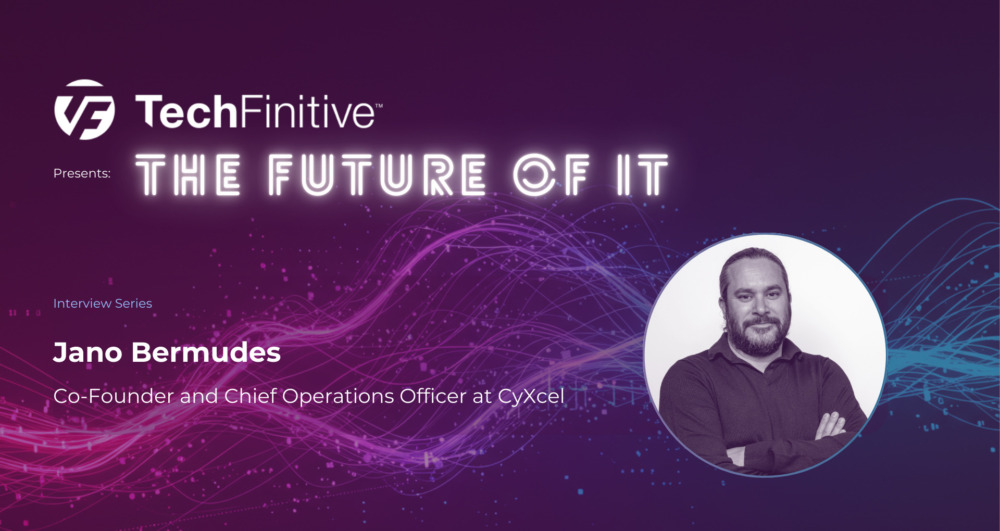
Jano Bermudes Co-Founder and Chief Operations Officer at CyXcel: “IT devices and edge computing are becoming the new normal in industrial spaces”

It rapidly became clear in our interview that Jano Bermudes, Co-Founder and Chief Operations Officer at CyXcel, always has one wary eye open gazing into the future. A future that his company, which specialises in cyber risk management and tech consultancy, needs to anticipate.
But this is a wide-ranging interview, as typified by Jano’s views on ethics. Pointing to the “growing role that technology is playing in and around the battlefield” he believes that IT is capable of adding to already tense geopolitical tensions. “[When] there’s a link between the profits of war and technology, then situations may transpire in which it’s in the financial interests of incredibly powerful companies to propagate and sustain rather than resolve conflicts.”
However, he doesn’t think we should be scared of AI disrupting the labour market, declaring that “it sounds scary but shouldn’t”. That’s because “[AI] is helping to create entirely new job categories and demanding the complete overhaul of others” just as technology has done for decades.
This clear analysis of risk is something Jano has honed over two decades of experience. He has served in senior cyber leadership roles at KPMG, Navigant Consulting, Ankura Consulting and Marsh McLennan, working across everything from critical national infrastructure to security architecture.
He now uses this technical background to help CyXcel’s clients “understand, measure and manage all aspects of technology risk”. A task made ever more complex by emerging technologies such as blockchain, IoT and, of course, AI.
Our thanks to Jano for taking the time to answer our questions so thoughtfully. We hope you enjoy reading what he has to say.
What do you think will be the most significant changes in the IT industry over the next 5-10 years?
The tech landscape is changing so quickly that sensible predictions today could become either reality or redundant tomorrow, but there are a few shifts in dials happening across both industry and society are likely to continue to gather momentum:
The continued digitalisation of all businesses
Be it farming, legal, pharma, retail and beyond, the convergence of traditional industries with IT is inevitable. Every business is becoming a tech business. And for tech businesses, primary challenges will increasingly centre around IT and technology challenges – whether that’s compliance and digital supply chain complexity, or training and retaining key talent.
The continued automation of physical processes with technology
The transformation of physical processes will be among the most visible changes that emerge from the advancement of IT. From the use of automated drones to the proliferation of robotics, IT will continue to break new ground in highly perceptible ways.
Harmonisation between physical components and software solutions
I also expect to see the simplification of machines and equipment, specifically so that they can work more readily and easily with software solutions. Already, IT devices and edge computing are becoming the new normal in industrial spaces, and that trend will only gather speed moving forward.
Which emerging technologies do you think will have the biggest impact on IT in the coming decade?
Without question, AI, quantum computing and blockchain are the big three technologies to watch.
While it might be a bit too soon to comment on quantum computing, the massive impact AI is having on every solution, in every industry, and in every job is becoming ever more prevalent.
There’s good and bad in that. AI developers, corporate adopters, policymakers and honestly society more broadly agree that for every productive and beneficial deployment of AI, there will be many disruptive, destabilising and even some outright harmful applications.
Take the impact of AI on labour markets. This technology is helping to create entirely new job categories and demanding the complete overhaul of others. And that does mean that sceptics – including those in IT – are now worried that AI will eliminate jobs owing to its potential to augment and automate.
It sounds scary, but it shouldn’t.
Around 60% of US jobs in 2018 had titles that did not exist in 1940. In other words, jobs have changed massively in recent years, and they will continue to do so.
That change should not and cannot ultimately be resisted. The key for the IT industry is to recognise and embrace dynamic interaction between technology and workers, rather than pushing against it.
What role do you foresee for edge computing and IoT in shaping IT infrastructure?
While the merging of IT and operational technology (OT) will continue to be met with some resistance – particularly in traditional sectors such as heavy industries – this is ultimately the direction of travel. Therefore, we should begin to gradually see an increasing acceptance and adoption of edge computing and IoT in the coming years as the benefits of these technologies become clearer. Standard features, such as just-in-time resource allocation, resilience and security by design, and hyperscale, will ultimately win out on traditional monolithic OT solutions.
As this transition happens, I expect common approaches to governance will also emerge, helping to facilitate both more cohesive infrastructure and enable easier adoption of technologies.
At the same time, as maturity grows, we can also expect to see the simplification of more “exotic” forms of IoT, with advancements such as infrastructure as code and virtualisation set to disrupt operational environments. Through a greater acceptance and widespread adoption of automation and IoT, those novel machines, techniques, technologies and solutions being championed by cutting-edge companies will begin to enter the mainstream.
I also believe that those industries that have traditionally been difficult to disrupt (such as those with major safety concerns, like power generation and transmission), will become easier to disrupt. With early adopters leading the way, regulators supporting the position to drive down cost and improve industry efficiency (as was the case with the adoption of public cloud first by unregulated businesses, the regulators (The FCA), and then the largest banks), I think we’ll start to see aggressive inroads in the near future.
What ethical considerations do you believe will become more critical as IT continues to advance?
As IT continues to evolve, it will undoubtedly continue to unlock efficiencies in every business, government and ecosystem. However, we cannot shy away from the ethical question marks those advancements place on issues such as equitable access and the role of technologies in global conflicts.
In my view, one of the major concerns lies in good and fair governance. Recent years have shown the struggles of democracies in governing big tech effectively, while non-democratic regimes may also be guilty of stifling innovation or misusing the technologies available to them.
I have a real concern about the growing role that technology is playing in and around the battlefield, as we’ve seen in the Middle East and Ukraine.
From an ethical point of view, it’s very worrying. Not only is the use of advanced IT in conflicts capable of exacerbating geopolitical tensions. Equally, when there’s a link between the profits of war and technology, then situations may transpire in which it’s in the financial interests of incredibly powerful companies to propagate and sustain rather than resolve conflicts.
It’s one thing capturing in consumer markets, but profiting from global conflicts is quite another.
Lastly, the global nature of big tech against the increasingly nationalistic Balkanisation of the geopolitical landscape exacerbates the governance challenges we have over these organisations. Their almost limitless resource pool, technical and business mastery and ability to flex on a global scale make anti-competition ineffective.
In what ways do you think IT will transform industries like healthcare, education, or finance?
Personally, I will be watching the influence of IT on the pharma industry, medical sectors and heavy industries very closely. While all industries will continue to digitise at speed, I feel it is these sectors that will be the most visibly transformed during the next four or five years.
In healthcare, technologies will bring about a whole new approach to patient care, from diagnostics to treatment delivery, that has the potential to improve our lives like antibiotics, statins and vaccines have. Consider the role of robotics – it is completely possible that automated surgeries for relatively routine or standard procedures could become the norm in the next decade.
We’ve already seen how technology has changed surgery for the better through minimally invasive procedures and laparoscopic surgery, reducing risks and scarring for patients. As technology and robotics continue to evolve, their precision and accuracy could offer even greater benefits in fields such as these.
Similarly, heavy industries will undergo massive transformation. The deepening blend between IT with physical processes will enable hyperscale, while connected data and AI implementations will reshape industries like manufacturing and construction, and autonomous machines and vehicles are set to become commonplace in urban and industrial environments.
AI is incredible, there’s no doubt about it. However, it’s AI’s combination with physical processes – with robotics and automation – that will be truly incredible to watch. To me, it’s really exciting, but these shifts must be managed properly. Drawing comparisons to the industrial revolution, one has to consider personal, professional, political and societal impacts on a global scale.
What skills do you think will be most valuable for IT professionals in the future?
I think the scope of the profession will continue to broaden in the coming years. Even now, IT has become an incredibly multidisciplinary role requiring not just traditional, technical skills but also soft skills, business skills and financial acumen.
On one side of IT departments, you need leaders who can build and manage new technologies and systems, while on the other you need those who can audit solutions, crack the codes, and test for digital resilience and risks. Right now, those two spheres rarely understand each other well. However, as the profession continues to widen, I believe each silo will need to open up. Already, we are seeing the evolution of DevOps, merging development expertise with the traditionally separate disciplines of release management and operational oversight.
Within this context, I believe the most important characteristics for IT professionals to have will be curiosity, creativity and a focus on emotional intelligence rather than traditional IQ, to avoid burnout, and stress and promote cohesion and integration. The ability of companies to buy a piece of software and set it up hasn’t changed – solutions will work and will be helpful. However, IT departments must now consider the broader implications of implementing and managing technologies.
Is the software provider secure, and are they themselves using providers that are secure? To understand that you need to do your due diligence and evaluate the vendor, requiring auditing skills, and an understanding of legal and contractual constructs. However, the legal language that’s used to convey that level of security is often incredibly technical, and still often open to interpretation.
Those additional aspects of the job will only continue to expand, and IT professionals will therefore need to become increasingly proactive problem solvers with diverse skill sets.
Can you share a project or innovation you’re currently working on that you believe has the potential to influence the future of IT?
I’m currently involved in a project that’s focused on bridging the gaps between the technical IT profession and other traditionally disparate disciplines like regulatory compliance, supply chain management, legal and regulatory expertise and geopolitical risk in addition to various traditional technical disciplines.
The idea is to create a common language framework across technical, business and legal domains that will provide organisations with the foundations from which they can address challenges more holistically.
Why are we doing this? Fundamentally, IT is no longer a siloed function that can tick along in the background. It is both front and centre, with innovation in technology often being the competitive factor, connected across ecosystems, intranets, extranets and geopolitical and regulatory boundaries.
It is becoming accepted that IT leaders need a seat at the board level to ensure that IT decisions align with enterprise goals. However, that understanding shouldn’t just happen at the board level.
Boards need to understand the technology and develop levers with which to run, measure and correct the technology aspects of the business. For IT professionals, legal experts, regulators and other key departments to be able to work together effectively in addressing increasingly complex challenges on a daily basis, they need to build cohesive partnerships. Governance frameworks must adapt to include technical concepts.
We’ve seen other sectors such as healthcare develop coordinated mechanisms capable of handling crises across borders. Today, IT needs similar frameworks to handle issues that span multiple departments, such as regulatory compliance and cybercrime.
With greater cross-functional transparency and understanding, organisations will be able to build more cohesive, resilient, adaptive strategies.
You might also be interested
About The Author

Tim Danton
NEXT UP


