Trending Topics

 Trending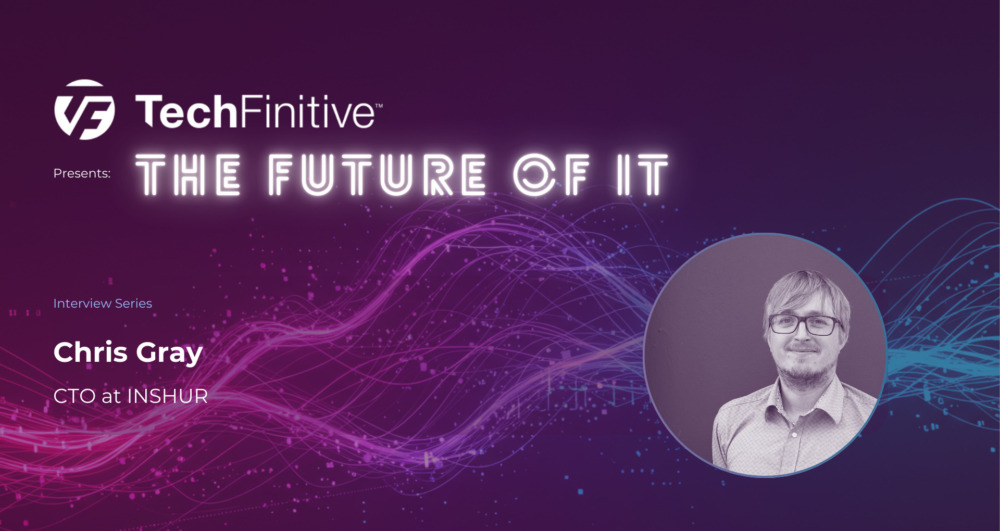
Chris Gray, CTO at INSHUR: “The next generation of IT professionals are the first true AI natives”

People often talk about AI’s bias, but normally that’s all it is: talk. For Chris Gray, CTO at insurance firm INSHUR, that bias is a very real concern. Bias could cost the company real money whether it’s in favour of the client or against them; this is a heavily regulated industry after all.
“[INSHUR] has a duty of care to our customers to ensure that any AI tools we use, for example in customer service or claims, are free from bias of any kind,” Chris told us. “This involves running a full suite of tests every time we make even the smallest code change. AI can ‘hallucinate’ and present false or misleading information as fact: the IT team needs to know how to test whether there’s a right or wrong answer present.”
It was also intriguing to discover Chris’s views on using AI and machine learning to spot fraud, a huge risk factor in the insurance industry. It’s already helping to spot trends in fraud, and hopefully that will drive down claims for all of its honest customers.
In such a competitive industry, it probably isn’t a surprise that Chris and his team at INSHUR are at the cutting edge of technology. All we can say is, insure yourself against the future by reading the challenges they are already solving. If you aren’t already taking the steps he describes below, chances are you will be within a couple of years.
What do you think will be the most significant changes in the IT industry over the next 5-10 years?
The most significant changes in the next decade will be driven by developments in AI. Large Language Models (LLMs) are going to keep improving, and the businesses that succeed in harnessing this technology will leverage it to continuously improve their products. For some, AI is a threat – if it renders your product useless instead of improving it, your business has not used AI in the right way.
So-called “AI slop” – low quality, AI generated content that some commentators claim is killing the internet – is becoming a real issue, with more and more AI-generated content infiltrating all areas of our lives. IT teams need to lead the charge across the business to combat any negative impacts of AI and to ensure it is being employed in smart ways that benefit the business and customers.
In a heavily regulated industry like insurance, this means focusing on creative implementations of AI that augment – not replace – human expertise. For example, we’re building AI-based tooling to support our claims teams in delivering great quality, efficient service to on-demand drivers, and in doing so we’re seeing patterns in use cases for AI that are a good fit for other departments within the business. So much so, that we see potential for the commoditisation of these approaches to a wider set of solutions that serves not just insurance, but any business with amazing staff who generate high-value content.
How do you envision the role of IT professionals evolving in the future?
Because of the crucial role AI will play in the coming years, IT professionals will need to ensure that they are consistently developing deep AI understanding and expertise. Crucially, this will include taking a leadership role in helping to educate stakeholders across the business on best use cases for AI tools, building understanding at every level around what the technology can and can’t help with, and putting clear structure and process around AI innovation.
At INSHUR, we’ve established an AI-focused R&D team within the Technology department that focuses on identifying potential use cases and working with non-IT stakeholders to develop appropriate and effective responses using AI. For example, AI – when used to power OCR technology – can be particularly useful in helping to scan and categorise ambiguous, unstructured data such as policy numbers in documents submitted as part of a claim. These numbers aren’t standardised across providers, so they can look very different and difficult to spot with the naked eye.
Elsewhere, AI agents can effectively act as automated compliance assistants, ensuring regulatory requirements are satisfied in everything we do. These are simple, yet impactful, jobs for an AI tool.
Moving forwards, the IT team’s role won’t just be to identify and build such solutions, it will also be to instil this AI-focused mindset across the business – helping to drive real momentum and transformation.
What ethical considerations do you believe will become more critical as IT continues to advance?
AI bias continues to hit headlines as a global concern, most recently when incoming US President Donald Trump signed an executive order on developing AI ‘free from ideological bias’. While the precise impact this order will have on businesses remains to be seen, the eradication of bias should be a top priority for any IT team that is building AI solutions.
As an insurance company servicing on-demand drivers in rideshare and delivery from extremely culturally diverse backgrounds, INSHUR has a duty of care to our customers to ensure that any AI tools we use, for example in customer service or claims, are free from bias of any kind. This involves running a full suite of tests every time we make even the smallest code change. AI can ‘hallucinate’ and present false or misleading information as fact: the IT team needs to know how to test whether there’s a right or wrong answer present.
On the other side of the coin, AI can actually be employed to combat bias by monitoring ambiguous, broad data sets to spot trends and address any inconsistencies of issues in policies. Once more, it’s going to become increasingly incumbent on IT teams to identify the areas of the business where AI could pose a threat or solve a problem, and to act accordingly.
In what ways do you think IT will transform industries like healthcare, education, or finance?
A key challenge in finance and insurance is regulation: treating customers fairly is both a regulatory and moral imperative. AI and machine learning assist us in this mission, primarily as an augmented assistant rather than a replacement for insurance expertise, such as ID verification, fraud detection and assistance with claim triage and handling. AI removes a layer of manual, mundane tasks and supercharges the team’s productivity.
For example, we identified that a significant proportion of the calls coming into our customer service team could be quickly and effectively answered by an AI-driven solution. By implementing a ‘virtual agent’ (VA) to handle more straightforward queries, the team can then focus more on serving customers with specific or detailed questions.
In addition, a huge part of insurance success lies within the claims department. When it comes to claims, our customers expect to be treated fairly and swiftly by claims handlers.
In our claims team, we use AI and ML primarily as an augmented assistant for fraud detection and assistance with claim triage and handling – and we embed insurance into the apps so that it’s accessible for on-demand drivers. This provides a smooth purchasing experience directly from the app where all the data is processed to offer the best insurance products specifically for that on-demand driver.
What skills do you think will be most valuable for IT professionals in the future?
At INSHUR, we operate a flexible working policy that means the majority of our employees work both in the office and remotely on a hybrid basis. We believe this is the best approach to fostering a truly inclusive work environment that offers equal opportunities for everyone.
For businesses like ours, this means that IT teams need to be able to switch between modes of working and operating effectively in different environments to continue driving innovation and supporting the evolving needs of the business. Specific skills are increasingly needed to participate in crucial in-person collaboration, such as hackathons and whiteboarding while being able to lead the business even when working remotely is also paramount.
The next generation of IT professionals are already learning skills like coding and the use of LLMs at school and in their daily lives. They are the first true AI natives, with a natural ability to identify and create AI-generated content. School curriculums now need to structure themselves around the fact that generative AI is only going to become more pervasive, as well as helping students to develop their collaboration skills across multiple channels and environments.
How will IT contribute to addressing global challenges like climate change or social inequality?
Having control of your own finances is a basic human necessity in our society, and IT can help to deliver on this need. It’s why INSHUR has taken a technology-forward approach to developing insurance products that are embedded into our partners’ platforms, removing the friction when onboarding on-demand drivers – many of who are from underrepresented backgrounds – and providing them with fair and suitable cover while driving.
On a broader scale, IT will continue to bridge the digital divide, with the further commoditisation of hardware and software bringing lower lost broadband to underserved groups. According to the GSMA, over half the planet’s population (54%) now owns a smartphone, and this number is set to continue to rise as phones become more accessible to people in developing economies. Responsible development of applications that cater to underserved markets will help shorten the gap between the haves and have not.
You might also be interested
About The Author

Tim Danton
NEXT UP


