Trending Topics

 Trending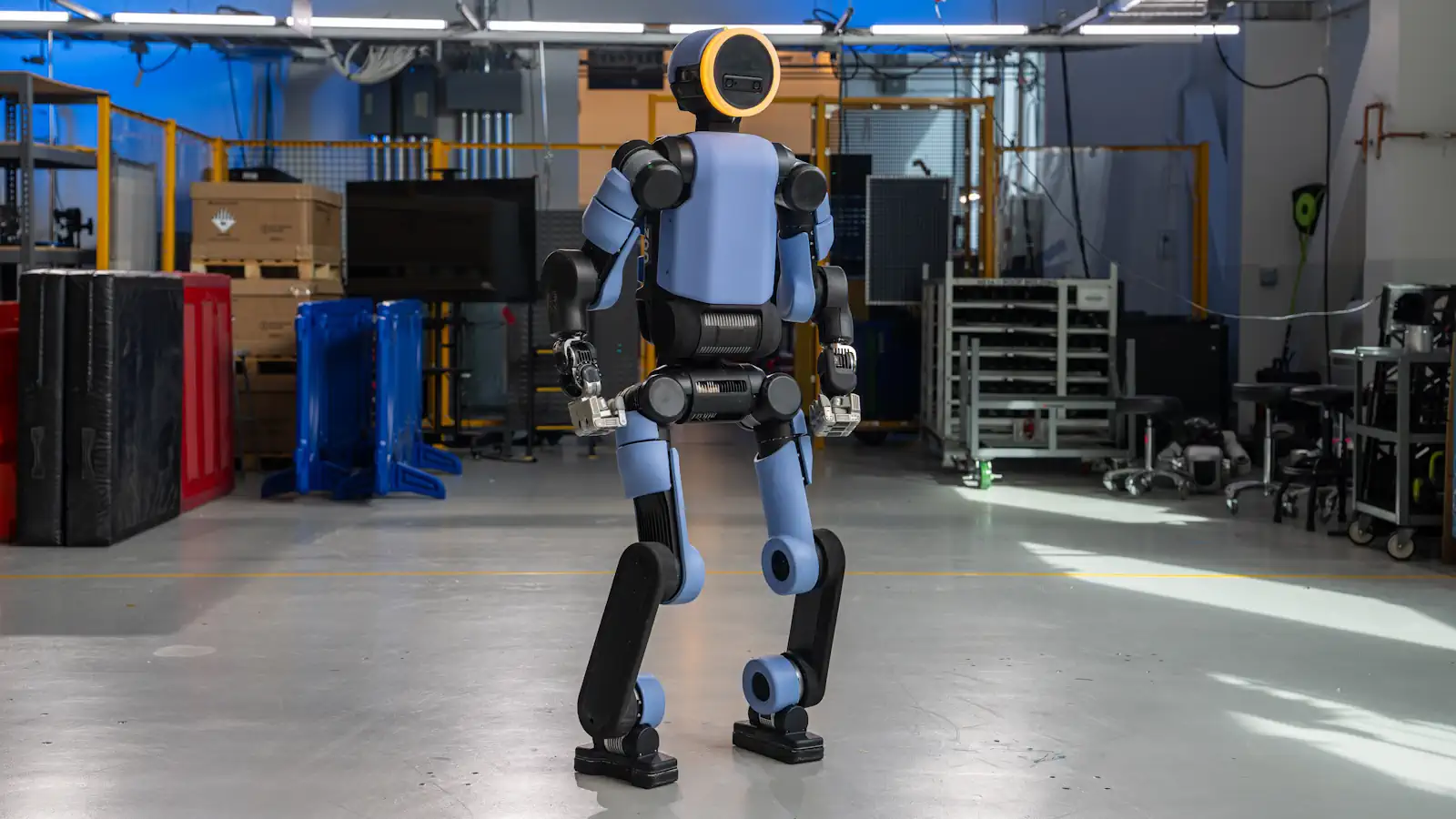
Boston Dynamics VP: “Our goal is to deliver an intelligent, adaptable humanoid robot”


In a world of relentless bad news, let us bring you a glimmer of light: the robots are coming. And they’re here to help. I base this on a series of interviews with leaders in the robotics industry, from the CEO of Sensory AI (makers of The Robot Barista) to the companies that are making the chips. And it’s a message echoed by Matt Malchano, Vice President of Software at Boston Dynamics, in this interview.
I wanted to speak to Boston Dynamics because it’s no Johnny-come-lately when it comes to robotics. There’s an excellent chance that you’ve seen Spot, its dog-like quadruped, which first went on sale six years ago. You may well have watched a few videos of its other scarily agile robots in action too. For example, this video of a prototype of its humanoid robot Atlas went viral three years ago.
Hyundai saw the robots’ potential from the start. It took a controlling stake in Boston Dynamics in 2020, completing its purchase the following year. And with one of the world’s biggest car manufacturers behind it, Boston Dynamics has rapidly gone from startup to mainstream.
Here, I ask Matt about the state of play in the robotics market, and crucially what’s to come. Ending with the big question of our time: when will Asimov-style humanoid robots start roaming among us?
From Boston Dynamics point of view, where are we now? I know Spot has been rolled out in a wide range of scenarios, normally for sensing, but I believe it’s still very early days for the humanoid robot Atlas?
Robotics is finally really moving into its age of commercial deployment. For decades, the goal was to prove what was physically possible, and now, the goal is to scale reliable systems that solve real-world problems. Currently we have three mobile robots in our portfolio: Spot, Stretch and Atlas.
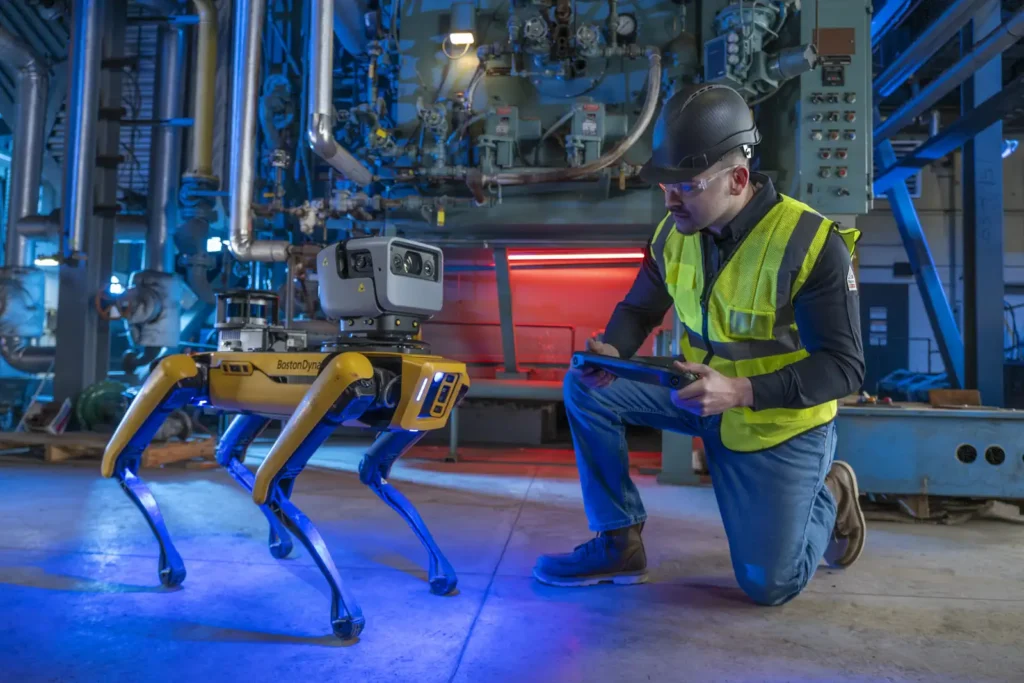
Our quadruped, Spot, is a reflection of this new age, with units deployed globally across industrial sites, power plants, construction zones, public safety and more for autonomous sensing and inspection.
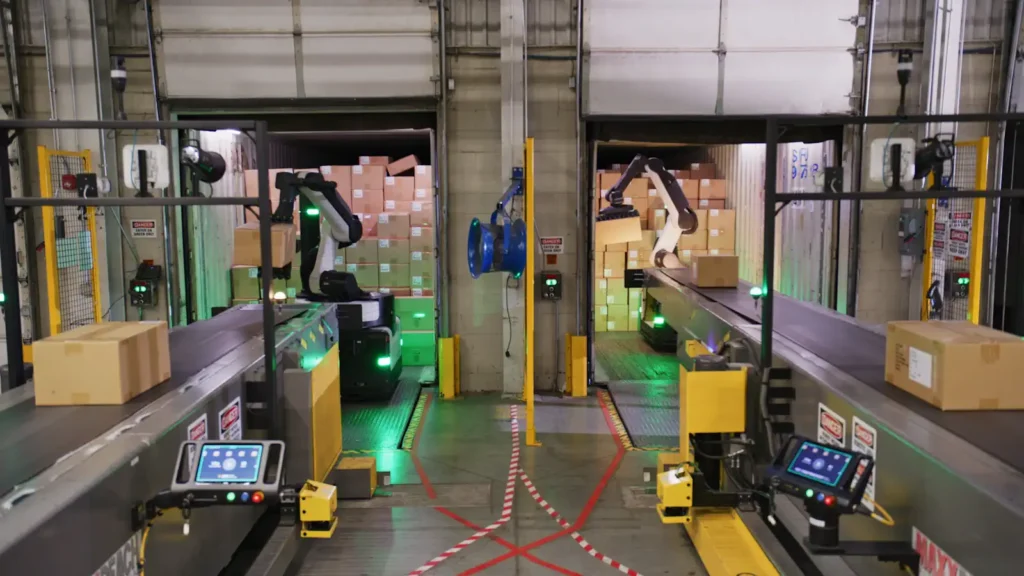
In 2022, we began selling our second robot, Stretch. Stretch is Boston Dynamics’ first commercial robot specifically designed for warehouses. The versatile mobile robot builds upon Boston Dynamics’ decades of advancements in mobility, perception and manipulation to create a flexible solution that can be deployed in any warehouse configuration.
Our product humanoid robot, Atlas, is still in early stages. We officially debuted the commercial version of the robot at CES this year. We’re currently switching from the prototype to the production version of Atlas, and all 2026 production units will be going to Hyundai Motor Group & Google DeepMind for data collection and initial application testing this year.
Would you agree that the mechanical side of robotics has outpaced the software/edge processing side until now? With the rise of small language models and improved edge processors, with more to come, is the “brain” of the robot catching up with the “body”?
The impressive behaviours that used to take engineers months of programming and testing can now be accomplished essentially overnight thanks to AI techniques and large language models.
The core challenge remains that robots must be taught everything from scratch. One of the reasons large language models are so seemingly intelligent is because they were trained on the entire history of the internet. Robots don’t yet have a dataset like that for the physical world. They don’t know how much objects weigh, how much grip force to apply, or whether something is solid, flexible or breakable. Building an internet-scale dataset for the physical world is the defining engineering challenge of this decade, and AI will help us get there faster.
For Atlas, the best way to think about its intelligence is that the humanoid has two brains, and both of them have an important AI layer contributing to them.
The first is the cognitive brain. Our partnership with Google DeepMind illustrates this approach, where DeepMind’s AI “brain” helps the robot understand and interpret the things it’s seeing in the physical world. Think of it as the brain that controls the robot’s sense of recognition and reasoning to give it a semantic understanding of the world. It processes visual data and foundation models so the robot can understand what task to execute, such as parsing a vague human command like “clear the workspace” and autonomously break it down into actionable steps.
We’ve also built an AI layer at Boston Dynamics that serves as a “physical brain” for our robots. That’s what actually allows the robot to take action, meaning the brain that controls its ability to move around, grasp objects, and physically make changes in its environment. Operating at the edge with ultra-low latency, this system manages the complex physics of dynamic motion, posture and instant environmental reflexes. It relies on advanced machine learning pipelines and reinforcement learning to ensure the robot stays upright, balances fluidly, and navigates rough or slippery terrain safely.
What are the biggest barriers to humanoid robots in particular? While we’ve seen them run fast half-marathons and cautious rollouts in factories, we still seem some way from mass adoption…
The biggest barriers to mass adoption are safety, functional reliability and the unpredictability of the real world compared to the controlled environment in our labs..
While it is easy to generate excitement with a curated demo video, deploying mobile robots at scale in unstructured environments is an incredibly difficult challenge. Humanoids will be most effective only when they are deployed with in-depth models of a facility and massive amounts of data regarding how it operates.
Functional safety is also paramount when robots operate in close proximity to humans. If there is an emergency situation, you cannot simply cut power and let a heavy robot crash to the floor. Engineers must design systems so the robot gets to the ground in the safest way possible, and we are doing that with Atlas.
We won’t see widespread adoption until robots can operate reliably and safely.
How will we integrate robots into our working world without causing a Luddite-style reaction? To put it another way, how will we ensure human workers enjoy working with their robotic counterparts?
From patrolling factories and performing surgeries to handling last-mile delivery and enhancing customer service, robots [need] to have meaningful real-world impact today. People worry robots will take their jobs, and that’s a legitimate concern. But like the introduction of the personal computer, we believe they will create jobs and transform how we all work as well. At Boston Dynamics, the most powerful deployments are the ones where robots take on the dangerous, repetitive, and physically backbreaking work, freeing people to focus on more valuable and meaningful things.
Recent economic studies have shown countries that aggressively adopted automation have actually tended toward higher employment, not lower. The world’s goal shouldn’t be a workforce without humans. It should be a workforce where humans do safer and more meaningful work. That requires investing in retraining and reskilling at the same scale we’re investing in the technology itself, and that responsibility falls on industry as much as government.
Do you have a rough timeline for when we will see humanoid robots deployed into more complicated and mixed environments? For example, assisting in care homes for the elderly.
Our products are currently designed for industrial and commercial use. As our technology continues to mature, we hope that we will offer consumer-level products that are both useful and delightful. We think the path from industrial leads next to service industries, where you’ll start seeing mobile robots appear in retail stores, restaurants, hospitals, schools and commercial offices. And then eventually we’ll be ready for the home.
We are as excited as you are about helpful humanoids in our daily lives, but the path to a truly general-purpose humanoid robot in the home will be long and hard and is several years away.
How excited should we be about the coming three years? Is this a golden era for robotics? If so, why?
We’re living in an exciting era for humanoid robots as they navigate and interact with the physical world in increasingly sophisticated ways. Everyone is very eager to show humanoids walking and picking up simple objects, but very few are showing humanoids doing valuable and complex manipulation tasks. We’re just at the crawling stage for truly valuable manipulation capabilities.
AI has helped push the robotics industry further and faster by tackling tough mobility and manipulation challenges. Specifically, reinforcement learning enables our robots to stay stable on difficult terrain, while visual foundation models allow them to navigate new obstacles with much-needed context.
In the next two to three years, AI and foundation models will play an important role in robotics. We recently announced a partnership with Google DeepMind, to integrate their Gemini Robotics models into Boston Dynamics’ robots, including Spot and Atlas and will only continue to drive this innovation.
What are your ambitions for robots in the future? Are we getting close to the promised land of Isaac Asimov and The Jetsons?
Asimov is indeed a cultural milestone. Our goal is to deliver an intelligent, adaptable humanoid [robot] that can walk into an existing facility and perform useful work, without requiring companies to spend millions adapting and remodeling. The future will look like a safer, more productive world for humans, where humanoid robots solve real-world problems for us all.
Related articles
About The Author