IBM has scored another quantum win, with the announcement of an upcoming rollout in Spain’s Basque Country.
IBM and the Basque government said last week that they are planning to install an IBM Quantum System Two in the region before the end of this year.
The machine will be available to local students, researchers and companies, Javier Aizpurua, scientific director of the Basque government’s quantum computing initiative, known as BasQ, said.
“Having the IBM computer in the Basque Country is going to be a game changer in many senses. In science and technology, many research groups are going to be able to do calculations and simulations that they wouldn’t be able to do somewhere else,” he added.
The Quantum System Two will be installed in the main campus of the Ikerbasque foundation’s Euskadi Quantum Computational Center, located in San Sebastian.
Basque Country quantum computer
Ikerbasque is the Basque region’s foundation for science, which currently hosts nearly 400 researchers working across fields including technology, climate change, physics, and human and animal biology.
The IBM-Euskadi Quantum Computational Center was set up in 2023 to foster scientific research using quantum computing and increase quantum skills in the Basque Country. Prior to the arrival of the Quantum System Two, IBM and Basque researchers have been collaborating on projects such as algorithm development and the integration of quantum computing and artificial intelligence.
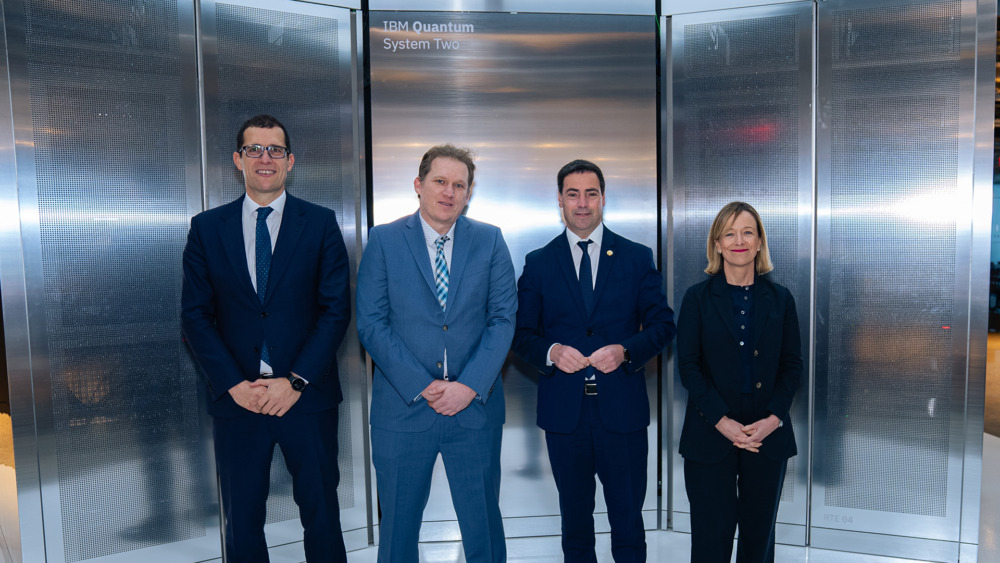
Europe’s first IBM Quantum System Two is expected to be up and running by the end of 2025 (image: IBM)
As well as rolling out the System Two, the pair are also setting up “workforce programs” to expand the quantum skills base in both the Basque Country and in Spain more widely. BasQ expects the arrival Quantum System Two will lead to the creation of hundreds of jobs in the Basque region.
Late last year, IBM announced the rollout of a System One quantum computer in Yonsei University in the Korean capital of Seoul. At the time, IBM said it was the first quantum system in the country, and the fifth IBM Quantum System One in the world, aside from IBM’s own.
According to a report by analysts Boston Consulting Group published last year, quantum computing is expected to generate $850 million of economic value by 2040. Researchers at Fortune Business Insights meanwhile have predicted that the quantum computing market will grow from $1.16 billion in 2024 to $12.6 billion in 2032.
Jo has been writing about technology for over 20 years, and has always been fascinated by emerging technologies and innovation. These days, she's particularly interested in the intersection of technology, science, and human health.
To provide the best experiences, we and our partners use technologies like cookies to store and/or access device information. Consenting to these technologies will allow us and our partners to process personal data such as browsing behavior or unique IDs on this site and show (non-) personalized ads. Not consenting or withdrawing consent, may adversely affect certain features and functions.
Click below to consent to the above or make granular choices. Your choices will be applied to this site only. You can change your settings at any time, including withdrawing your consent, by using the toggles on the Cookie Policy, or by clicking on the manage consent button at the bottom of the screen.
Functional
Always active
The technical storage or access is strictly necessary for the legitimate purpose of enabling the use of a specific service explicitly requested by the subscriber or user, or for the sole purpose of carrying out the transmission of a communication over an electronic communications network.
Preferences
The technical storage or access is necessary for the legitimate purpose of storing preferences that are not requested by the subscriber or user.
Statistics
The technical storage or access that is used exclusively for statistical purposes.The technical storage or access that is used exclusively for anonymous statistical purposes. Without a subpoena, voluntary compliance on the part of your Internet Service Provider, or additional records from a third party, information stored or retrieved for this purpose alone cannot usually be used to identify you.
Marketing
The technical storage or access is required to create user profiles to send advertising, or to track the user on a website or across several websites for similar marketing purposes.
To provide the best experiences, we use technologies like cookies to store and/or access device information. Consenting to these technologies will allow us to process data such as browsing behaviour or unique IDs on this site. Not consenting or withdrawing consent, may adversely affect certain features and functions.
Functional
Always active
The technical storage or access is strictly necessary for the legitimate purpose of enabling the use of a specific service explicitly requested by the subscriber or user, or for the sole purpose of carrying out the transmission of a communication over an electronic communications network.
Preferences
The technical storage or access is necessary for the legitimate purpose of storing preferences that are not requested by the subscriber or user.
Statistics
The technical storage or access that is used exclusively for statistical purposes.The technical storage or access that is used exclusively for anonymous statistical purposes. Without a subpoena, voluntary compliance on the part of your Internet Service Provider, or additional records from a third party, information stored or retrieved for this purpose alone cannot usually be used to identify you.
Marketing
The technical storage or access is required to create user profiles to send advertising, or to track the user on a website or across several websites for similar marketing purposes.