Trending Topics

 Trending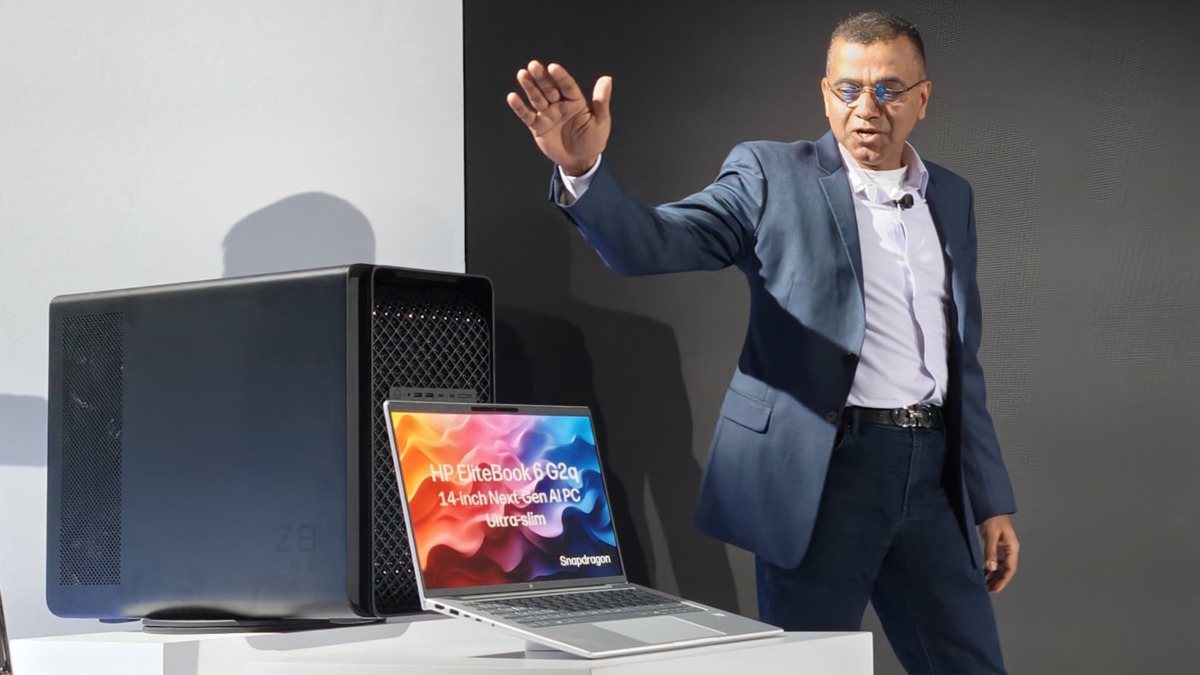
HP Z8 Fury G6i takes centre stage at HP Imagine 2026

HP unveiled its HP Z8 Fury workstation, designed for heavyweight compute, creative and AI workloads, at HP Imagine 2026 in New York today. It supports up to four Nvidia RTX Pro 6000 Blackwell Max‑Q GPUs and is based around Intel Xeon 6 chips, with up to 86 cores in a single CPU.
Manoj Leelanivas, President, HP Solutions, was eager to show off another key feature: the HP Max Side Panel, designed for Z8 Fury and Z4 workstations. It’s been designed to support not only all current Nvidia graphics cards, but future ones too.
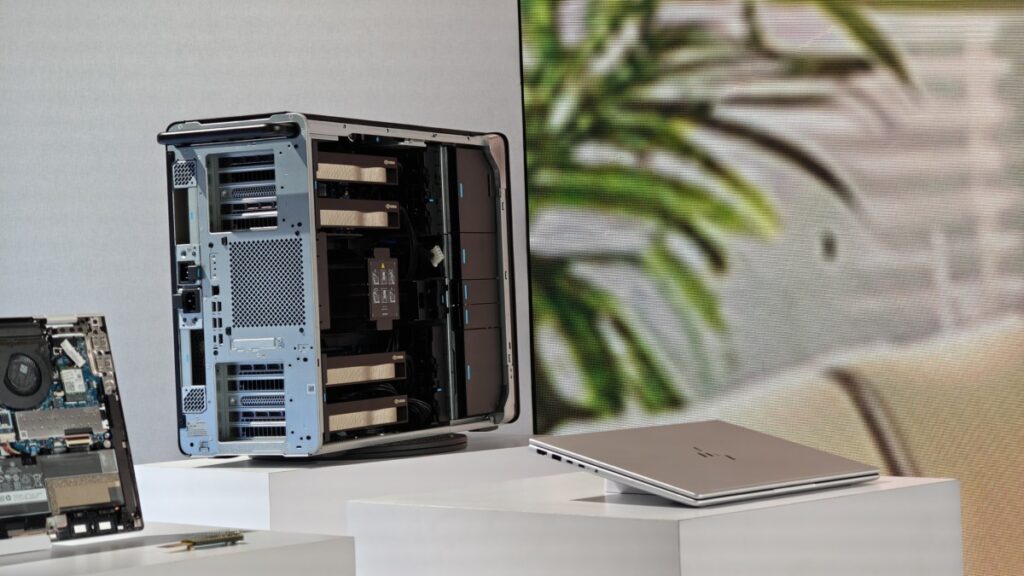
“One click, it can completely future proof your investment,” said Leelanivas as he removed the side panel on-stage. “This is an HP chassis extender, HP Max Side Panel…. Nvidia keeps coming up with these new graphic cards, bigger GPUs and whatnot, you can actually have these amazing next generation graphic cards even though ‘[they haven’t] been designed yet, which means that it’s future proof, and whatever space you need is right here.”
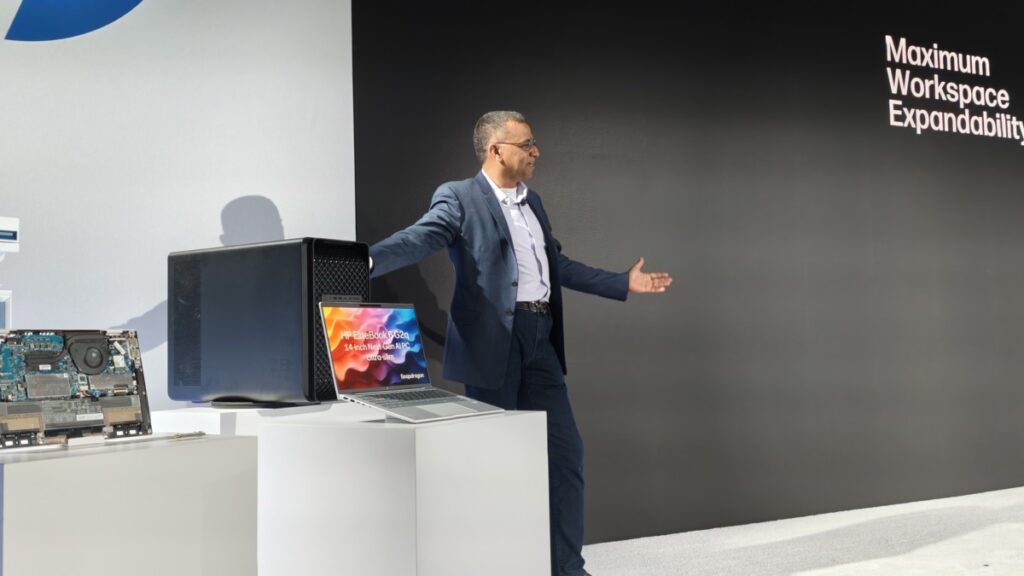
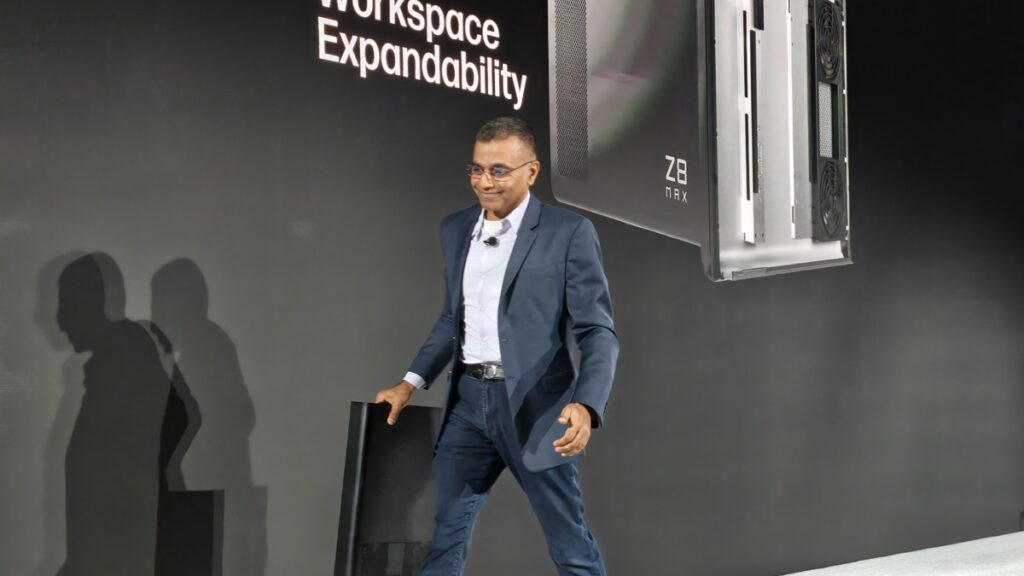
HP also teased an upcoming Fury workstation that can run trillion-parameter models “without breaking a sweat”. But that’s coming later this year. By contrast, the HP Z8 Fury G6i is on sale now and costs from $4,500.
The new Fury workstations echoed a theme from HP Imagine 2026 event, that there is a “pull” from the cloud to “the edge”. That is, laptops, PCs and workstations. So rather than running AI workloads on cloud-based data centres, HP believes that there is an inexorable move towards local devices due to price, privacy and latency.
HP ZGX Nano G1n running NemoClaw
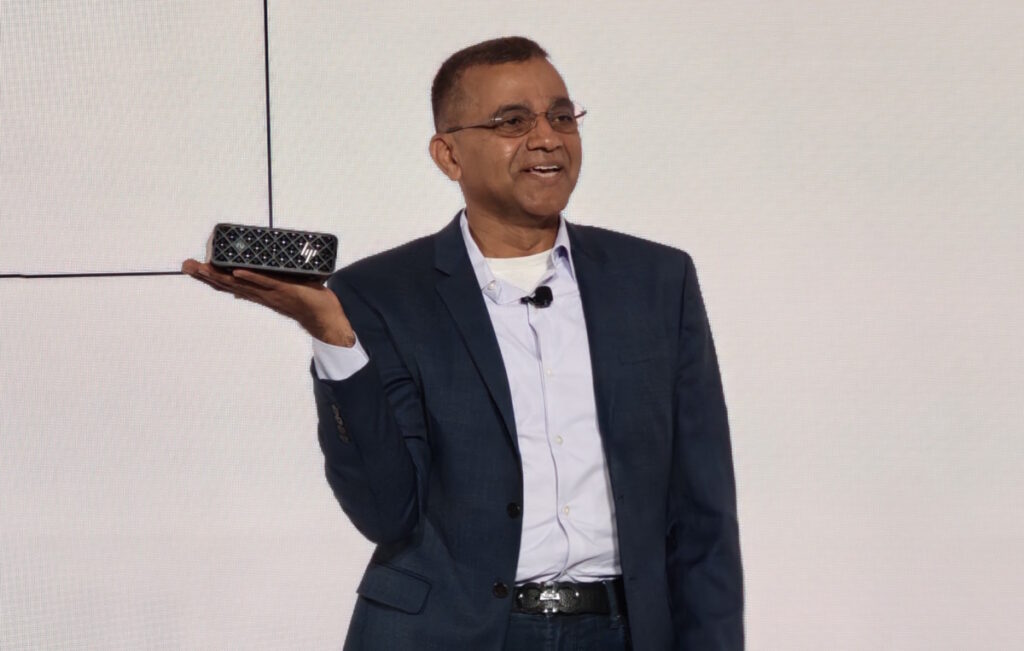
Leelanivas also showcase a far smaller workstation designed for AI workloads: the HP ZGX Nano G1n, based around Nvidia’s GB10 Blackwell chip. It was announced last autumn but is now on sale in the USA for a cool $7,399.
“NemoClaw runs on this today,” said Leelanivas. “In fact, all of our AI stations are native on the Nvidia stack, but this powerful little thing can do amazing stuff. You know, it is enterprise class. It’s completely secure, easy to deploy, and more importantly, it actually provides the best performing thing in the palm of your hand.”
HP also introduced three skinny mobile workstations: the HP ZBook X G2i, HP ZBook 8 G2i, and ZBook 8G2a. Based around Intel and AMD silicon – given away by the suffix in their names – HP promises they offer “scalable memory and improved portability without sacrificing battery life”.
About The Author