Trending Topics

 Trending
When seven became one: Is server consolidation too good to be true?

Consolidation claims can sound like little more than slideshow promises, but advances in processor design and energy efficiency mean shrinking server estates is becoming a realistic option
CIOs have heard some version of the consolidation pitch for years. The promise that you can shrink rows of ageing servers to a handful of modern boxes, sometimes even a single system, always sounds impressive – but it also tends to invite a raised eyebrow.
That skepticism hasn’t gone away, but the context has shifted. Energy is expensive, budgets are tight, and the underlying technology has moved on far faster than many infrastructure estates have. Which is why organizations of all sizes are now moving consolidation from “nice idea” status to “must investigate”.
Silicon changes the conversation
Strip away the marketing and the story starts with silicon. Even five years ago, a mid-range enterprise server with a few dozen cores was considered well provisioned. Today’s high-end chips look like something from a different era. AMD’s latest EPYC processors can scale to as many as 192 cores per CPU, and that sort of leap changes the conversation almost by itself.
More cores don’t just mean more performance. It also means that organizations consolidate workloads onto fewer machines, saving money in the process. With fewer servers to run, power and cooling demands fall, and there are simply fewer components that can fail overnight.
A Dell-commissioned study by Principled Technologies puts some numbers on that shift, suggesting that in certain consolidation scenarios CPU energy costs could fall by as much as 65% when moving from older clusters to newer systems. As with all benchmark-style figures, the real world will vary, but the direction of travel is hard to ignore when power bills remain stubbornly high.
Another benefit tends to be more practical than dramatic. Smaller environments are easier to manage day to day, with fewer updates to plan, fewer incidents to investigate, and less overall complexity. While management platforms add useful automation, much of the advantage comes from reducing the number of components in the environment.
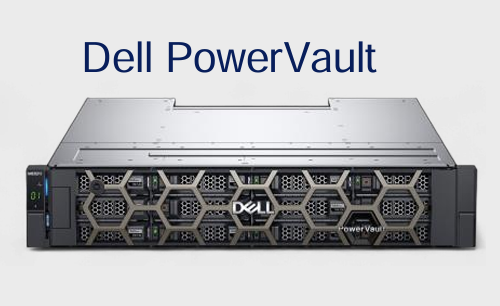
PowerVault ME5 Virtualization Solution Brief
Dell PowerVault ME5 delivers high-performance, cost-effective storage designed specifically for virtualized environments. The solution offers seamless integration, automated tiering, and native data protection capabilities that grow with your business needs without breaking your budget.
Where the savings actually show up
One of the first places consolidation tends to show meaningful savings is software licensing. Platforms like Windows Server, SQL Server and VMware are priced around cores or server counts, so changes to the underlying infrastructure can quickly ripple through to software spend. According to the study, newer hardware can, in some scenarios, significantly reduce those requirements. How significant? One example points to reductions of up to 80%.
That only really matters if performance keeps pace. In testing, newer systems handled substantially more throughput than older hardware, which in some cases meant organizations could replace several legacy machines with a single server. While still supporting more virtual machines. It’s the sort of result that tends to get finance teams leaning forward, even if they never go near a server room.
The risk of standing still
Consolidation isn’t only about the promise of savings, as it’s also about what happens when refresh cycles quietly slip from one year into the next. Holding off on upgrades can feel like the sensible move when budgets are tight, but ageing hardware rarely becomes easier or cheaper to live with over time. Maintenance demands start to creep up, power consumption edges higher, and older systems often lack security capabilities that are now treated as standard.
None of this usually hits all at once, but the effect is cumulative. With breach costs now regularly running into seven figures, keeping hardware far beyond its intended lifecycle can start to look less like careful stewardship and more like risk being quietly deferred.
Capacity is part of the picture, too. As workloads shift toward automation and machine learning, older platforms can start to feel restrictive – something many teams only fully appreciate once performance complaints begin to bubble up. Newer systems bring faster storage, larger memory footprints and built-in support for accelerators, making it far easier to run heavier workloads without having to rethink the entire environment. For many IT teams, that flexibility ends up mattering just as much as any headline cost saving.
Building a platform for AI and hybrid IT
Artificial intelligence is one of the reasons infrastructure has crept back into everyday conversations. New workloads are putting pressure on systems that were designed for a very different era, and many organizations are finding they need more flexibility than their existing setups can provide. Newer servers, particularly those built to handle GPUs and heavier processing, are helping to ease that strain by giving teams more room to test ideas and scale them once they prove their worth.
For organizations already deep into digital transformation efforts, consolidation often looks less like a simple cost-saving exercise and more like a chance to tidy up the foundations. It’s about building a platform that can support what comes next, rather than constantly working around ageing limitations.
Still, most IT leaders approach the idea with a healthy dose of realism. No two environments are the same, migrations can be painful, and those tidy ratios from vendor presentations don’t always stand up once real workloads are involved. Going from seven servers to one is possible in some scenarios, but it’s hardly a safe assumption.
Server consolidation: What needs to happen next
It is clear where things are heading. Hardware keeps moving on, energy costs are still volatile, and the need to modernize isn’t going anywhere. In that light, consolidation looks less like a hunt for dramatic cuts and more like a way to keep infrastructure matched to changing needs.
In practice, the mood tends to be cautiously optimistic. The potential savings are appealing, but so is the need to see how platforms behave once they’re carrying real workloads. Where consolidation works, it can simplify operations, reduce ongoing costs and create some breathing room without forcing a major rethink every few years.
So the real question isn’t whether seven can become one. It’s whether organizations are ready to take a step back and decide how much infrastructure they actually need – and when it makes sense to make that move.
About The Author

Carly Page
NEXT UP


