Trending Topics

 Trending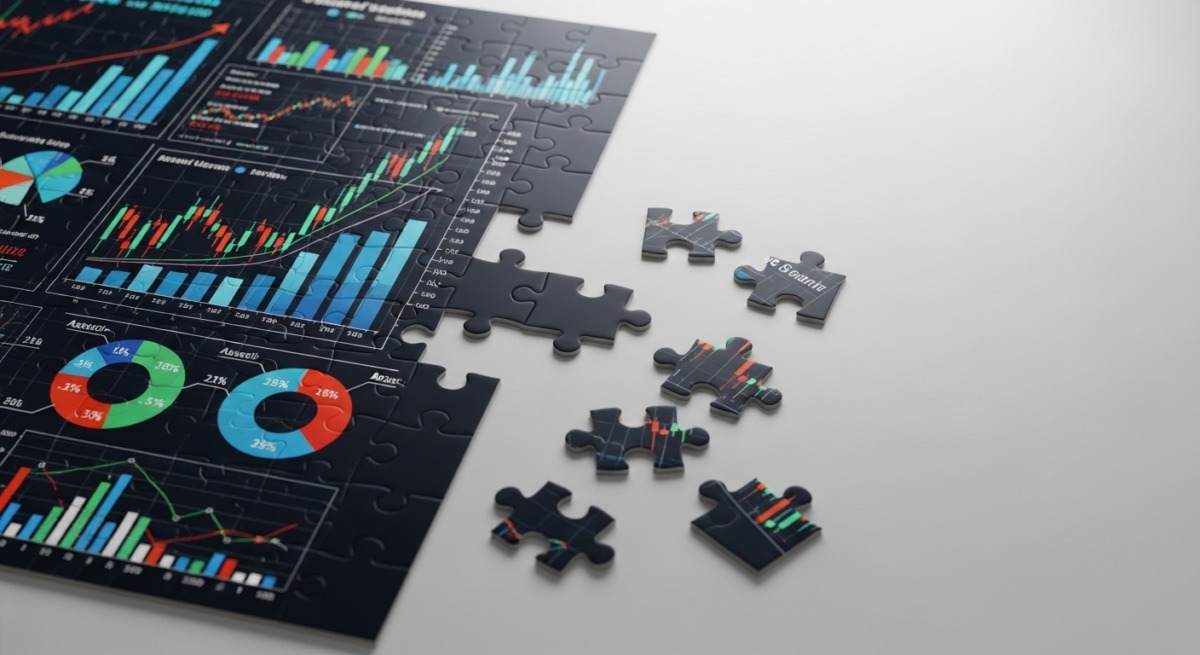
The death of fragmented data: A guide for portfolio managers

We’ve moved a long way from carrier pigeons to 21st century digital intelligence platforms

In the 19th century, one of the world’s biggest news and financial information giants was born out of a single person identifying a data gap and exploiting it. With pigeons. Which may not seem relevant to portfolio managers in the 21st century, until you realize that he was removing data friction – something now done by sophisticated financial platforms like Amberdata.
So what lessons can we learn from the then-struggling publisher, Paul Reuter? What parallels can we draw with the modern world, where data friction remains the difference between successful and failed trades?
Reuter’s first great insight was to spot a gap in the telegraph lines between the city of Aachen and stock exchanges in Berlin and Paris. He used homing pigeons to carry financial news over this gap and get the latest information before the markets could react. At the time, this was as close to real-time data as people could get.
Reuter later set up a private telegraph line between South West Ireland and London. He paid American sailors to throw flare-lit canisters containing the latest data from Wall Street, which where then picked up by locals and transmitted to London before the ships docked and the rest of the world caught up.
So Paul Reuter was a pioneer in reducing data friction, but the idea that someone can get a key financial advantage from a single source of information is long gone. Instead, portfolio managers and traders need a multiplicity of sources all assembled in an easily understandable format that will allow people to make split-second decisions that could reap huge benefits.
Beyond price feeds: The rise of regulation
Now it’s not just price feeds that move markets, but correlated markets, exchange-traded funds and real-world assets that have been made into tokenized financial instruments. All of this must be studied and acted upon, while recording commercial information for the regulators.
Managers must track levels of arbitrage in pricing and valuation across asset classes, identify and quantify risk exposure across blockchains and derivatives. They must spot differences in reporting, reconciliation, and compliance, particularly now that old-money financial players are getting seriously invested in this new frontier.
While governments have been slow to monitor the new investment landscape, those days are ending: a portfolio manager needs to show what information was coming in, how investment decisions were made, and how they fit with the current level of regulatory compliance.
Filtering your feeds
This is what Amberdata does. It fits all these sources together, whether it’s on-chain analytics, market data, derivatives intelligence, or DeFi metrics. It analyses information from 1,000+ centralized and decentralized exchanges, 500,000+ trading pairs, and 13+ years of historical data, bringing them together into a single unified platform.
This platform gives its users a huge advantage. Take, for example, the recent collapse in the price of Bitcoin to nearly half of its peak price. The warning signals were there, if you knew how to read them, but amateur traders without proper information support didn’t see the red flags.
In these turbulent times, this access to information is more important than ever. Consider that on October 10, 2025, President Trump announced major new tariffs against China. Within 40 minutes the effect was felt on the markets, but Amberdata Intelligence again gave portfolio managers and investors early warnings.
For example, it monitored a buildup of long leveraged positions and unusual activity in the World Liberty Financial market, with nearly $7 billion in contracts being liquidated.
Meanwhile, cryptocurrency mining operators like Bitdeer and Cango sold off vast quantities of digital cash in a pivot to AI and gold investments. Correlating all this information must be done in minutes, ideally seconds. Good luck trying to do this without an AI-powered platform like Amberdata Intelligence.
How Amberdata helps traders and managers
The platform mixes multiple information sources from both trading and historical data to provide a full, informed picture in real-time. It reacts in minutes, not the hours traditional traders would have taken.
There is another big benefit too. Portfolio managers have to show their workings to regulators, so the Amberdata Intelligence platform merges and records transactions – a must-have in government-controlled investment markets.
Amberdata Intelligence is also easy to use, giving non-technical portfolio managers answers to complex questions. It turns plain-language queries into structured requests across unified datasets, bypassing the traditional know-how around SQL and APIs. The result is faster decision-making, less dependency on intermediaries, and more sophisticated analytics. This gives the ability to see the likely outcomes of high-impact events like tariffs and project profits and losses based on current market positions.
The Wild West days are getting East Coast controls
As institutional investors move in on previously ignored markets, they need the kind of data that would usually have taken traders hours to collate, in seconds, and have an audit trail in case it goes well or badly.
In the latter case it’s a matter of dealing with the dreaded double D of banking: due diligence. Unless you can show how you arrived at a decision then there are potential problems ahead, and saying “gut feelings” cuts no ice with compliance officers and state regulators.
Being able to show what information was available, timestamped, and from which source, is going to become increasingly important to justify trades and the profits they can make. Having all this data flowing through a single platform not only simplifies trading but also justifies the decisions that were made.
Acting on fragmented data was enough in Paul Reuter’s day, but now the market is much more demanding. Managers need the token prices from many exchanges, data on smart contract activity on-chain, funding rates by the second, open interest positions, options skews on derivatives, and off-chain documentation on RWAs to make sure everything is legitimate.
Each of these data streams has a different source, a different update frequency, and a different schema. Building a unified view internally requires engineering resources most portfolio teams don’t have, and maintaining it as markets evolve is a continuous burden. A unified platform with recording capabilities built in makes a lot of sense.
Gone are the days when literal air mail could overcome these problems, and that’s no bad thing. Reuter made a killing from information, but the free market requires a leveling of the information playing field for efficiencies to be realized. Traders need multiple real-time feeds, coupled with historical data on longer-term trading positions, to make accurate forecasts – and to show why decisions were taken.
You can’t get that for a handful of bird seed.
About The Author

Iain Thomson
NEXT UP


