Trending Topics

 Trending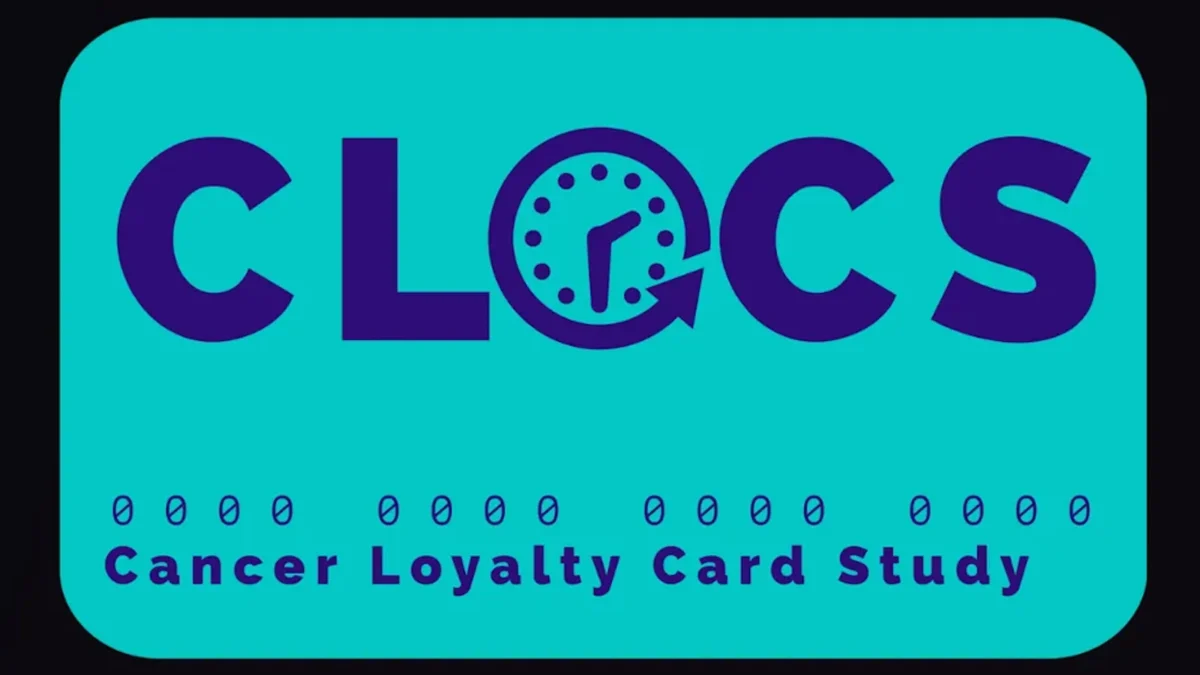
Loyalty cards and your health data: a magical mix or dangerous to all?

As a healthcare professional with more than a passing interest in tech, I listened with interest to last week’s PC Pro podcast. The team discussed the CLOCS Project, a cancer-detecting loyalty card. Bear with me as I explain.
CLOCS (or more correctly CLOCS2) is the Cancer Loyalty Card Study, second iteration, and must surely be in the running for one of the most contrived acronyms out there.
The brief, as provided on its website, states: “CLOCS explores whether shopping habits – captured through loyalty card data from high street retailers like Tesco and Boots – can help identify undiagnosed cancer earlier as the first of many steps on the road to beating cancer.”
One word jumps out at me there: “like”.
My first question, then, is who else is involved? The site doesn’t state this. The two named companies are interesting in their shared business (pharmacies) but also how different they are with one being a supermarket and the other a “health and beauty retailer” (as described on the Boots website).
Another worrying phrase is “first of many steps”, a subject I will revisit.
So, what’s going on with CLOCS and can we trust it?
Health data and loyalty cards: What we can agree on
In essence your shopping habits, as recorded by your loyalty card, will be fed into some sort of data crunching software (no doubt powered by AI) with the aim of enabling healthcare professionals to identify cancer early.
To again quote the website: “The CLOCS (Cancer Loyalty Card Study) initiative is exploring whether the things people buy – like painkillers, antacids, or herbal remedies – could reveal early clues about undiagnosed cancer.
“Many people try to manage vague symptoms themselves before seeing a doctor. These self-care choices often show up in loyalty card data from high street retailers like Tesco and Boots.”
The primary example given is ovarian cancer, with potential for diagnosis up to eight months earlier than at present. If true, this is amazing.
Certainly I can see how this could work and how such data collection and processing could be used more broadly in healthcare.
And if you wish to read the background information, there’s an in-depth article published in the European Journal of Cancer Care that goes deeper into the theory.
The future of shopping habits and cancer diagnosis
I will digress from the CLOCS2 study and look at how I can foresee recording of shopping habits being a powerful tool.
As I hurtle towards a significant age with a zero at the end I was recently invited for my first adult health screen. I embraced the opportunity but strongly suspected that I would receive some unwelcome news as I know that my diet is not as it should be.
Indeed, my cholesterol is raised but only slightly and definitely to a degree that I can rectify it with lifestyle adjustment. No statins for me at this point and I fully intend to keep it that way.
But, like most people, I know that I lie to myself when it comes to food and drink habits. I would have no problem with an app notifying me that (hypothetically) my one-off treat of chocolate flapjacks isn’t a one-off at all! Or indeed that my alcohol consumption is increasing month on month.
CLOCS2 is an opt-in system and my hypothetical situation would also need to be. People have a right to make unhealthy decisions and patients will often resent unwanted health promotion.
Who owns my shopping and health data?
All of which hints at my primary concern here: data ownership, handling and security.
Who has access to this data, exactly? How could it be used nefariously? Could it be used to tie in to advertising? Could this data be sold? How well anonymised is it?
In the podcast, Nik Rawlinson pointed out that the data is owned by the retailer which should surely raise some concerns. And really you, the shopper have consented to data collection and processing to some degree by virtue of signing up for your loyalty card.
I note that being involved in the CLOCS2 study means consenting to analysis of six years of loyalty card data.
False positives
Jon Honeyball raised the concern about false positives, which I addressed at the time through the PC Pro Discord discussion. It helps that I’m an Advanced Clinical Practitioner in a General Practice, so have personal experience.
False positives are common and accepted in medical diagnoses, which are often subject to interpretation by the clinician. Take the PSA blood test, for example, which is used to identify prostate cancer.
The PSA tells us that something is amiss with the prostate but not what. A raised PSA in the absence of other causes will indeed prompt your GP or associated clinician to make an urgent referral to your local urology service. This is one of those times where the NHS – the UK’s national health service – really does things well.
Of those referrals many will end up with diagnoses that aren’t cancer. What of the “other causes” – well anything that affects the prostate including infection and trauma.
A raised PSA could therefore be considered a “false positive” but this is a part of the process and I don’t see the CLOCS2 initiative as being radically different.
Ditto the FIT stool sample which is used to detect non-visible blood in your digestive system. This is also a marker for colon cancer. But again, other things than cancer cause a positive FIT, such as benign polyps.
This is where the “many steps” is important. I don’t believe this initiative will provide a diagnosis but will give your GP a prod to invite you in for further discussion and investigation.
Future of CLOCS
At present this is an opt-in study and we shouldn’t be thinking that next month we’re going to be getting telephone calls from Boots to advise us that our Advantage Card thinks we have cancer.
Being naturally suspicious, I have grave concerns about a supermarket passing my data to an insurance company who then increase my premium on the basis of potential diagnoses or health predictions.
Still, I hope that this study does lead to something more. Maybe lives can be saved?
But along with this huge benefit, I hope that all due safety measures around data processing and participant communication are maintained. Clinical interpretation by experts laying hands on the person must be paramount.
We are more than data.
If you’re interested in taking part in the CLOCS project, read more details on the official website. You can sign up to be part of NHS research projects here.
Related healthcare articles
About The Author

Peter Jones
NEXT UP


